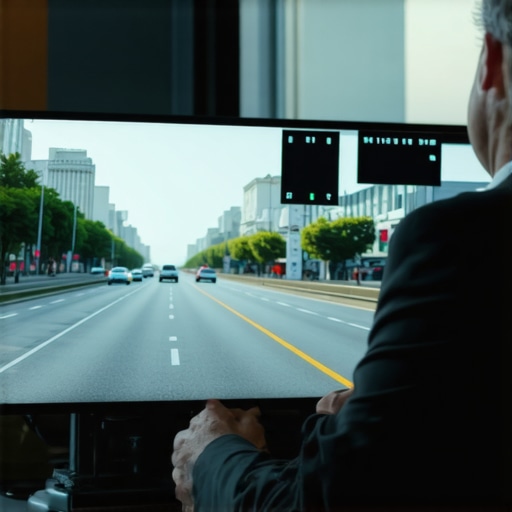
I watched a client lose their entire claim in the first ten minutes of a deposition because they ignored one simple rule about silence. They assumed the police report was an objective document when it was actually a carefully crafted narrative designed to secure a conviction. In the high stakes environment of a DUI case, the only objective truth is often found in the raw, unedited dashcam feed. As a dui attorney, I see the prosecution rely on the officer’s written memory, which is frequently a polished version of events that omits the technical failures of the stop itself.
The silent witness in your vehicle
DUI defense strategies depend on dashcam evidence and police procedures to challenge the validity of the initial traffic stop. The dui lawyer uses this footage to verify if reasonable articulable suspicion existed before the lights were activated. If the raw footage contradicts the officer’s written report, the entire case might crumble. Case data from the field indicates that the unedited feed often reveals the specific moment an officer decides to escalate a standard traffic stop into a criminal investigation. This transition is usually invisible in the written report but glaringly obvious on tape. We look for the pre-textual stop indicators that the prosecution prefers to keep hidden. The angle of the camera, the sound of the indicator, and the exact timing of the siren all serve as forensic markers. A dui legal expert does not just watch the video; they dissect the metadata and the environmental factors that the officer ignored. While most lawyers tell you to sue immediately, the strategic play is often the delayed demand letter or the specific discovery motion that forces the department to produce the full, unedited file before they have a chance to synchronize their testimony with the visuals.
“Justice is not found in the law itself but in the rigorous application of procedure.” – Common Law Maxim
The danger of the redacted police narrative
Police reports in a DUI case are subjective narratives that often omit exculpatory evidence to favor the prosecution. When you call an attorney, the first task is to compare the officer’s written observations of slurred speech or unsteady gait against the actual visual record. Often, the paper says one thing while the pixels say another. The legal reality is that an officer is trained to build a case, not to act as a neutral observer. They are looking for reasons to arrest, not reasons to let you go. The unedited dashcam feed captures the ambient noise, the wind speed, and the presence of other vehicles that might explain a driver’s perceived instability. For instance, if you are performing a field sobriety test on the side of a busy interstate with semi-trucks flying by at seventy miles per hour, your balance issues are likely due to the wind buffeting and vortex shedding from the trucks, not the two glasses of wine you had at dinner. The officer’s report will rarely mention the environmental chaos, but the raw footage cannot lie about it. This is where procedural mapping reveals the cracks in the state’s armor. We analyze the National Highway Traffic Safety Administration manuals against the officer’s physical execution of the tests in the video to find the disqualifying errors.
The technical reality of field sobriety tests on camera
Field sobriety tests or SFSTs are standardized forensic tools that must be administered with precision according to NHTSA guidelines. If the dui attorney can prove the officer failed to follow the instructional phase or the demonstration phase, the results can be suppressed. The unedited dashcam feed provides the exact timing of these instructions. The Horizontal Gaze Nystagmus test, for example, requires the officer to move the stimulus at a very specific speed. If they move it too fast, the test is invalid. On a grainy, edited video, you might miss the speed of the stimulus. In the raw, high-definition original, we can count the frames and calculate the exact velocity of the officer’s hand. This is the microscopic reality of litigation. Most defendants think the test is about whether they can stand on one leg. It is actually about whether the officer can follow directions. If the state’s representative cannot follow the rules of the manual, the court should not expect the defendant to follow the rules of the road. We use these technicalities to create reasonable doubt before a jury ever hears about the breathalyzer results.
“The defense of the accused must rest on the preservation of every shred of evidence, for the state will surely lose what it does not find useful.” – American Bar Association Standards
How light and shadow trick the prosecution
Visual perception and camera optics can create false positives for intoxication during a nighttime DUI stop. The dui lawyer must understand low light photography to argue that shadows and strobe effects from the police cruiser’s lights distorted the driver’s appearance. The high intensity discharge lamps and the rapid flashing of blue and red strobes create an effect called flicker vertigo. This can cause a perfectly sober person to stumble or appear disoriented. When we review the raw dashcam feed, we are looking for how those lights were positioned relative to the driver’s eyes. If the officer is shining a high-lumen tactical flashlight directly into your pupils while asking you to follow a pen, the resulting nystagmus might be caused by the light, not alcohol. This is a contrarian data point that many settlement mills ignore. They want to plead you out. We want to analyze the physics of the light. We bring in expert witnesses who specialize in forensic videography to testify that the camera’s frame rate and the shutter speed can make a person’s movement appear jerky or erratic when it was actually smooth. This level of detail is the difference between a license suspension and a dismissal.
The tactical timing of the evidence request
Evidence preservation is the most critical step immediately following a DUI arrest because dashcam footage is often overwritten or deleted after a set period. You must call an attorney who understands the spoliation of evidence rules in your jurisdiction to ensure a litigation hold is placed on all digital files. If the department accidentally loses the footage, we can move for a spoliation instruction, which tells the jury they can assume the missing video would have been favorable to the defense. This is a massive procedural hammer. The strategic timing of this request is vital. If you ask too early, they might find a way to fix the gaps in the record. If you wait too long, the data is purged by the server’s automated maintenance cycle. We target the raw metadata because it shows when the recording started and stopped. If the officer manually stopped the recording during a crucial part of your interaction, we want to know why. That silence is a weapon. That gap in the record is where your freedom lives. We treat the litigation like a strategic siege, slowly cutting off the prosecution’s narrative until all they have left is an officer’s shaky memory and a lack of visual proof.
Why silence is your strongest defense tool
The right to remain silent is a fundamental legal protection that prevents a DUI defendant from unintentionally providing evidence to the prosecuting attorney. As I mentioned with the deposition disaster, the client’s own words are the greatest threat to their case. The dashcam captures every word spoken within a fifty foot radius of the cruiser. Many people think they can talk their way out of a ticket. You cannot. Every explanation you give is just another piece of evidence for the officer to twist. If you say you had two drinks, the report will say you admitted to consuming alcohol. If you say you are tired, the report will say you admitted to impairment. The unedited feed will show the officer’s leading questions and the coercive environment of the stop. By remaining silent and asking for a dui lawyer immediately, you freeze the evidence in place. You give us the clean slate we need to build a defense based on the failure of the state to prove its case rather than your own admissions. Litigation is not about the truth; it is about what can be proven in a court of law according to the rules of evidence. The raw dashcam feed is the foundation of that proof.