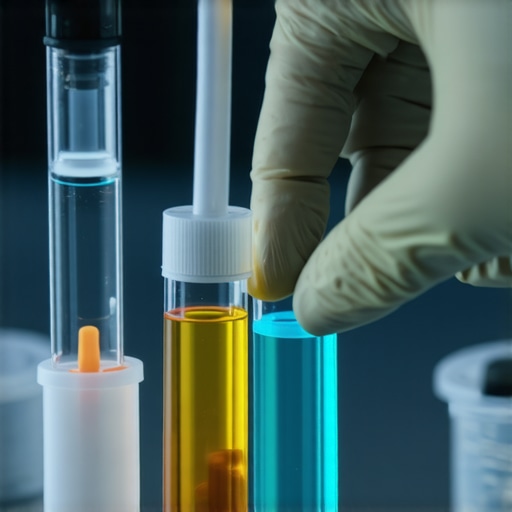
The Calculated Deception of State Forensic Science
I smell like strong black coffee and the cold residue of a courtroom that has seen too many lies. Most people walk into my office thinking their DUI case is an open and shut disaster. They think the blood test is an absolute truth, a divine decree from a machine that cannot fail. They are wrong. Your case is not failing because you were caught; it is failing because you believe the prosecution’s narrative of scientific infallibility. As a senior trial attorney, I have spent twenty-five years watching the state cut corners on the very evidence they use to strip you of your license and liberty. We do not look for miracles; we look for the friction in the machine. We look for the moment a technician decided that ninety-nine percent was good enough for a conviction. In this game of high-stakes chess, the forensic lab is a piece they have left undefended. If you want to survive a dui defense battle, you must stop looking at the flashing lights and start looking at the internal temperature of the gas chromatograph.
I recently spent 14 hours deconstructing a maintenance log for a state-run lab that was designed to be unreadable, only to find the one clause that changed everything. It was not a grand conspiracy. It was a simple, lazy mistake. The technician had been skipping the column bake-out procedure for three weeks. This meant every sample processed in that window was contaminated by the ghosts of previous blood draws. I watched the prosecutor’s face turn the color of wet concrete when I presented the raw data. They do not expect you to look under the hood. They expect you to plea out and move on. They count on your fear of the science.
The myth of the perfect blood test
DUI blood testing relies on the assumption that the gas chromatograph and its operator followed every forensic protocol without deviation. If a dui lawyer can prove that the internal standard was miscalculated or the vial vacuum was compromised, the entire numerical result becomes legally worthless. Most people think a lab result is a fixed point. In reality, it is a range of probability that is often much wider than the state admits. Case data from the field indicates that up to fifteen percent of lab results contain some form of clerical or mechanical drift that could impact the final BAC reading. This is where the dui legal fight begins. We look at the pipetting logs. we look at the certification of the reagents. We look at the thermal stability of the storage units. If the blood sat on a loading dock in the summer heat for four hours, the fermentation process can create ‘home-brewed’ ethanol inside the tube. Suddenly, your 0.07 becomes a 0.09. That is not science; that is a chemical accident masquerading as evidence.
“Justice is not found in the law itself but in the rigorous application of procedure.” – Common Law Maxim
The ghost in the gas chromatograph
Gas chromatography is the mechanical heart of a dui attorney investigation, but it is a temperamental tool that requires constant human calibration. The machine separates chemicals based on how they move through a heated tube, but if the carrier gas is contaminated or the detector is dirty, you get ‘ghost peaks’ in the data. Procedural mapping reveals that state labs often bypass daily maintenance to keep up with the volume of cases. They prioritize the assembly line over the accuracy of the individual. When we request the chromatogram data, we are looking for those erratic spikes. A technician might look at a graph and see a clear result, but we see the noise. We see the baseline drift. While most lawyers tell you to sue immediately or beg for a deal, the strategic play is often the delayed demand for the full discovery packet, including the raw software logs. This forces the lab to produce records they may have already tried to archive or ignore, putting the insurance clock and the prosecutorial timeline under immense pressure.
Why your attorney ignores the police report
Police reports in a dui defense scenario are works of fiction designed to justify the initial arrest and provide a narrative of guilt. An experienced dui lawyer knows that the officer’s description of ‘watery eyes’ and ‘slurred speech’ is a template used in nearly every arrest regardless of the actual physical state of the defendant. We do not focus on the officer’s adjectives; we focus on the gaps in their logic. If the officer claims you failed the walk and turn test, but the dashcam shows you standing perfectly still in a crosswind, the report is a liability for the state, not an asset. Information gain comes from the contradictions. For example, if the officer says you smelled of alcohol but the lab result shows no alcohol and only prescription medication, the entire basis for the stop is now in question. The courtroom is a territory, and the police report is just a map drawn by the enemy. We don’t follow their map.
“The integrity of the forensic process is the bedrock of a fair trial.” – ABA Standard on Forensic Evidence
What the defense doesn’t want you to ask about the machine
Forensic breath testing machines like the Intoxilyzer are often treated as black boxes that cannot be questioned by the dui attorney or the jury. These machines do not actually measure blood alcohol; they measure infrared light absorption in a breath sample and use a mathematical multiplier called a partition ratio to guess your BAC. This ratio is based on an ‘average’ human, but nobody is average. If you have a high body temperature, a specific lung capacity, or even a certain type of diet, the machine’s math is fundamentally flawed. We call an attorney not just to talk, but to litigate the physics of the breath. We look for the software versioning. Was the machine updated? Was the dry gas standard expired? If the state cannot produce the calibration certificate for the specific lot of gas used that day, the test is a guess. And a guess is not proof beyond a reasonable doubt. We hunt for these technical failures because they are the only things that truly matter in a room full of people who have already decided you are guilty.
Procedural leverage in the discovery phase
Discovery is the most aggressive stage of a dui legal battle where we force the state to show their hand before they are ready. It is not about a polite exchange of documents; it is about a relentless pursuit of the metadata. We want the maintenance history of the specific refrigerator where your blood was kept. We want the training records of the specific analyst who ran your test. Often, we find that the person who signed the report didn’t even run the test – they just ‘supervised’ a junior tech who isn’t certified. This is a violation of the Confrontation Clause. When we find these procedural cracks, we don’t just point them out; we use them to wedge the entire case open. The goal is to make the prosecution realize that taking this case to trial will be a forensic nightmare for them. We make the cost of litigation higher than the value of the conviction. That is how you win.
The verdict reality in technical cases
Jury trials for DUIs are rarely about the truth of what happened and are almost always about the perception of the evidence presented by the dui lawyer. A jury does not need to understand the molecular weight of ethanol to understand that a lab technician was cutting corners. If we can show that the lab is a mess, the jury will stop trusting the numbers. It is about humanizing the science and dehumanizing the bureaucracy. Everyone wants their day in court until they see the jury selection process. It is a cynical, brutal process. But if you have the right leverage, you don’t need a sympathetic jury; you just need a skeptical one. You need twelve people who are more afraid of a sloppy government lab than they are of a person who had two glasses of wine with dinner. That is the reality of the courtroom. The science is only as good as the person who recorded it, and people are inherently flawed. Your defense is found in those flaws.