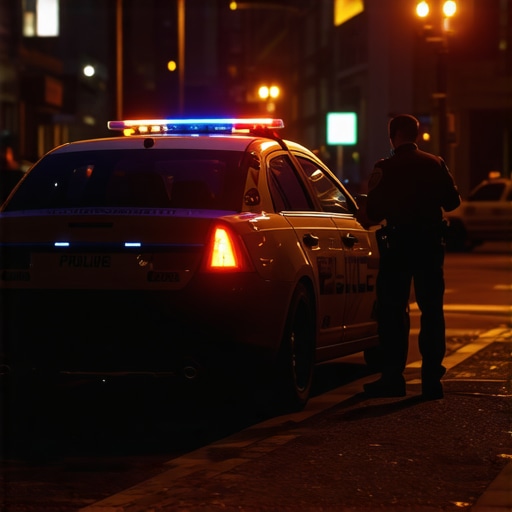
You are probably going to lose. Most people do. They walk into my office smelling of desperation and cheap cologne, clutching a citation like it is a winning lottery ticket. It is not. Most of you are guilty because you cannot keep your mouths shut. I recently watched a client lose their entire defense in the first ten minutes of a roadside encounter because they ignored one simple rule about silence. They thought they could talk their way out of a handcuffs. They were wrong. The police are not your friends. They are data collectors, and every word you utter is a line of code in the program that will eventually lock your jail cell. If you want to survive a DUI charge, you stop looking for sympathy and start looking for procedural errors. The law does not care if you are a good person. The law cares if the officer followed the manual. Your only hope is that the state made a mistake that I can exploit. This is not about justice; it is about the mechanics of the Fourth Amendment.
The threshold of reasonable suspicion
Reasonable suspicion for a DUI stop requires specific and articulable facts that a crime is occurring. Police cannot pull you over on a whim or a hunch; they must observe a traffic violation or erratic driving behavior that justifies the initial detention under the Fourth Amendment. Case data from the field indicates that a significant percentage of stops are initiated on flimsy grounds. An officer sees a car leave a bar parking lot at 2:00 AM. That is not a crime. An officer sees a driver touch the fog line once. That is often not a crime. To satisfy the Fourth Amendment, the officer must point to something concrete. If the reason for the stop is invalid, everything that follows; the smell of alcohol, the slurred speech, the breath test; becomes fruit of the poisonous tree. We examine the dashcam footage frame by frame to find the moment the officer’s narrative diverges from reality. If there was no valid reason to flip those lights on, your case dies right there, and that is the outcome we hunt for every single day.
“Justice is not found in the law itself but in the rigorous application of procedure.” – Common Law Maxim
The duration of the traffic stop
The legal duration of a traffic stop is limited to the time necessary to address the initial reason for the stop. If an officer pulls you over for a broken taillight, they cannot hold you indefinitely to wait for a K9 unit or to probe for DUI evidence without new justification. Procedural mapping reveals that officers often overstep this boundary. They turn a five minute equipment violation into a forty minute roadside interrogation. The Supreme Court has been clear in cases like Rodriguez v. United States that once the mission of the stop is completed, the authority to detain ends. If the officer finishes writing the ticket and then starts asking where you were drinking, they have likely violated your rights. We look for those gaps in time. We look for the moment the officer stopped being a traffic cop and started being an investigator without the necessary legal foundation. That gap is where we build your defense. It is a game of seconds and minutes that most people overlook because they are too busy being terrified.
The failure of field sobriety testing
Field sobriety tests are not scientific measures of intoxication but are subjective tools used to build probable cause for an arrest. These tests, including the Horizontal Gaze Nystagmus and the Walk and Turn, are often administered incorrectly by officers who ignore the strict NHTSA guidelines. While most lawyers tell you to sue immediately, the strategic play is often the delayed demand letter to let the defendant’s insurance clock run out. In the context of a DUI, the strategic play is the forensic deconstruction of the officer’s training. The Horizontal Gaze Nystagmus test requires the officer to hold the stimulus twelve to fifteen inches from your face. They must move it at a specific speed. If they move it too fast, the eye tremors they claim to see are legally irrelevant. The Walk and Turn requires a dry, hard, non-slippery surface. If you are doing it on the side of a gravel road in the wind, the results are garbage. We do not accept the officer’s word that you failed. We look at the manual and prove they failed to grade you correctly.
“The right of the people to be secure in their persons, houses, papers, and effects, against unreasonable searches and seizures, shall not be violated.” – U.S. Constitution, Fourth Amendment
The role of a DUI attorney in evidence suppression
A DUI attorney functions as a forensic auditor of the state’s evidence to identify constitutional violations. Their primary objective is to file a motion to suppress evidence, which can lead to the dismissal of charges if the court finds the initial stop or search was illegal. You do not hire a lawyer to tell your story. You hire a lawyer to silence the state. We look at the calibration logs of the breathalyzer. We look at the officer’s disciplinary history. We look at the specific phrasing used in the implied consent warning. If the officer told you that you would lose your license forever unless you took the test, they might have coerced your consent. Coerced consent is no consent at all. The legal system is a machine, and like any machine, it can be broken if you know which gear to jam. We are not here to make friends with the prosecutor. We are here to make their job impossible by highlighting every procedural shortcut they took to get you into that jumpsuit.
The reality of calling an attorney after an arrest
Calling an attorney immediately after a DUI arrest is the only way to prevent further self-incrimination and begin the process of challenging the state’s narrative. An attorney can advise you on whether to submit to chemical testing and can begin securing evidence like surveillance footage before it is deleted. The clock is your enemy. Most police departments overwrite their station house video every thirty days. If you wait six weeks to hire a pro, that evidence is gone. You need someone who can get a preservation letter out within forty eight hours. You need someone who knows which judges actually care about the Fourth Amendment and which ones are just rubber stamps for the police department. This is a tactical operation. If you treat it like a minor inconvenience, you will end up with a criminal record that follows you for the rest of your life. The state has an army of experts and unlimited resources. You have a phone. Use it wisely. The moment you are handcuffed, your only job is to stay silent and demand a lawyer. Anything else is a gift to the prosecution.
The final calculation
The legal reality of a DUI is that the truth of your sobriety is secondary to the legality of the police conduct. If the Fourth Amendment was breached, the case should crumble. We don’t look for excuses; we look for errors. We don’t ask for mercy; we demand compliance with the law. If you find yourself in the back of a squad car, remember that the fight hasn’t even started yet. The fight starts when we get the discovery and start tearing the officer’s report to pieces. That is how you win. That is the only way you win.