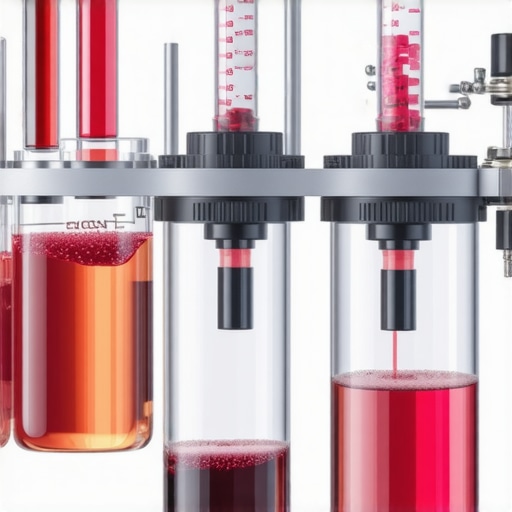
The office smells like burnt coffee and the silence of a failed plea deal. You are sitting across from me because you think the science is settled. You think a needle in the arm and a machine in a lab are infallible arbiters of truth. You are wrong. I recently spent 14 hours deconstructing a forensic lab report that was designed to be unreadable, only to find the one notation regarding the refrigeration log that changed everything. The temperature spikes in that storage unit turned a clean sample into a fermentation vat. Most people do not realize that blood is a biological soup, and when that soup is mishandled, it cooks up its own alcohol. This is not a theory. It is chemistry. If you are facing a charge based on a blood draw, you need to stop looking at the number on the paper and start looking at the microscopic failures that created it. The system is built on the assumption that the lab followed the rules, but the truth is that labs are overworked, underfunded, and often indifferent to the chemical reality of your sample.
The chemistry of a false conviction
Blood fermentation occurs when glucose in a blood sample converts into ethanol due to yeast or bacteria contamination. This process, often catalyzed by improper storage or insufficient preservatives like sodium fluoride, can artificially inflate a BAC reading far beyond the actual level at the time of the stop. When a phlebotomist draws your blood, they are capturing a living specimen. If that specimen is not immediately stabilized with the correct concentration of sodium fluoride, typically ten milligrams per milliliter of blood, the microorganisms already present in your system or introduced during the draw begin to feast on the blood sugar. This metabolic process produces ethanol as a byproduct. In a courtroom, this is called endogenous alcohol production. To the prosecutor, it looks like a high BAC. To a trained dui attorney, it looks like a contaminated sample that should never see the inside of a jury room. You must understand that the gas chromatography machine cannot distinguish between the alcohol you drank and the alcohol the yeast made while your blood sat in a warm mailbox or a technician’s desk drawer. This is why dui defense is not just about the law, it is about the forensic integrity of the vial.
“Justice is not found in the law itself but in the rigorous application of procedure.” – Common Law Maxim
What the state lab hides from your defense
State laboratories often omit the raw data from their standard reports to prevent defense experts from identifying fermentation markers. When you receive your discovery packet, you will likely see a single page summary stating a blood alcohol concentration. This is a curated version of the truth. A real dui legal strategy involves demanding the gas chromatograms, which are the jagged graphs that show every chemical detected in the sample. If the sample has fermented, there are often telltale peaks of other alcohols like acetaldehyde or n-propanol that should not be there in high quantities. If the lab technician sees these peaks and ignores them, they are committing a forensic sin. Most lawyers will not even ask for this data because they do not know how to read it. They want a quick settlement and a move to the next case. I want the raw data. I want to see the calibration curves. I want to see if the internal standard, usually n-propanol, was properly integrated. If the internal standard is off, the whole calculation is garbage. This is the microscopic reality of dui defense that the prosecution hopes you never investigate.
Science behind the sugar to alcohol conversion
Fermentation in a blood vial occurs when microorganisms consume blood sugar and produce endogenous ethanol. This chemical reaction can occur if the sample is contaminated at the time of draw or if the preservative concentration is too low to inhibit the metabolic activity of yeast. The primary culprit is often Candida albicans, a common yeast that can survive and thrive in blood vials if the preservative is insufficient. As this yeast consumes the glucose in your blood, it produces ethanol. Studies have shown that even a small amount of yeast can raise a BAC by as much as 0.05 percent or more in a matter of days if the temperature is not strictly controlled. This is why the refrigeration log is the most important document in your case. If the blood sat in an unrefrigerated evidence locker over a long weekend, it is no longer your blood. It is a chemical experiment. While most lawyers tell you to plead out early for a better deal, the strategic play is often the delayed demand for the raw laboratory data to see if the glucose levels were measured. If the glucose is gone and the alcohol is high, you have a fermentation case. This is how you call an attorney who actually knows how to win.
The refrigeration log lie
Temperature fluctuations in evidence storage rooms are the primary drivers of microbial growth in blood samples. When a dui lawyer reviews the internal laboratory temperature logs, they often find that the stable environment required for forensic integrity was actually a fluctuating heat zone. There is a specific forensic requirement for blood samples to be kept at a consistent temperature, usually between two and eight degrees Celsius. If the log shows a spike to fifteen degrees because an HVAC system failed or a door was left open, the preservation of that sample is legally compromised. Bacteria like Serratia marcescens can double their population every twenty minutes in the right conditions. Each of those bacteria is a tiny alcohol factory. When I look at a case, I look for the gap between the draw and the analysis. If that gap is more than seven days and the temperature logs are missing, the evidence is suspect. You are not just fighting a police officer, you are fighting a chain of custody that is often held together by Scotch tape and wishful thinking. A dui attorney who understands this will attack the foundation of the evidence before the trial even begins.
“The integrity of forensic evidence depends entirely upon the documented preservation of the sample from the moment of collection.” – American Bar Association Standards for Criminal Justice
Why your attorney must hunt the laboratory technician
Testimony from the actual analyst who processed the blood sample is often the weakest point in the prosecution’s case. A skilled dui lawyer will cross examine the technician on the specific maintenance records of the gas chromatograph and their personal deviation from standard operating procedures. Lab technicians are human. They get tired. They cut corners. They might skip the step of checking for vitreous humor glucose levels or fail to properly clean the headspace injector. In the forensic realm, there is no room for error, but in the actual lab, errors are routine. I want to know when the machine was last calibrated. I want to know if the liner in the injector port was dirty. A dirty liner can cause carryover from a previous high BAC sample into your sample. This is called ghosting. If your sample was run right after a 0.30 BAC sample and the machine was not properly purged, your result is artificially inflated. This is the kind of detail that wins cases and forces prosecutors to drop charges. If you do not call an attorney who understands the mechanics of the Agilent 7890B Gas Chromatograph, you are bringing a knife to a gunfight.
Strategic timing of the motion to suppress
Filing a motion to suppress blood evidence should occur only after the defense has secured the raw data from the laboratory computer system. While many lawyers act too early, the strategic play is often the delayed demand for the chromatography traces to let the prosecution’s witnesses commit to a false timeline. You want the technician on the record saying the sample was perfect before you show them the graph that proves it was fermenting. This is the leverage that creates winning outcomes. A motion to suppress based on fermentation requires an expert witness, usually a forensic toxicologist, who can testify that the scientific certainty of the result is zero. We look for the absence of sodium fluoride or the presence of ethyl glucuronide and ethyl sulfate to see if the alcohol was ingested or produced post-draw. This is the forensic high ground. If the state cannot prove the alcohol was in your system at the time of driving, they have no case. The law requires proof beyond a reasonable doubt, and a fermenting blood vial is the definition of doubt. Do not let a single number dictate your future when the science behind that number is crumbling under the weight of its own procedural failures. This is the brutal truth of the legal system, and you need a strategist who can navigate it.