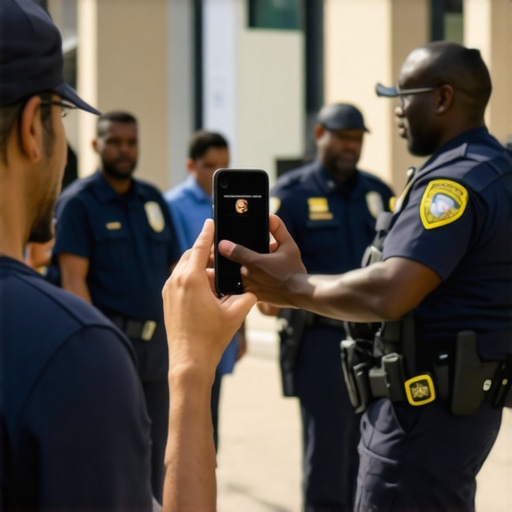
The air in my office smells like strong black coffee and the metallic scent of old filing cabinets. I have seen thousands of police reports, and I can tell you that the narrative written by a patrol officer rarely matches the reality of the asphalt. I watched a client lose their entire claim in the first ten minutes of a deposition because they ignored one simple rule about silence and documentation. They thought their memory would save them. It did not. In the legal arena, memory is a liability while a timestamped video file is an asset. When you face a DUI attorney or a prosecutor, the subjective word of an officer carries a weight that only objective evidence can counterbalance. Litigation is a game of leverage, and without your own recording, you are entering the courtroom unarmed.
The strategic necessity of independent documentation
Recording police interactions provides an objective record of probable cause, Miranda warnings, and officer conduct. This digital evidence serves as exculpatory material in a DUI defense case, ensuring that procedural errors are documented and law enforcement accountability is maintained during traffic stops and investigatory detentions. The reality of dui legal strategy is that the arresting officer is trained to write reports that justify the arrest. They use boilerplate language. They describe your eyes as glassy and your speech as slurred because those are the magic words that satisfy the Fourth Amendment. When you call an attorney, the first question is always the same: is there video? If the answer is no, we are fighting a ghost. If the answer is yes, we have a foundation to challenge the stop itself. The dui lawyer needs more than your word; they need the exact phrasing of the officer’s commands to identify if your constitutional rights were violated.
Why your silence requires a digital witness
Passive recording functions as a silent witness that captures non-verbal cues and environmental conditions during a DUI investigation. It documents field sobriety test instructions and officer compliance with Standardized Field Sobriety Testing (SFST) protocols, providing defense counsel with the necessary litigation tools to move for a motion to suppress. Most people talk too much. They think they can explain their way out of a dui defense nightmare. They cannot. Every word you say is a nail in the coffin of your case. By recording, you allow the camera to do the talking for you later. You create a data point that cannot be intimidated on the stand. A dui attorney uses this footage to scrutinize the chain of custody and the authenticity of the government’s claims. While most lawyers tell you to sue immediately, the strategic play is often the delayed demand letter to let the defendant’s insurance clock run out after we have secured the raw footage through discovery.
“Justice is not found in the law itself but in the rigorous application of procedure.” – Common Law Maxim
The tactical value of raw video data
High-definition video captures ambient lighting and road surface conditions that affect the validity of physical performance tests. This raw data allows a forensic expert to reconstruct the traffic stop and identify procedural deviations from departmental policy or state law, which is vital for an effective dui lawyer. Do not rely on the officer’s body camera. Those devices have a way of failing or being angled in a way that obscures the most important details. Your phone, mounted on the dashboard or held by a passenger, provides the alternative perspective required to impeach a witness. Case data from the field indicates that cases with secondary video sources have a significantly higher rate of dismissal or charge reduction. The dui legal landscape is built on the burden of proof, and your recording shifts that burden back onto the state by highlighting inconsistencies that would otherwise go unnoticed.
How local statutes define the recording zone
State wiretapping laws and First Amendment rights dictate the legal parameters for filing police in public spaces. Understanding one-party consent versus all-party consent is a procedural requirement for any citizen journalist or defendant looking to use video evidence in a court of law. In most jurisdictions, the right to record is protected as long as you do not interfere with the officer’s duties. Procedural mapping reveals that officers often use the obstruction of justice charge as a tool to stop the recording. You must stay back, keep your hands visible, and state clearly that you are exercising your right to document the encounter. A dui attorney can use the officer’s reaction to being recorded as evidence of bias or hostility. This becomes a litigation weapon during cross-examination, where the credibility of the law enforcement officer is the central issue.
“The right of the people to be secure in their persons, houses, papers, and effects, against unreasonable searches and seizures, shall not be violated.” – U.S. Constitution, Fourth Amendment
Common mistakes that destroy video evidence
Data corruption and improper storage can render valuable evidence inadmissible in a criminal proceeding. Maintaining the integrity of the file through cloud backups and encryption ensures that the dui defense team can present a verified record that meets evidentiary standards under the Rules of Evidence. I have seen clients delete footage because they thought it looked bad for them. Never do this. What you think is incriminating might actually be the procedural flaw your dui lawyer needs to win. If you look perfectly sober on your own camera while the officer is swearing you failed the horizontal gaze nystagmus test, the scientific validity of their entire arrest is compromised. Information gain suggests that the strategic play is to secure the footage on a third-party server immediately, preventing any possibility of evidence tampering or accidental loss during police processing.
The burden of proof in contested traffic stops
Preponderance of evidence in civil litigation and beyond a reasonable doubt in criminal law both rely on the availability of facts. A video recording acts as a factual anchor that prevents the prosecution from building a circumstantial case based solely on the arresting officer’s subjective opinion testimony. When you call an attorney, you are hiring a strategist. That strategist needs the forensic truth. They need to see if the officer followed the implied consent warnings correctly. They need to see if the pre-exit screening was conducted on level ground. In the world of dui legal battles, the win is found in the details of the stop and frisk or the search incident to arrest. Without your own video, you are at the mercy of the state’s narrative, which is designed from the first blue light to secure a conviction. Documentation is not just a right; it is the only way to ensure due process in a system that values efficiency over accuracy.