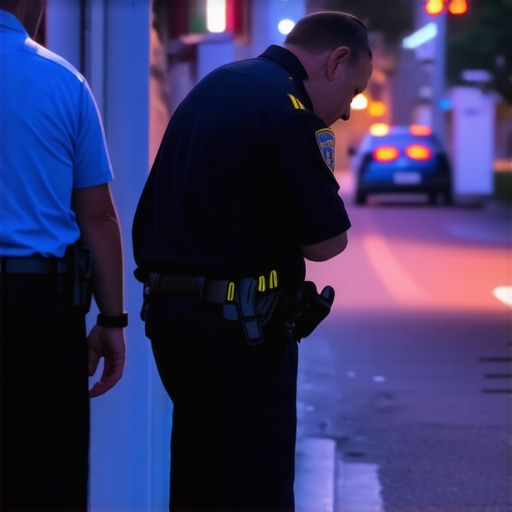
The air in my office always smells like strong black coffee and the metallic tang of old files because that is the scent of reality. Sit down. If you are reading this, you likely believe that you can talk your way out of a pair of handcuffs or that your athletic ability will save you on a dark shoulder of the highway. You are wrong. I watched a client lose their entire claim in the first ten minutes of a deposition because they ignored one simple rule about silence, and the same principle applies to the roadside. They thought they could pass the test because they were sober. They failed because the test is designed to be failed. Most people believe the law is about justice. I am here to tell you that the law is about procedure and evidence. In the world of dui defense, your cooperation is a confession in disguise. You do not win by playing a rigged game. You win by refusing to play it at all.
The myth of the fair roadside assessment
Field sobriety tests are subjective tools used to gather probable cause for an arrest rather than objective measures of impairment. These assessments rely on an officer’s personal observation, which is inherently biased toward finding guilt. Refusal is often the only way to prevent the creation of subjective evidence against yourself. Case data from the field indicates that the moment an officer asks you to step out of the vehicle, the decision to arrest has likely already been made. The tests that follow are merely a formality to build a narrative of guilt for the police report. You are being graded on a scale where the grader wants you to fail. This is not a high school gym class. This is a forensic environment where every stumble, every twitch of the eye, and every vocal hesitation is documented as a symptom of intoxication. If you think your dui lawyer can simply explain away a poor performance later, you are underestimating the power of a written police report in front of a jury.
Why your biology betrays the legal standard
Biological factors such as inner ear issues, natural nystagmus, or simple exhaustion can mimic the symptoms of alcohol impairment during roadside testing. High-stakes legal strategy dictates that you should never allow physical variables to be misinterpreted as criminal conduct by an untrained observer in the field. Procedural mapping reveals that the Horizontal Gaze Nystagmus test is one of the most misused tools in the police arsenal. The officer looks for a lack of smooth pursuit in your eyes. They look for distinct nystagmus at maximum deviation. However, dozens of medical conditions cause these same eye movements. Caffeine, nicotine, and even the flashing lights of the police cruiser can trigger these responses. Yet, in the eyes of the law, these are signs of a dui. You are handing the prosecution a weapon when you allow them to track your eye movements without a medical professional present.
“Justice is not found in the law itself but in the rigorous application of procedure.” – Common Law Maxim
This quote should be your mantra. If the procedure is flawed, the outcome is tainted. By participating, you validate a flawed procedure.
The officer’s notebook is your executioner
A police officer’s notes during a roadside stop are written to justify an arrest, not to record a neutral observation of the facts. These notes become the primary evidence in a dui legal battle, and they are notoriously difficult to challenge once they are entered into the record. While most lawyers tell you to sue immediately, the strategic play is often the delayed demand letter to let the defendant’s insurance clock run out, but in criminal cases, the clock starts the second the pen hits the notepad. The officer is not looking for what you did right. They are looking for the “clues” of impairment defined by the National Highway Traffic Safety Administration. For the Walk and Turn test, there are eight specific clues. If you start too soon, that is a clue. If you lose your balance while listening to instructions, that is a clue. If you take the wrong number of steps, you are already halfway to a jail cell. The brutal truth is that you can perform perfectly in ninety percent of the test, but the two small errors you make will be the only things mentioned in court.
The anatomical failure of the walk and turn
The walk and turn test requires a level of physical coordination and divided attention that many sober individuals cannot maintain under stress. This test is a tool of forensic psychology designed to split your focus and create visible signs of failure for the camera. Consider the physics of the movement. You are asked to walk heel to toe along a straight line, which is often an imaginary line on uneven pavement. You must keep your arms at your sides. You must count out loud. You must turn in a very specific, unnatural manner. If you have a back injury, a knee problem, or if you are over fifty pounds overweight, the NHTSA guidelines themselves suggest the test may be unreliable. Do you think the officer will mention your weight or your old football injury in their report? No. They will write that you exhibited a lack of coordination consistent with alcohol consumption. This is why you must call an attorney before you say a single word that could be used against you. The mechanical reality of these tests is that they are designed for twenty year old athletes in sneakers, not everyday citizens in boots or heels on the side of a highway.
Why silence is your only credible defense
Invoking your right to remain silent and refusing to perform physical tests is a tactical decision that limits the evidence available to the prosecution. While it may lead to an immediate arrest, it provides your dui attorney with a much stronger position to fight the charges. Every word you speak is recorded. Every