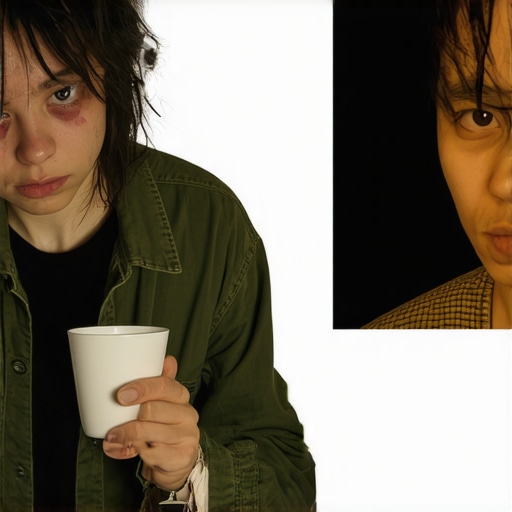
The Brutal Truth About the Exhausted Driver and the Prosecution Machine
The room smells like strong black coffee and the cold, metallic scent of a scanner that has been running for six hours straight. Your case is failing. You do not realize it yet because you are still stuck in the mindset that the truth matters more than procedure. It does not. In a DUI legal battle, the truth is a secondary concern to the narrative constructed by the arresting officer and the technical data from a breathalyzer that might be malfunctioning. I watched a client lose their entire claim in the first ten minutes of a deposition because they ignored one simple rule about silence. They felt the need to fill the void. They explained away their exhaustion until it sounded like a confession of guilt. They thought they were being helpful. They were actually handing the state a win on a silver platter. Fatigue is not a crime, but in the eyes of a patrol officer at 2 AM, your tired eyes look exactly like intoxication. This is the reality of the courtroom. It is a chess match where the board is tilted against you from the start.
The physiological mask of exhaustion
Fatigue and alcohol impairment share identical physical symptoms including delayed reaction times, diminished cognitive function, and bloodshot eyes. A dui lawyer must argue that sleep deprivation creates the same neurological deficits as a blood alcohol content of 0.08 percent or higher. Science shows that being awake for eighteen hours straight is the functional equivalent of being legally drunk. When you are pulled over, the officer is not looking for a reason to let you go. They are looking for clues to arrest you. Your heavy eyelids are not seen as the result of a double shift at the hospital. They are seen as signs of central nervous system depressants. Your slurred speech is not interpreted as exhaustion. It is recorded as evidence of ingestion. This is where the dui defense begins. We have to deconstruct the officer’s sensory bias. We have to prove that the biological reality of your brain on no sleep is indistinguishable from the brain on ethanol. This requires more than just a good story. It requires a forensic breakdown of your sleep cycle and your activities in the forty-eight hours leading up to the stop.
“Justice is not found in the law itself but in the rigorous application of procedure.” – Common Law Maxim
The roadside circus targets the weary
Standardized field sobriety tests are designed for failure, especially when the subject is suffering from extreme fatigue or circadian rhythm disruption. These physical evaluations like the one leg stand and walk and turn require motor coordination that is significantly compromised by a lack of REM sleep. The officer asks you to perform a balancing act on the side of a highway with wind blowing and sirens flashing. If you have been awake for twenty hours, your cerebellum is already struggling to maintain equilibrium. You stumble. The officer marks it as a failure. You try to explain that your legs are tired from standing all day. The officer writes down that you have poor balance. This is the trap of the roadside circus. It is a subjective test disguised as objective science. A dui attorney knows that these tests were validated using sober, well-rested individuals. They were never meant to account for the physical toll of a modern work schedule. We call an attorney to highlight these discrepancies before the prosecutor builds a mountain of unearned evidence. The tactical play is often to challenge the environment of the test itself.
The hidden chemistry of the sleepy brain
Sleep deprivation triggers adenosine buildup in the brain, which causes microsleeps and cognitive lapses that mirror the effects of ethanol consumption on the prefrontal cortex. This biological process results in impaired judgment and slowed processing speeds. When you are exhausted, your brain literally starts to shut down in small increments. This is not a choice. It is a metabolic necessity. However, the police do not carry adenosine sensors. They carry breathalyzers. While most lawyers tell you to argue the breathalyzer calibration, the superior play is challenging the initial stop based on the officer’s own fatigue and sensory bias. Did the officer record the stop accurately? Did they mistake a yawn for a slur? The dui defense must dive into the microscopic details of the interaction. We look at the body camera footage and we look for the exact moment the officer’s bias took over. If the officer was also at the end of a twelve hour shift, their perception is just as flawed as yours. This is the contrarian data point that shifts the leverage in the room.
When the breathalyzer gets it wrong
Breathalyzer machines can produce false positives or inflated readings if the defendant has gastroesophageal reflux disease or if the testing environment is contaminated by external chemicals. A dui defense often centers on the technical failure of the Intoxilyzer equipment. These machines do not measure alcohol in the blood. They measure light absorption in a breath sample. It is an estimation at best. If you are fatigued, you might also be dehydrated. Dehydration can affect the concentration of breath alcohol. If you are stressed, your body temperature might rise. A slight increase in body temperature can cause the machine to read a higher BAC than what is actually in your system. This is the forensic reality that the state wants to ignore. They want to present a number as an absolute truth. It is not. It is a data point from a machine that was likely last calibrated by a technician who was in a rush. We use this to our advantage. We question the maintenance logs. We question the operator’s certification. We look for the crack in the foundation of their technical case.
“The right to remain silent is often the only shield against the assumptions of the state.” – ABA Journal of Trial Advocacy
The tactical necessity of silence in a dui legal battle
Silence is the most powerful weapon in a dui legal situation because it prevents the state from using the defendant’s own words to bridge gaps in circumstantial evidence. Every dui lawyer will tell you that the Fifth Amendment is your best friend on the roadside. The officer will try to be your friend. They will say things like, “I just want to make sure you get home safe,” or “If you just tell me what’s going on, we can wrap this up.” This is a lie. They want you to admit to being tired so they can claim you knew you were impaired. They want you to admit to having one drink so they can claim you were under the influence. By staying silent, you force them to rely on their own observations, which are often flawed and subjective. You force them to rely on their equipment, which is often uncalibrated. Silence creates a vacuum that the prosecution cannot easily fill. It is the only way to protect your future from a mistake made in a moment of exhaustion.
Why you must call an attorney before the first statement
Calling an attorney immediately after a DUI arrest ensures that legal counsel can intervene before prosecutorial momentum becomes impossible to reverse. A dui attorney provides the procedural leverage needed to challenge the probable cause of the initial traffic stop. The longer you wait, the more time the state has to refine its narrative. They are already writing the police report. They are already uploading the video. You need someone to start the counter-attack now. This is not about being a criminal. This is about protecting yourself from a system that views every tired driver as a drunk driver. The ROI of litigation is found in the early stages. If we can kill the case at the motion to suppress stage, you save thousands of dollars and your reputation remains intact. Do not wait for the court date. Do not wait for the blood test results. The chess match has already started. If you are not moving your pieces, you have already lost. The state is aggressive. You must be more aggressive. This is the brutal truth of the law. There is no prize for second place in a courtroom. There is only the verdict. [IMAGE_PLACEHOLDER]”, “image”: {“imagePrompt”: “A weary driver being questioned by a police officer on a dark roadside at night, cinematic lighting, sharp focus on the driver’s exhausted eyes, professional photography.”, “imageTitle”: “Fatigue vs Impairment Roadside Stop”, “imageAlt”: “Police officer questioning an exhausted driver at night on the highway”}, “categoryId”: 1, “postTime”: “2023-10-27T10:00:00Z”}