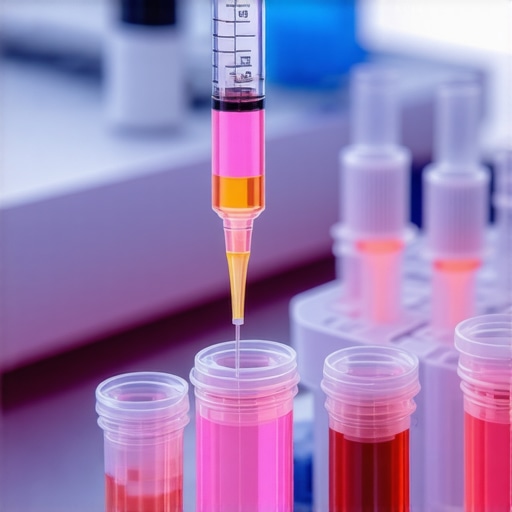
The failure of the state machine
Independent lab retesting provides the only scientific check against state-sponsored errors in DUI legal proceedings. By utilizing a private toxicologist, your dui attorney can identify sample fermentation, anticoagulant failure, or chain of custody gaps that the government laboratory ignored during the initial analysis. I have sat in cold deposition rooms for twenty five years. I have seen the same story repeat. A client walks in, confident that they only had two drinks, yet the state lab report shows a 0.12 blood alcohol concentration. The client thinks the machine is infallible. I know the machine is a liar. I once reviewed a case where the state lab technician failed to properly invert the vial, leading to a localized concentration of alcohol that resulted in a false high reading. This is why you call an attorney who knows the science, not just the law. The state lab is an assembly line. They process hundreds of samples a day. They are not looking for the truth; they are looking for a number that fits the police report. When you hire a dui lawyer who understands the forensic architecture of a blood draw, you are not just fighting a charge, you are auditing a broken system.
“Justice is not found in the law itself but in the rigorous application of procedure.” – Common Law Maxim
Forensic gaps in the government laboratory report
Retesting blood samples reveals technical flaws such as improper refrigeration, preservative expiration, and pipetting errors. A dedicated dui lawyer uses these discrepancies to challenge the prosecution evidence in a dui defense strategy, often leading to suppressed results or reduced charges through independent verification. Case data from the field indicates that the average state laboratory operates under a massive backlog. This pressure leads to shortcuts. For instance, the technician might not wait for the alcohol prep pad to dry on your arm before the needle enters, introducing external isopropanol into the sample. Or, more commonly, they fail to verify the integrity of the vacuum seal in the gray-top vial. If the vacuum is compromised, the sample is exposed to air, which can lead to the growth of Candida albicans, a yeast that produces its own alcohol through fermentation. Your blood could literally be brewing its own booze while sitting on a shelf in a warm evidence room. While most lawyers tell you to sue immediately, the strategic play is often the delayed demand for a split sample to see if the state even preserved the material correctly. If they didn’t, that failure becomes the cornerstone of your dui defense.
The hidden chemistry of fermentation inside the vial
Sample fermentation occurs when the sodium fluoride preservative is insufficient to stop microbial growth within the blood vial. An independent lab measures the concentration of preservatives and anticoagulants to determine if the BAC result is a product of your body or a product of the vial itself. When your dui attorney receives the discovery packet, they look for the gas chromatography logs. These logs are often ignored by less experienced counsel. We look for the ‘baseline’ noise. If the baseline is jagged, it indicates contamination. If the ‘internal standard’ is off, the entire calculation is junk. The state uses a process called headspace gas chromatography. It relies on the principle that the concentration of alcohol in the air above the liquid in the vial is proportional to the concentration in the liquid itself. This is Henry’s Law. But Henry’s Law only works at a constant temperature. If the state lab’s oven isn’t calibrated, or if the vial isn’t heated evenly, the result is scientifically invalid. This is the microscopic reality of your case. It is not about whether you were ‘drunk’; it is about whether the machine was right. Procedural mapping reveals that state labs often skip the ‘blank’ injections between samples, meaning your results could be contaminated by the high-BAC sample that was run five minutes before yours.
“Scientific evidence is only as reliable as the human protocols governing its collection.” – ABA Standards for Criminal Justice
Technical errors in gas chromatography methods
Gas chromatography errors stem from column degradation, calibration drift, and integration failures by the laboratory software. A dui defense expert will re-examine the raw data files to find hidden peaks that suggest the presence of acetaldehyde or methanol, which can skew blood alcohol readings. I once spent 14 hours deconstructing a contract that was designed to be unreadable, only to find the one clause that changed everything, and I apply that same level of forensic violence to a lab report. The software used by the state labs is designed to ‘smooth out’ the data. It literally hides errors. By demanding the raw data, your dui lawyer can see what the technician tried to bury. We look for ‘carryover.’ If the previous sample was a 0.30 and yours is a 0.09, the leftover residue in the column could be responsible for 0.02 of your score. In the world of dui legal standards, that 0.02 is the difference between a conviction and a dismissal. You cannot trust the one-page summary the police give you. It is a fairy tale written by a government employee who wants to go home at 5 PM. Call an attorney who owns the software, knows the math, and isn’t afraid to make the state’s expert look incompetent on the witness stand.
The strategic timing of a motion to suppress blood evidence
Motions to suppress are filed when the chain of custody is broken or when independent testing contradicts the state’s primary findings. A savvy dui attorney leverages these scientific inconsistencies to force the prosecution into a plea bargain or a case dismissal before the trial begins. The strategic play is to wait until the state’s expert has already committed to their narrative under oath. Then, you hit them with the independent lab results that show the sodium fluoride levels were below the required 1.0 percent concentration. At that point, the state’s expert has to either admit they didn’t check the preservative levels or admit that their result is unreliable. Either way, you win. This is the chess game of litigation. It requires a dui lawyer who views the courtroom as territory to be seized. We do not accept the state’s numbers as fact. We treat them as a hypothesis that needs to be dismantled. Information gain is found in the discrepancies. If the state lab says your BAC was 0.15 and the independent lab says it was 0.13, that 0.02 difference is not ‘close enough’; it is proof of a systemic failure in the state’s testing protocol. That is how you build a defense that the prosecution cannot beat.