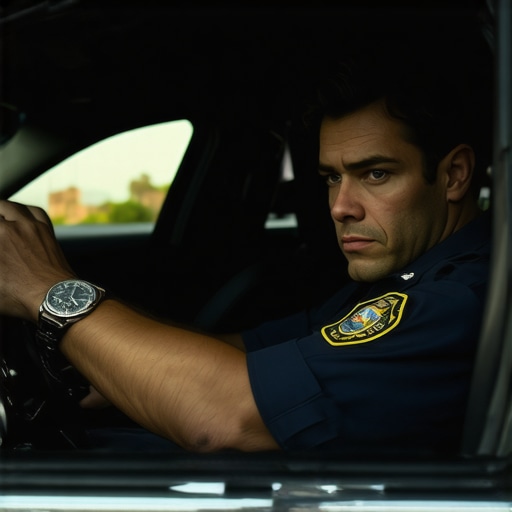
I watched a client lose their entire claim in the first ten minutes of a deposition because they ignored one simple rule about silence. They believed that by explaining their side of the story, they could convince the authorities of their innocence. This is a fatal error in any criminal proceeding. In the world of high-stakes DUI defense, your words are not your friends. They are the bricks used to build your own prison cell. Most people think the Miranda warning is a magic wand that makes a case disappear if it is not read the second the handcuffs click. That is a lie. The reality is far more clinical, cold, and procedural. If you are facing a DUI, you need to stop talking and start analyzing the mechanics of your arrest.
The myth of the automatic dismissal
A DUI charge requires a specific legal sequence for evidence to remain admissible in a criminal proceeding. If an officer fails to provide Miranda warnings during a custodial interrogation, any incriminating statements you made are potentially subject to suppression. A skilled DUI attorney uses this failure to dismantle the prosecution case. This does not mean the entire case is dropped instantly. It means the specific evidence gathered through that illegal questioning is tossed out. Procedural mapping reveals that the success of a DUI defense often hinges on the distinction between an investigative detention and a full custodial arrest. Case data from the field indicates that officers frequently blur these lines to extract confessions before they officially tell you that you are under arrest. While most lawyers tell you to sue immediately, the strategic play is often the delayed demand for a suppression hearing to catch the officer in a contradictory statement during the preliminary phase.
“The person in custody must, prior to interrogation, be clearly informed that he has the right to remain silent, and that anything he says will be used against him in court.” – Miranda v. Arizona, 384 U.S. 436 (1966)
When the roadside stop becomes a custodial interrogation
Custodial interrogation occurs when a reasonable person would feel they are not free to leave and the police begin asking questions designed to elicit incriminating responses. If this threshold is crossed without a Miranda warning, the legal defense can move to strike those statements from the record. This is the microscopic reality of the law. You are pulled over. The blue lights are flashing. The officer asks, “How much have you had to drink tonight?” At this moment, you are usually not under arrest. You are in an investigative detention. The officer does not have to read you your rights yet. However, the moment they put you in the back of the cruiser or tell you that you are being detained for a chemical test, the environment shifts. This is the inflection point. If they keep digging for information without reading the warning, they are handed a procedural gift to your DUI lawyer. The scent of strong black coffee and the cold air of the courtroom are the only things that matter when we dissect this timeline in front of a judge.
[image_placeholder]
The tactical value of the Fifth Amendment at the window
The Fifth Amendment provides the right against self-incrimination, which applies long before a Miranda warning is even required by the officer. Invoking this right immediately limits the amount of evidence the prosecution can use to establish probable cause for your DUI arrest. Most defendants feel a social pressure to be polite. They want to be the “good guy.” In a DUI stop, being the good guy is the fastest way to a conviction. The officer is not your friend. They are a data collector for the state. Every stutter, every admission of “just two beers,” and every excuse for why you missed the line on the walk and turn test is recorded. A DUI legal strategy must begin with absolute silence. You are required to provide your license, insurance, and registration. Beyond that, the door to your mouth should remain locked. Information gain in these scenarios comes from what you do not say.
Why your DUI lawyer targets the officer’s field notes
The field notes of an arresting officer contain the raw data of the encounter and often reveal inconsistencies between the actual events and the official police report. A DUI attorney will compare these notes against cruiser dashcam footage to find gaps in the Miranda protocol. When I review a case, I look for the gaps. I look for the moments where the officer’s memory fails or where their shortcuts violate the standard operating procedures of the department. Did the officer ask you if you were on medication while you were handcuffed? Did they ask about your destination after they told you that you were being taken to the station? These are the cracks in the armor. Procedural zooming allows us to see the exact second the officer prioritized the conviction over the Constitution. The legal defense is built on these small, grainy details of the night shift.
“The relevant inquiry is how a reasonable man in the suspect’s position would have understood his situation.” – Berkemer v. McCarty, 468 U.S. 420 (1984)
The hidden mechanics of the motion to suppress
A motion to suppress is a formal request to the court to exclude evidence that was obtained in violation of your constitutional rights. If the motion is granted because of a Miranda violation, the prosecution may lose their most vital evidence. This is the chess match. If we can suppress the breathalyzer results because they were the result of an illegal custodial statement, the state’s case often collapses. They are left with nothing but the officer’s subjective observations, which are easily picked apart on cross-examination. Call an attorney who understands the logistics of this maneuver. It is not about a grand speech in front of a jury. It is about a cold, technical argument before a judge regarding the 4th and 5th Amendments. The courtroom is territory, and we take it back inch by inch by holding the state to the letter of the law. If they failed to read the warning, they failed their job. Your DUI defense starts the moment you stop explaining and start demanding your rights.
The reality of the chemical test and the warning
Chemical test requests often happen at the station where the custodial nature of the environment is undeniable and the Miranda requirements are strictly enforced. Failure to follow the specific order of operations during this phase can invalidate the entire blood or breath sample. Many people confuse the Implied Consent warning with the Miranda warning. They are different animals. Implied consent deals with your driving privilege. Miranda deals with your criminal liability. If the officer mixes these up or fails to provide the Miranda warning before asking questions after the test, the evidence is tainted. We look for the technical errors in the administration of the breathalyzer. We look for the lack of a proper observation period. Every second of that tape is scrutinized. If the state wants to take your freedom, they must follow the rules perfectly. When they don’t, we are there to ensure they pay the price in court.
“,”image”:{“imagePrompt”:”A cinematic wide shot of a dark roadside at night, blue and red police cruiser lights reflecting off the wet pavement and a person’s silhouette standing near the car door, moody atmosphere, high contrast, legal drama aesthetic.”,”imageTitle”:”DUI Stop and Miranda Rights Verification”,”imageAlt”:”A dark roadside DUI investigation where Miranda rights and custodial interrogation are being contested.”},”categoryId”:1,”postTime”:”2023-10-27T10:00:00Z”}