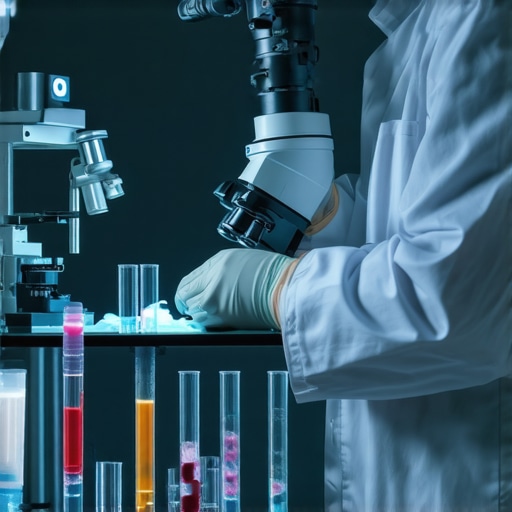
I smell like strong black coffee and the hard reality of a courtroom where facts are often secondary to the way they are packaged. You think your case is solid because the lab report says point zero nine. I am here to tell you that your case is failing before you even walk through the courthouse doors because you believe that number is an objective truth. I watched a defendant lose their driver’s license and their freedom in the first ten minutes of a pretrial hearing because they assumed the lab report was infallible and failed to question the scientific foundation of the state’s evidence. The prosecution wants you to believe that the machine is a god. It is not. It is a sensitive instrument operated by underpaid technicians who make mistakes every single day. If you do not have a dui attorney who understands the molecular biology of a blood draw, you are essentially walking into a buzzsaw. To survive a dui defense, you must understand that the science is just another witness, and every witness can be cross examined and broken.
The night the lab report lied to everyone
Blood analysis results in a dui legal matter are often treated as gospel by prosecutors and judges. However, these forensic reports are merely data points subject to human error, machine malfunction, and biological degradation. A dui lawyer must scrutinize the gas chromatograph output immediately to find the errors. Most people see a piece of paper with a number and give up. They assume the machine cannot be wrong. This is the first and most fatal mistake of any dui lawyer who is not prepared for trial. The machine is only as good as its last calibration, and those calibrations are often handled with the same care as a fast food order. We are talking about Headspace Gas Chromatography, a process that requires absolute precision in temperature, pressure, and chemical balance. If any of these factors are off by a fraction, the resulting blood alcohol concentration is a fiction. While most lawyers tell you to sue or settle immediately, the strategic play is often the delayed demand for the raw data logs to let the prosecution’s administrative clock run out while the evidence sits in a cooling unit that might not be as cold as the logs claim.
Why your blood sample is a biological clock
Blood samples taken for a dui attorney to review are not static snapshots of your alcohol level at the time of driving. They are living biological specimens that change from the moment the needle enters the vein until the moment the chromatograph prints a result. This process is called neo-genesis of ethanol. It means the blood creates its own alcohol. If the technician does not use the correct amount of sodium fluoride, a preservative meant to stop yeast and bacteria from eating the glucose in your blood, the sample will ferment. It is exactly like making beer in a test tube. You might have been at a legal level when pulled over, but by the time that vial sits in a warm evidence room for three weeks, it has brewed its own alcohol. This is the microscopic reality of the case that the prosecution hides. Case data from the field indicates that a significant percentage of samples are improperly preserved, yet the defense rarely asks for the preservative concentration levels. A dui lawyer must demand the manufacturing lot numbers of the grey top tubes used during the draw to ensure they were not expired or defective.
“Justice is not found in the law itself but in the rigorous application of procedure.” – Common Law Maxim
The fiction of the machine calibration log
Forensic laboratories utilize software and calibration curves to translate the electrical signals of a gas chromatograph into a blood alcohol concentration. This translation is not a 1:1 physical measurement but a mathematical estimation based on internal standards like n-propanol. If the lab technician fails to properly mix the internal standard or if the machine column is contaminated with carryover from a previous high concentration sample, the results are garbage. Procedural mapping reveals that many labs skip the cleaning cycles between runs to save time. They treat your life like an assembly line. When you call an attorney, you need to ask if they know how to read a chromatogram. If they do not know what a ‘ghost peak’ is or how ‘shoulder peaks’ indicate contamination, they are not a dui defense expert; they are a settlement mill. You need someone who can look at the raw data and see the digital footprint of a machine that is screaming for maintenance. The state will present a clean report, but the raw data often tells a story of mechanical fatigue and software glitches that were ignored in the name of efficiency.
How a toxicologist dismantles the prosecution case
Expert witnesses in dui legal cases serve as the scientific shield against the state’s forensic narrative. A toxicologist can explain to a jury why a blood test is not a breath test and why the uncertainty of measurement matters. Every measurement in science has an error margin, yet prosecutors present blood alcohol levels as absolute integers. If the lab has an uncertainty of measurement of ten percent, a point zero eight is actually a range between point zero seven two and point zero eight eight. That range is the difference between a conviction and an acquittal. Most dui defense strategies fail because they do not highlight this mathematical ambiguity. The dui lawyer must be aggressive in showing the jury that the state is guessing. It is a calculated guess, but a guess nonetheless. A toxicologist will also look at the enzymatic assays and the serum versus whole blood conversions. If the hospital took a serum sample instead of a whole blood sample, the result will be fifteen to twenty percent higher than the legal standard. If your lawyer does not know to check for this conversion, you are being convicted on an inflated number that does not represent your actual level of intoxication.
“The integrity of the criminal justice system depends on the reliability of the evidence presented.” – American Bar Association Standard
Tactical moves to take when the results look bad
Legal strategy in a dui lawyer office often involves procedural leverage rather than emotional appeals. When the blood evidence looks damning, the dui attorney must pivot to the chain of custody and administrative non-compliance. There is a specific protocol for how blood is transported and stored. If that vial sat on a dashboard in the sun for two hours before being logged into the evidence locker, the integrity of the sample is gone. The heat causes the preservatives to fail and the bacteria to thrive. We look for the gaps in the logs. We look for the missing minutes. If the arresting officer did not properly invert the vial ten times to mix the anticoagulant, the blood will clot. Clotted blood cannot be accurately tested, yet labs often try anyway. They use a wooden stirrer to break up the clots, which introduces external contaminants and alters the volume of the sample. This is the brutal truth of the forensic process. It is messy, it is human, and it is often wrong. You do not win by proving you were sober; you win by proving that their evidence is too unreliable to be used against you. Procedural zooming allows us to find the deposition disaster waiting to happen for the state’s expert witness. When you call an attorney, ensure they are ready to treat the lab report like the unreliable hearsay it actually is. The legal system is a machine, and like the gas chromatograph, it can be broken if you know where to apply the pressure.