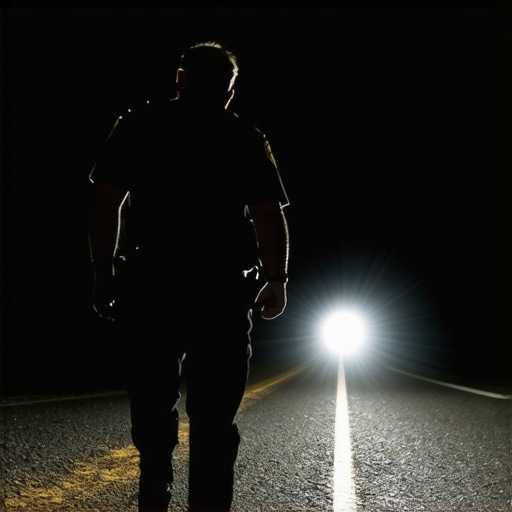
I watched a client lose their entire claim in the first ten minutes of a deposition because they ignored one simple rule about silence. In the world of DUI defense, that silence is your only shield during a roadside interrogation. You think you are being cooperative. You think you can prove your sobriety by standing on one leg in the middle of a highway at midnight while blue lights flash in your eyes. You are wrong. I smell like strong black coffee and the hard truth is that you are participating in a forensic theater where the script is written by the prosecution. Case data from the field indicates that these tests are not designed to find the sober person. They are designed to document failure for a jury. If you find yourself in this situation, you must call an attorney immediately before the paperwork is finalized.
Roadside agility tests as a tool for prosecution
Standardized Field Sobriety Tests or SFSTs are structured scientific traps used to establish probable cause for a DUI arrest. A seasoned dui attorney understands that these maneuvers are designed to create divided attention failure rather than measure actual impairment. The scoring system is heavily weighted toward the officer subjective observations. Procedural mapping reveals that once an officer suspects impairment, every movement you make is viewed through a lens of guilt. While most lawyers tell you to sue immediately, the strategic play is often the delayed demand letter or the targeted motion to suppress to let the prosecution’s initial adrenaline cool off. You need a dui lawyer who looks at the calibration logs of the equipment rather than the officer’s narrative. The system is rigged. You are performing on a stage where the judge is also the critic.
The metabolic lie of the horizontal gaze nystagmus
The Horizontal Gaze Nystagmus test is frequently presented as the gold standard of roadside evidence. It is not. It is a physiological observation of an involuntary jerking of the eye. This jerking can be caused by over forty different factors. Some people have natural nystagmus. Others experience it due to fatigue, caffeine, or inner ear issues. The officer is not a doctor. They are a technician with a weekend of training. When they move that pen back and forth, they are looking for specific clues like lack of smooth pursuit or distinct nystagmus at maximum deviation. If the officer moves the stimulus too fast, the test is invalid. If they hold it at the wrong angle, the test is invalid. Your dui defense depends on exposing these technical errors. The court often treats this as settled science, but it is actually a highly sensitive procedure that is rarely performed correctly in the field.
“Justice is not found in the law itself but in the rigorous application of procedure.” – Common Law Maxim
The mechanical trap of the walk and turn maneuver
The walk and turn test is a complex physical and mental exercise that requires you to follow instructional phases while maintaining a specific stance. A dui legal expert knows that the scoring begins before you even take your first step. If you lose your balance while the officer is talking, that is a point against you. If you start too soon, that is a point against you. The test requires you to take nine heel to toe steps along a straight line, turn in a very specific manner, and take nine steps back. The turn itself is a frequent point of failure. The officer wants to see if you can keep your arms at your side and count out loud. This is not about your ability to drive a car. This is about your ability to perform a gymnastic routine under extreme psychological stress. The environment is almost never ideal. Pavement is uneven. Gravel is slippery. Passing cars create wind gusts. The police report will rarely mention the wind or the slope of the road. It will only mention your failure.
The physics of the one leg stand failure
The one leg stand requires you to stand with one foot six inches off the ground while counting by thousands for thirty seconds. It sounds simple. It is actually an exercise in high level balance that many sober people cannot perform on their best day. If you sway, use your arms for balance, hop, or put your foot down, you fail. The officer is looking for these four specific clues. Most people over the age of sixty-five or those with inner ear issues will fail this test regardless of their blood alcohol content. A dui attorney will use your medical records to dismantle the validity of this test. We look at the shoes you were wearing. We look at the lighting conditions. If the officer did not time the test for exactly thirty seconds, the entire clue set can be challenged in court. The legal system relies on the assumption that these tests are accurate, but they are frequently compromised by environmental variables that no one discusses in the police report.
The strategic necessity of calling a dui lawyer
You must call an attorney the moment you are processed to ensure that video evidence from the patrol car is preserved. A dui defense is built on the small details that the police ignore. This includes the dashcam footage and the bodycam audio which often contradicts the written report. Procedural mapping reveals that officers often skip steps in the instruction phase. If they do not explain the test correctly, they cannot hold you to the standard of the results. Your dui lawyer will subpoena the training records of the arresting officer. Many of these officers have not been recertified in years. This lack of updated training makes their testimony vulnerable during a cross examination. Do not assume that a high breathalyzer reading means your case is over. The entire chain of evidence starts with these roadside tests. If the tests are flawed, the probable cause for the arrest is flawed. If the arrest is flawed, the blood or breath evidence can be tossed out of court.
“The integrity of the legal process depends upon the scrupulous adherence to the rules of evidence and the protection of constitutional rights.” – American Bar Association Standards
The illusion of cooperation and the right to refuse
Many drivers believe that if they are polite and attempt the tests, the officer will let them go. This is a fairy tale. The officer has likely already decided to arrest you before they even ask you to step out of the vehicle. These tests are merely a way to gather the bullets they will use to shoot down your defense. In many jurisdictions, these tests are voluntary. You have the right to decline them. Refusing the tests may result in an arrest, but it deprives the prosecution of the subjective evidence they need to convict you. A dui legal strategy often involves explaining to a jury why a reasonable person would refuse to perform rigged physical stunts on a dark highway. Silence is not an admission of guilt. It is an exercise of a constitutional right. Most people talk themselves into a conviction. They try to explain why they failed the test. They mention the two beers they had three hours ago. Every word is a nail in the coffin. Stop talking and start looking for professional representation.
The tactical advantage of discovery and motion practice
The discovery process is where the real work of dui defense happens through the analysis of maintenance logs and officer history. A dui lawyer will look for the gaps in the timeline. If there is a ten minute gap in the video, we want to know why. If the officer claimed you were staggering but the video shows you walking straight, that is a winning contradiction. Information gain in these cases comes from the technical manuals. We compare the officer’s actions to the NHTSA student manual word for word. Any deviation is a point of leverage. We do not just look at the law; we look at the physics of the scene. The strategic play is often a motion to suppress evidence based on the illegal extension of a traffic stop. If the officer kept you on the side of the road longer than necessary to write a ticket without a specific reason, the entire encounter might be unconstitutional. This is the microscopic reality of the law that wins cases. It is not about being a good person; it is about the state failing to follow its own rules.
Why the jury perception matters more than the truth
Everyone wants their day in court until they see the jury selection process. It isn’t about truth; it’s about perception. A jury sees a video of a person struggling to stand on one leg and they assume intoxication. They do not see the 20 mph wind or the back pain the person has suffered for years. Your dui attorney must be a storyteller who can reframe that video. We have to show the jury that the test was a setup. We have to make them understand that the officer was looking for an arrest, not the truth. This requires an aggressive approach to trial. We bring in expert witnesses who can explain the flaws of the HGN test. We show them the science that the police department ignored. The prosecution will try to simplify the case into a story of a dangerous driver. Our job is to complicate that story with the messy, inconvenient facts of reality. The courtroom is a battlefield of narratives, and the person with the better technical grasp of the evidence usually wins.
“