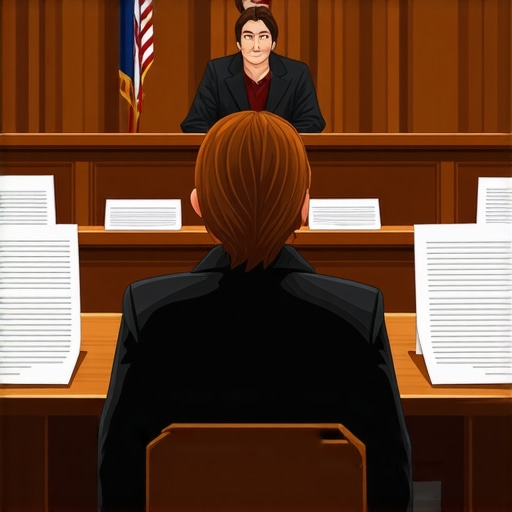
The Brutal Truth About the Administrative License Hearing
I watched a client lose their entire claim in the first ten minutes of a hearing because they ignored one simple rule about silence. They were asked a basic question about the timeline of their evening, and instead of providing a concise answer, they volunteered information about a specific medication they had taken. That single admission gave the hearing officer the nexus required to uphold the suspension, regardless of the blood alcohol evidence. My coffee was cold, the air in the room felt like lead, and the case was functionally dead because the client spoke when they should have listened. This is the reality of the administrative process; it is not a place for stories or explanations. It is a procedural battlefield where the state holds most of the high ground, and any slip of the tongue becomes a permanent part of the record. To survive, you must treat this as a forensic autopsy of the police report, not a forum for your grievances.
The immediate threat to your driving privilege
The license suspension hearing is an administrative proceeding where the state determines if your driving privilege should be revoked following a DUI arrest. To win, a dui lawyer must challenge the legal basis of the stop. You must call an attorney immediately to preserve your rights before the dui attorney loses the window for a dui defense.
When you are arrested for driving under the influence, the officer seizes your plastic license and replaces it with a pink piece of paper. That paper is your temporary permit, but it expires in thirty days. Most drivers wait until the paper is about to expire before they think about their defense. This is a fatal mistake. You have exactly ten days from the date of the arrest to request an administrative hearing. If you miss that window, the suspension begins automatically, and no amount of legal maneuvering in criminal court will restore your license. The administrative side of a DUI is entirely separate from the criminal side. You can win your criminal case and still have a suspended license because you ignored the administrative timeline. The hearing is your only chance to stop the clock. It is a formal process conducted by a hearing officer who acts as both the judge and the prosecutor. They are not there to be your friend; they are there to verify that the officer followed the basic requirements of the vehicle code.
“Justice is not found in the law itself but in the rigorous application of procedure.” – Common Law Maxim
The brutal reality of the administrative process
The administrative process is a cold, clinical environment where the dui legal standards are significantly lower than in a criminal court. Your dui defense relies on the dui lawyer finding procedural errors. If you fail to call an attorney, you face a dui attorney‘s nightmare: a hearing officer with unfiltered power over your mobility.
The burden of proof in these hearings is the preponderance of the evidence, which means the state only needs to prove it is more likely than not that you were driving with a prohibited blood alcohol level. This is a much lower bar than the beyond a reasonable doubt standard used in criminal trials. In this room, the police report is often accepted as absolute truth unless a skilled representative can tear it apart. The hearing officer will look at three primary issues: Did the officer have reasonable cause to believe you were driving under the influence? Was the arrest lawful? Were you driving with a blood alcohol concentration of .08 percent or higher? If they check those three boxes, your license is gone. There is no middle ground, no sympathy for your need to get to work, and no consideration for your clean driving record. It is a binary outcome based on the paperwork presented on the desk. To fight this, you have to look at the microscopic details of the stop, the calibration of the breath machine, and the exact timing of the chemical test.
The trap of the unrepresented driver
An unrepresented driver is a target for the hearing officer because they do not understand the rules of evidence or dui defense. You must call an attorney to navigate the dui legal framework. A dui lawyer identifies hearsay in the police report, while a dui attorney cross examines the officer to find inconsistencies.
I have seen countless individuals walk into these hearings thinking they can explain their way out of a suspension. They tell the hearing officer about how they only had two drinks or how they were swerving to avoid a cat. All they are doing is providing the state with the evidence needed to uphold the suspension. The hearing officer is trained to listen for admissions. When you represent yourself, you are a witness for the state. You are required to testify if called upon, and without a legal shield, you will be dismantled by a few pointed questions. The procedural rules are complex. For example, the state relies on the business record exception to hearsay to admit the breath test results. If you do not know how to object to the foundation of those records, they come in without a fight. A professional knows that the goal is not to prove you were sober; the goal is to prove the state’s evidence is unreliable or that the officer failed to follow the mandatory observation period before the test.
“The right to be heard is of little avail if it does not comprehend the right to be heard by counsel.” – American Bar Association Journal
Evidence that the hearing officer uses against you
The hearing officer relies on the sworn statement of the arresting officer and the chemical test results as the primary evidence. A dui lawyer must analyze the calibration logs for the dui defense. You should call an attorney to ensure the dui attorney reviews every dui legal document for technical errors.
The primary piece of evidence is the DS-367 form. This is the officer’s sworn statement. It contains the narrative of the stop, the results of the field sobriety tests, and the chemical test data. If the officer makes a mistake on this form, such as forgetting to sign it or failing to note the time of the test, it can be fatal to the state’s case. However, these mistakes are often subtle. You have to look at the calibration logs of the specific breathalyzer used. These machines must be checked every ten days or every one hundred fifty tests. If the log shows the machine was out of tolerance, the results might be excluded. There is also the issue of the three hour rule. For the state to use the legal presumption that your blood alcohol level at the time of the test was the same as the time of driving, the test must be taken within three hours of the stop. If the officer delayed the test, that presumption disappears, and the state must provide expert testimony to prove what your level was while you were behind the wheel.
Why the police report lacks objective truth
The police report is a subjective narrative designed to support a DUI arrest and justify the license suspension. Your dui defense involves exposing the bias in the dui legal paperwork. When you call an attorney, the dui lawyer and dui attorney look for contradictions between the video footage and the written report.
Officers are trained to write reports that lead to a conviction. They use