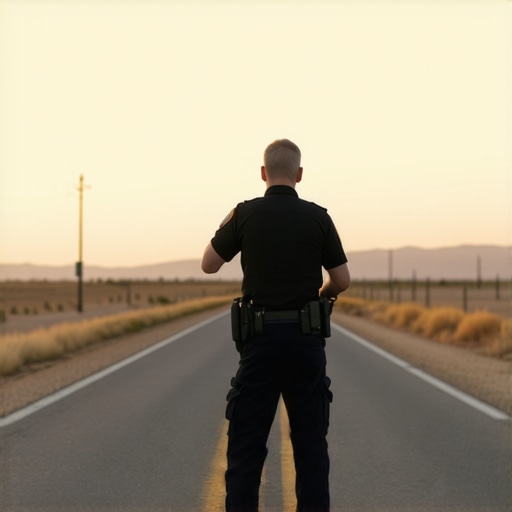
The rigged nature of the roadside circus
Standard field sobriety tests serve as the primary tool for law enforcement to gather probable cause for a DUI arrest. These physical and mental coordination exercises are technically voluntary in most jurisdictions, yet officers rarely explain that drivers have the right to refuse them without immediate license suspension penalties. I smell the stale odor of burnt coffee every morning before I look at these police reports. I watched a client lose their entire claim in the first ten minutes of a deposition because they ignored one simple rule about silence. They thought they were being helpful by explaining their balance issues to the officer. In reality, they were handing the prosecution a confession. These tests are not meant to be passed. They are designed to document failure. When a dui lawyer looks at the footage, they see a government agent looking for specific clues of impairment that the average person would display under perfect sobriety. The roadside environment is the first variable that works against you. You are standing on the shoulder of a highway with police cruisers flashing high intensity blue and red strobes into your retinas. This creates a physiological phenomenon called optokinetic nystagmus, which makes your eyes jerk regardless of your blood alcohol content. Yet, the officer will mark it down as a failure on the dui legal scorecard. You are being asked to perform Olympic level balance feats while traffic zooms past at seventy miles per hour. The wind resistance alone is enough to push a sober person off their center of gravity. Most people believe that if they just try their best and act polite, the officer will let them go. That is a fantasy. By the time the officer asks you to step out of the car, the decision to arrest has likely already been made. The tests are merely the evidentiary seasoning for the police report. Every stumble, every twitch, and every instance of starting a second too early is recorded as a definitive sign of intoxication. This is why you must call an attorney before you say a single word more than necessary. The dui attorney is the only person in the room who cares about the actual science behind your movement. The prosecution only cares about the checkboxes on the form.
What the Horizontal Gaze Nystagmus reveals about government intent
Horizontal Gaze Nystagmus or HGN is an involuntary jerking of the eyeball that occurs when the eye gazes to the side. Officers use a stimulus like a pen or flashlight to track this movement and claim it proves alcohol consumption or drug impairment. It is the most scientifically backed test in the battery, yet it is frequently administered incorrectly in the field. The officer is supposed to hold the stimulus twelve to fifteen inches from your face. If they hold it too high, they induce vertical nystagmus. If they move it too fast, they miss the onset. I have seen hundreds of bodycam videos where the officer moves the pen like they are trying to swat a fly. This creates false positives. There are over forty different causes of nystagmus that have nothing to do with alcohol. These include caffeine, nicotine, aspirin, inner ear infections, and simple fatigue. If you have been awake for eighteen hours, your eyes will jerk. If you have a high fever, your eyes will jerk. The officer does not care about your medical history. They are looking for six specific clues. If they find four, they claim they have a high statistical probability of impairment. It is a mathematical trap disguised as a medical exam.
“Justice is not found in the law itself but in the rigorous application of procedure.” – Common Law Maxim
This procedure is rarely followed to the letter. The nhtsa manual is the bible for dui defense, but most officers have not read it since the academy. They rely on muscle memory and bias. They want to find the clues, so they find them. A skilled dui lawyer will dismantle the officer’s technique by showing the jury that the eye movement was caused by the officer’s own error or the environment. The flashing lights of the patrol car are the biggest culprit. If the officer leaves those lights on while performing the HGN, the results are scientifically invalid. Yet, they do it every single night. They prioritize their own safety over the integrity of the evidence, then they expect the court to treat that evidence as gospel. It is a conflict of interest that goes unchallenged in most courtrooms because the defense attorney is not aggressive enough to call it out.
The physiological impossibility of the Walk and Turn
The Walk and Turn test requires a defendant to take nine heel to toe steps along a straight line, turn in a specific manner, and return. This is a divided attention task meant to test your ability to process verbal instructions while performing physical movements. If you lose your balance while listening, that is a clue. If you start before the instructions are finished, that is a clue. If you leave more than half an inch between your heel and toe, that is a clue. It is a test of perfection, not a test of sobriety. Most people over the age of fifty or those with a body mass index over a certain threshold are physically unable to perform this test under the best conditions. If you have a back injury, a knee problem, or even a tight pair of shoes, you are going to fail. The officer will ask if you have any physical ailments, but they will ignore the answer once the test begins. They will tell you to imagine a straight line if one is not painted on the asphalt. Expecting a human being to walk an imaginary line in the dark while a man with a gun watches them is a psychological stressor that causes fine motor skill degradation. This is the reality of dui legal maneuvering. The state wants to present you as a stumbling drunk, but a dui attorney can show that you were a nervous citizen struggling with a balance exercise that was designed by bureaucrats who never had to do it on the side of a highway at 2 AM. The turn itself is a complex series of small steps. If you turn the wrong way, you fail. If you take ten steps instead of nine, you fail. It is a memory test as much as a balance test. When the adrenaline is pumping and the lights are flashing, the brain’s prefrontal cortex often glitches. This is not intoxication; it is human nature. The prosecution will try to use your confusion as proof of guilt. They will argue that a sober person could follow simple instructions. They ignore the fact that the instructions are intentionally long and convoluted to ensure a mistake is made. This is why a dui defense strategy must focus on the biological response to stress.
Why the One Leg Stand is a balance test disguised as a memory trap
The One Leg Stand involves standing on one foot and counting aloud by thousands for thirty seconds or until told to stop. Law enforcement looks for four specific clues of impairment including swaying, using arms for balance, hopping, or putting the foot down. This test is the most difficult for the average person to complete. Most humans begin to lose their static balance after fifteen seconds. The nhtsa research itself admit that thirty seconds is the threshold where even sober individuals begin to struggle. The officer knows this. They will wait until you reach twenty five seconds and then watch like a hawk for the slightest tilt of your torso. If you move your arms more than six inches away from your sides, you have failed one fourth of the test. If you are wearing heels, boots, or even flip flops, the surface area of your contact with the ground is compromised. The gravel on the side of the road is uneven. The wind from passing trucks creates a vortex effect. These are all environmental factors that the officer conveniently forgets to mention in the report. They simply write that the subject was unsteady on their feet. I have seen dui defense cases won simply because the dui lawyer brought a level to the scene of the arrest and showed that the road had a four degree slope. That four degree slope makes it physically impossible to stand on one leg for thirty seconds without swaying. The clues are subjective. What one officer calls swaying, another might call a natural adjustment. There is no machine measuring the movement; there is only the biased eye of the person who wants to make an arrest to meet a quota or justify their shift.
“The right of the people to be secure in their persons, houses, papers, and effects, against unreasonable searches and seizures, shall not be violated.” – Fourth Amendment, US Constitution
The one leg stand is a search of your physical capabilities. If the search is conducted under conditions that guarantee a specific result, it is not a search for truth; it is a search for evidence of a crime that may not have been committed. A dui attorney will look for the specific timing of the test. If the officer stopped the test at twenty seconds because they already saw enough, they violated the protocol. If they let it go for forty seconds, they were fishing for a failure. Both are grounds for challenging the dui legal validity of the arrest.
How environment and officer bias dictate the score
Officer bias is a documented psychological factor in criminal justice where the observer sees what they expect to see. If an officer smells alcohol or sees a traffic violation, they enter the field sobriety test phase with a preconceived notion that the driver is impaired. This bias manifests in how they interpret ambiguous movements. A slight lean becomes a stagger. A brief pause becomes mental confusion. The environment acts as a force multiplier for this bias. Rain, wind, cold, and darkness all degrade human performance. In many dui defense scenarios, the dui lawyer will point out that the officer was wearing a heavy winter jacket while the driver was in a t-shirt, shivering. Shivering is a neuromuscular response that looks exactly like the swaying associated with alcohol consumption. The dui attorney must be a forensic expert in these moments. They must look at the weather reports, the lumen output of the streetlights, and the texture of the pavement. If the pavement was cracked or covered in debris, the walk and turn is a safety hazard, not a test. Furthermore, the verbal cues given by the officer are often aggressive and intimidating. They use a command voice that is designed to induce a freeze response. When you are scared, your fine motor skills evaporate. Your heart rate spikes, your vision narrows, and your ability to count by thousands while balancing on one leg vanishes. This is the fight or flight response. The prosecution will tell the jury that your shaking hands were a sign of delirium tremens or simple intoxication. The dui lawyer will tell the jury that it was the result of a terrifying encounter with the state’s police power. Understanding the geography of the arrest is procedural mapping 101. Case data from the field indicates that arrests made on steep inclines or in high traffic areas have a much higher rate of wrongful conviction because the physical tests are unreliable. The dui legal system relies on the jury believing the officer is a neutral observer. My job is to prove they are a biased participant in a flawed experiment.
The tactical move to refuse or challenge the results
The most strategic play in many dui defense cases is often the refusal to participate in field sobriety tests. While most people fear that refusal leads to an automatic arrest, the truth is that you are often going to be arrested anyway if you perform the tests. By refusing, you deny the prosecution the video evidence of you stumbling or failing complex instructions. You leave them with only the officer’s subjective word rather than a thirty minute movie of your worst moments. If you have already taken the tests, the challenge moves to the suppression hearing. A dui lawyer will file a motion to suppress based on procedural errors. If the nhtsa standards were not met, the results of the tests should not be admitted as evidence of impairment. This is the legal leverage that leads to reduced charges or dismissals. The dui legal battle is won in the fine print of the officer training manual. I have seen cases where the officer failed to ask about corrective lenses before the hgn test, which rendered the entire arrest unconstitutional because the probable cause was built on a flawed foundation. You need to call an attorney who understands that litigation is about finding the one procedural crack that brings down the whole building. Information gain is found in the dashcam audio. Listen to how the officer explains the tests. If they skip even one sentence of the standardized instructions, the test is no longer standardized. If it is not standardized, it is not validated. If it is not validated, it is junk science. The dui attorney uses this to create reasonable doubt. While most lawyers tell you to sue immediately or settle for the first plea deal, the strategic play is often the delayed demand letter or the aggressive motion to strike the sobriety test results from the record. You must treat the courtroom like a procedural battlefield where the nhtsa manual is your primary weapon.
Your immediate steps after the flashing lights fade
DUI defense begins the moment the handcuffs are removed and you are released from custody. You must document everything while the memory is fresh. Write down the road conditions, the weather, the shoes you were wearing, and exactly what you said to the officer. Do not post about the incident on social media. The prosecution tracks these platforms to find admissions of guilt or inconsistent statements. Your next move is to call an attorney who specializes in dui legal defense. Not a general practitioner, but someone who spends their life dissecting police reports. You need a dui attorney who has the nhtsa certification themselves. If they know the tests better than the cop who arrested you, they can cross examine the officer into submission. Procedural mapping reveals that the first 48 hours are critical for preserving evidence like surveillance footage from nearby businesses or obtaining medical records that explain your physical limitations. If you have a pre-existing condition like vertigo or a spinal injury, get to a doctor immediately to have it documented in the context of the arrest date. This creates a paper trail that is hard for the prosecutor to ignore. The dui defense strategy is built on technicalities because the tests themselves are technical traps. Every dui lawyer knows that the government relies on your compliance and your ignorance. Once you arm yourself with legal counsel and scientific facts, the power dynamic shifts. The field sobriety test is a tool of the state, but the courtroom is a place of rules. If the officer broke the rules, you have the leverage to win. Do not let a bad night on the side of the road turn into a permanent conviction. The litigation architect views your case as a puzzle where the police have forced the pieces to fit. My job is to dismantle that false picture and show the jury the brutal truth about the roadside circus.
Comments are closed.