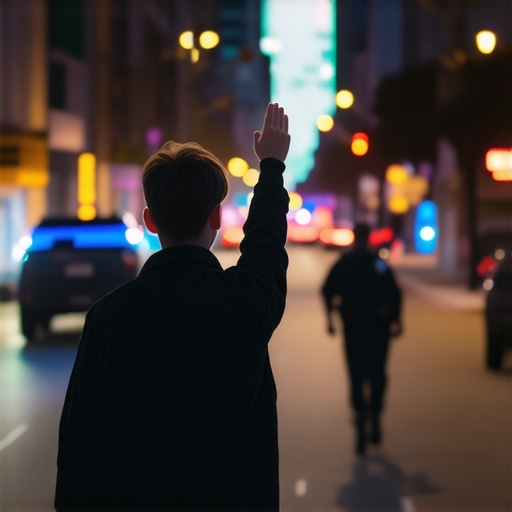
The air in my office usually smells like strong black coffee and the metallic tang of a ticking clock. I tell my clients the same thing before I even look at their files. Your case is failing. It was failing the moment you opened your mouth on the side of the road. I watched a defendant lose their entire dui defense in the first ten minutes of a roadside encounter because they ignored one simple rule about silence. They thought being a good citizen meant being an open book. It did not. It provided the prosecution with the exact narrative they needed to secure a conviction. The reality of dui legal strategy is that your words are not your friends. They are bricks being used to build the cell that will hold you. When those blue lights flicker in your rearview mirror, you are not in a conversation. You are in a forensic collection environment. Every stutter, every smell, and every admission of having one glass of wine is recorded, timestamped, and weaponized. This is not about being rude. This is about survival in a system that is designed to convert your cooperation into a guilty plea. Case data from the field indicates that the first sixty seconds of a stop determine the trajectory of the next six months of your life.
The immediate danger of the roadside interrogation
The immediate danger of the roadside interrogation begins before the officer even reaches your driver side window. A dui lawyer knows that the officer is already observing your manual dexterity as you reach for your registration and your ability to follow instructions while under stress. This is the dui attorney perspective on the initial contact. Procedural mapping reveals that officers use scripted questions like Where are you coming from tonight? to establish a baseline of your speech patterns and to detect the odor of alcohol. When you answer that you are coming from a dinner party, you have just provided the reasonable suspicion needed to expand the stop into a full investigation. While most lawyers tell you to be polite, the strategic play is often the minimum necessary response. You are required to provide your license, registration, and proof of insurance. You are not required to provide your itinerary. Every extra syllable is a data point for the prosecution. If you have been drinking, even a single beer, the answer is silence. You must politely state that you are exercising your right to remain silent and that you wish to call an attorney before answering any questions. This is the exact moment the interrogation should end, yet most drivers keep talking until they are in handcuffs.
“Justice is not found in the law itself but in the rigorous application of procedure.” – Common Law Maxim
How the body camera records your self-incrimination
How the body camera records your self-incrimination is the most overlooked aspect of modern dui legal defense. The camera captures not just your words but the tilt of your head and the lack of focus in your eyes. This dui defense nightmare is often the centerpiece of a trial. The officer is trained to narrate the scene for the camera, saying things like I see your eyes are bloodshot and watery or I can smell the odor of an alcoholic beverage. If you do not challenge this by remaining silent, your silence or your fumbled excuses become the corroborating evidence. Procedural mapping reveals that juries trust the camera more than they trust any witness. When the officer asks you to step out of the vehicle, the interrogation has shifted from verbal to physical. Your gait, your balance, and the way you lean against the car are all being logged as evidence of impairment. This is why the dui attorney emphasizes that the stop is a performance, and you are being graded on a curve that is designed to make you fail. Information gain from recent trial transcripts shows that officers often delay the formal arrest specifically to gather more body camera footage of the defendant acting confused or frustrated. The more you talk, the more footage they have to show a jury. The only way to stop the recording from being effective is to stop providing the content.
[image_placeholder_1]
The myth of the friendly police officer
The myth of the friendly police officer is a psychological tactic used to lower your guard during a dui lawyer transition. The officer may act like they want to help you get home safely or suggest that if you are honest, they might let you off with a warning. This is a dui attorney warning: honesty in a DUI stop is a luxury you cannot afford. The officer’s primary goal is to gather enough evidence to establish probable cause for an arrest. They are not your friend, and they are not your advocate. They are a trained investigator collecting evidence for the state. Case data from the field indicates that admissions made during the friendly phase of a stop are the most difficult to suppress in court. When an officer says, Just tell me how much you had to drink so I can decide what to do, they are actually asking you to confess to a crime. Once you admit to even one drink, the legal threshold for a dui defense becomes significantly higher because you have corroborated the officer’s observations. The strategic move is to realize that the officer has already decided your fate based on the initial stop. Your cooperation will not change the outcome of the arrest, but it will certainly change the outcome of the trial. Do not be fooled by the casual tone or the offer of a break. The break never comes.
Why field sobriety tests are designed for failure
Why field sobriety tests are designed for failure is a matter of biological and physical reality that every dui attorney understands. These tests are not meant to prove you are sober; they are meant to provide a basis for dui legal probable cause. The Horizontal Gaze Nystagmus test, for instance, is a medical observation that most people cannot pass perfectly even when stone cold sober. The officer looks for the involuntary jerking of the eye at specific angles. If you have any natural nystagmus or a minor neurological quirk, you have already failed. The Walk and Turn test requires you to balance heel to toe on an imaginary line while listening to complex instructions. Any slight lift of the arms for balance or a turn that is not exactly as described is marked as a clue of impairment. Procedural mapping reveals that the testing environment is usually a dark, uneven roadside with cars speeding by at sixty miles per hour. This is not a laboratory. It is a stage where the deck is stacked against you. While most people think they can pass these tests if they are careful, the reality is that the officer is looking for reasons to fail you, not reasons to pass you. You have the right to refuse these tests in many jurisdictions, although there may be administrative consequences for your license. However, from a dui defense perspective, it is often better to lose your license for a few months than to provide the prosecution with a video of you stumbling on a dark highway.
“The right to remain silent is the most fundamental protection against the coercive power of the state.” – American Bar Association Guidelines
The tactical window for requesting your attorney
The tactical window for requesting your attorney is the period between the initial stop and the formal arrest. You must call an attorney as soon as the investigation shifts toward your sobriety. A dui lawyer can advise you on whether to submit to a chemical test and how to handle the booking process. The dui legal framework in most states allows you a limited window to seek counsel before deciding on a breathalyzer or blood test at the station. If you wait until you are already in the back of the patrol car, you have missed the most critical opportunity to shape the evidence. Procedural mapping reveals that defendants who invoke their right to counsel early are less likely to provide spontaneous statements that damage their case. The moment the officer asks you to perform a test or answer a question about your consumption, your response should be a clear and unambiguous request for a lawyer. I will not answer any questions or perform any tests without my attorney present. This phrase creates a legal barrier that the officer must respect. While it may not prevent the arrest, it stops the flow of evidence. Information gain from appellate rulings suggests that many cases are won because the officer continued to question the defendant after a clear request for counsel was made, leading to the suppression of all subsequent evidence.
The forensic reality of the breathalyzer test
The forensic reality of the breathalyzer test involves complex machinery like the Intoxilyzer 8000 which uses infrared spectroscopy to measure ethanol. Any dui attorney knows that these machines are not infallible. They require regular calibration, specific ambient temperatures, and a trained operator to function correctly. This is a dui defense focal point because the machine does not actually measure your blood alcohol; it measures the breath and uses a mathematical ratio to estimate the blood. If you have acid reflux, a high protein diet, or if you have recently used mouthwash, the results can be artificially inflated. Case data from the field indicates that many breathalyzer results are scientifically unreliable but are accepted because they are not challenged by a skilled dui lawyer. The dui legal battle often hinges on the logs of the machine itself. When was it last serviced? Who performed the calibration? Was the 20 minute observation period strictly followed? If the officer turned their back for thirty seconds to fill out paperwork, the test result may be invalid. You must understand that the number on the screen is not the final word. It is merely a piece of data that can be dissected, disputed, and ultimately discarded if the proper procedures were not followed to the letter.
Why your refusal is a strategic tool
Why your refusal is a strategic tool depends entirely on the specific dui legal statutes of your state. In some jurisdictions, refusing a breath test results in an automatic license suspension, but it also leaves the prosecution without the most powerful piece of evidence against you. A dui lawyer will tell you that it is much harder to convict a defendant without a BAC reading. This dui defense strategy forces the prosecution to rely solely on the officer’s subjective observations, which are far easier to pick apart in front of a jury. If you call an attorney, they can help you weigh the immediate cost of a license suspension against the long term cost of a criminal conviction. Procedural mapping reveals that cases without chemical evidence are frequently reduced to lesser charges or dismissed entirely. While most drivers are terrified of losing their license, the strategic play is to look at the bigger picture. A DUI conviction stays on your record forever and can affect your employment, your insurance, and your freedom. A license suspension is a temporary administrative hurdle. While most lawyers tell you to follow the law, a trial attorney tells you to use the law to your advantage. Refusal is a calculated risk that can pay off by starving the prosecution of the data they need to win.
The high cost of a botched defense
The high cost of a botched defense is something I see every day in the eyes of people who thought they could handle a DUI on their own. They think dui legal issues are just expensive tickets. They are wrong. A conviction is a life altering event that ripples through your finances and your reputation. A dui attorney is the only thing standing between you and a system that wants to process you as quickly as possible. When you fail to call an attorney immediately, you lose the ability to challenge the stop, the evidence, and the procedure. A dui lawyer will look for the one clause, the one missed calibration, or the one procedural error that changes everything. I recently spent hours deconstructing a stop only to find that the officer’s certification for the breathalyzer had expired two days prior. That one detail saved my client’s career. The courtroom is not about truth; it is about perception and the technical application of the law. If you go in without a strategist, you are just a victim waiting to happen. The final tactical assessment is simple: stop talking, refuse the roadside theater, and demand your lawyer. The silence you maintain today is the freedom you enjoy tomorrow. Your case is failing right now because you are still thinking like a polite citizen and not like a defendant in a high stakes legal war. Change your mindset or prepare for the consequences.
Comments are closed.