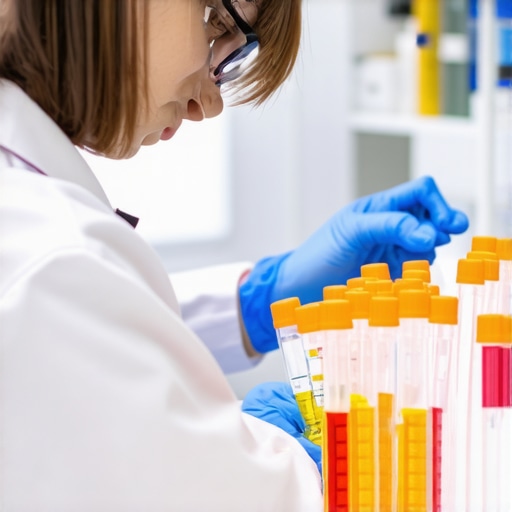
The High-Stakes Reality of Forensic Error
I watched a client lose their entire defense in the first ten minutes of a preliminary hearing because they ignored one simple rule about forensic silence. They assumed the government’s lab report was a finished document, an unassailable truth carved in stone by a scientist in a white coat. It wasn’t. I smells like stale coffee and desperation in these courtrooms when you realize the person holding the vial didn’t follow the refrigeration protocol. You think the 0.09 percent on that paper is your destiny. It is actually just a guess made by an overworked technician using a gas chromatograph that has not been calibrated since the previous fiscal year. If you do not call an attorney who understands the molecular instability of a blood sample, you are effectively pleading guilty to a math error.
The state lab is not your friend
A second independent opinion on your blood sample provides a critical check against laboratory error, chain of custody failures, and fermentation that artificially inflates BAC levels. This process involves securing the original vial and transporting it to a private, accredited toxicologist who operates without the inherent bias of law enforcement agencies. The state laboratory is a factory. They process hundreds of samples a day. In that environment, the individual nuances of your biology are ignored in favor of speed and throughput. A DUI lawyer knows that the government’s primary goal is a conviction, not a scientific inquiry into the preservation of your rights. When you demand a retest, you are not just checking their math; you are challenging their authority to define your reality with flawed equipment.
“Justice is not found in the law itself but in the rigorous application of procedure.” – Common Law Maxim
Why your blood sample is a ticking clock
The blood sample taken during a DUI arrest is a biological specimen prone to chemical changes that can lead to false positives without immediate stabilization. From the moment that needle leaves your arm, the sample begins to degrade. If the technician fails to properly mix the blood with the anticoagulant and preservative chemicals in the grey-top vial, the sample will clot. Clotted blood is useless for accurate testing, yet state labs often run it anyway, leading to an artificially high alcohol concentration. This is what we call the ‘hematocrit effect’ where the ratio of plasma to whole blood is skewed. A DUI defense built on science looks at the exact number of inversions the technician performed on that vial. If they did not flip it eight to ten times immediately, the sample is tainted evidence.
The myth of the perfect pipette
Laboratory equipment calibration is frequently neglected in high-volume state facilities, leading to volumetric errors that fundamentally skew blood alcohol results by significant margins. Most people believe that the machines used to test blood are infallible. This is a dangerous lie. Gas chromatography depends on the precise measurement of an internal standard, usually n-propanol. If the automated pipette is off by even a few microliters, the final calculation of your blood alcohol content will be wrong. This is not a theory; it is a statistical certainty in laboratories that fail to maintain rigorous internal quality control logs. Your DUI attorney must subpoena the maintenance records of the specific machine used for your test. If the Hamilton syringe hasn’t been serviced, the evidence is junk science.
How fermentation destroys a defense
Endogenous ethanol production occurs when bacteria or yeast in a blood sample consume glucose, creating alcohol that was never in the driver’s system. This is the most terrifying aspect of DUI legal battles. If your blood was not stored in a temperature-controlled environment, or if the sodium fluoride preservative was insufficient, the sample becomes a brewery. Microorganisms like Candida albicans thrive in a warm vial. They eat the sugar in your blood and excrete ethanol. By the time the state lab tests the sample three weeks later, your BAC has risen from a legal 0.05 to a criminal 0.09. Without a second independent opinion from a lab that checks for the presence of these bacteria, you will be convicted for alcohol your body never consumed.
“The reliability of forensic evidence is contingent upon the independence of the analysis and the transparency of the laboratory protocols.” – American Bar Association Standards for Criminal Justice
Chain of custody is a fragile link
Procedural mapping reveals that the majority of sample contamination occurs during the transit and storage phases before the actual chemical analysis begins. Every person who touches your blood vial is a potential point of failure. Case data from the field indicates that vials left in the hot trunk of a squad car for four hours will undergo significant thermal degradation. Was the evidence locker logged? Was the refrigerator temperature monitored? If there is a gap in the timeline, the integrity of the sample is gone. A DUI defense strategist looks for the ‘ghost’ in the laboratory logs – the moments where the sample was unaccounted for or handled by an uncertified intern. If the chain is broken, the result is inadmissible.
Why a DUI attorney demands raw data
Reviewing the raw digital data from the gas chromatogram allows a defense expert to identify ‘shoulders’ or overlapping peaks that indicate sample contamination. The state lab usually only provides a summary report. This is a sanitized version of the truth. The raw data, or the chromatogram, shows the actual separation of chemicals. If the peak for ethanol is merging with a peak for acetaldehyde or another volatile substance, the machine will misread the total alcohol content. This is a common technical error that remains hidden unless your DUI lawyer knows how to read the spectral output. While most lawyers tell you to sue immediately, the strategic play is often the forensic audit of the lab’s gas supply logs to see if contaminated carrier gas was used during the run.
The tactical advantage of the split sample
An independent retest acts as a deterrent against prosecutorial overreach by forcing the state to defend its forensic methods against an equal scientific peer. When you move for a split sample, you change the power dynamic of the case. Suddenly, the prosecutor is not the only one with a ‘scientist.’ You have a toxicologist who can walk into a courtroom and explain why the state’s math is a fantasy. This is about leverage. Often, the mere threat of a second opinion exposing a messy lab is enough to secure a reduction in charges or an outright dismissal. You are not asking for a favor; you are demanding an audit of the government’s work. In the world of high-stakes litigation, the one with the most accurate data wins.
Final strategic imperatives
The decision to seek a second independent opinion is not an admission of guilt; it is the cornerstone of a sophisticated dui defense. Most defendants are too intimidated by the system to question the white-coat authority of the state lab. They accept their fate based on a printout from a machine they don’t understand. Don’t be that client. The courtroom is a battleground of perception and procedure. If you leave your blood sample in the hands of the prosecution, you are surrendering your best weapon. Call an attorney who treats forensic science as the flawed, human process it truly is. The truth is not in the vial; the truth is in the errors they tried to hide.