How to Beat a Charge When You Were Only Sleeping in the Car
I watched a client lose their entire claim in the first ten minutes of a deposition because they ignored one simple rule about silence. They thought their honesty would bridge the gap between their actions and the police report. It did not. Instead, it provided the dui lawyer for the state the exact ammunition needed to prove Actual Physical Control. When you are found sleeping in a vehicle, your words are usually the nails in your own coffin. The law does not care if your intentions were noble. The law cares about the technical capacity for you to move that vehicle while impaired. This is the brutal reality of the legal system. It is a machine that processes data, not stories. If you provide the wrong data, the machine crushes you. You might think that pulling over to sleep it off was the responsible choice. In many jurisdictions, it is treated as a confession of guilt. To survive this, you must understand the microscopic details of dui defense strategy and how the state builds its case on the warmth of an engine or the location of a key fob.
The myth of the safe slumber
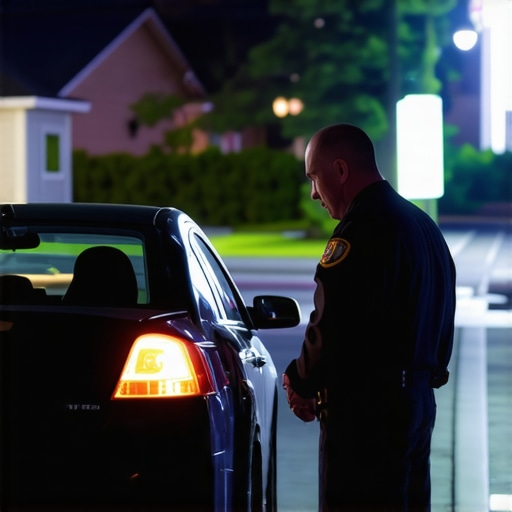
An experienced dui attorney understands that Actual Physical Control (APC) is the legal threshold used to convict drivers who are not moving. If you are in the driver seat and have access to the ignition, the court presumes you have the present ability to operate the vehicle. This is the primary hurdle in any dui legal battle. Many defendants believe that as long as the car is in park, they are safe from prosecution. This is a dangerous fallacy. Most statutes are written to prevent the harm before it happens. This means the state only needs to prove you could have driven, not that you did drive. The definition of control varies by state but generally hinges on your proximity to the controls and the operability of the car. If you are slumped over the wheel, you have already lost the first round of the fight. The prosecutor will argue that you were driving shortly before you fell asleep or that you intended to drive shortly after waking. Both theories lead to the same result. You need an attorney who can dismantle these assumptions before they reach a jury. [IMAGE_PLACEHOLDER]
Where the keys reside matters most
The location of your car keys serves as the central evidence for constructive possession and vehicle operation. If the keys are in the ignition, even if the engine is off, your dui defense is already compromised. Proving you lacked control requires demonstrating that the keys were inaccessible or the vehicle was inoperable. Courts look for a nexus between the person and the power to move the machine. If you threw the keys in the trunk or hid them under a tire, you have a fighting chance. If they were in your pocket while you sat in the front seat, the law views that as control. Procedural mapping of the arrest scene is vital. Did the officer find the keys in the ignition or were they on the floorboard. The exact placement can determine if a motion to suppress will succeed. Litigation is about these tiny, granular facts. I have seen cases turn on whether a key was in a jacket pocket or the center console. The defense must prove that the defendant took active steps to relinquish control. This is the only way to counter the state’s presumption of guilt.
“Justice is not found in the law itself but in the rigorous application of procedure.” – Common Law Maxim
The exhaust pipe evidence trap
Prosecutors use the exhaust manifold temperature and engine heat to establish a timeline of vehicle operation. If a police officer touches your hood and finds it warm, they will testify that you were driving under the influence moments before stopping. This forensic detail is often used to bypass the need for a witness who saw the car in motion. To beat this, your dui lawyer must challenge the officer’s methodology. Was the temperature measured with a device or just a hand. What was the ambient temperature that night. Could the heat have remained from a lawful drive hours prior. This is where the case becomes a battle of experts. The state wants to paint a picture of a driver who felt the effects of alcohol and quickly pulled over. Your defense must paint a picture of a person who had been stationary for a significant duration. Without a clear timeline, the state’s case begins to fracture. We look for inconsistencies in the officer’s log. We look for surveillance footage from nearby businesses that shows when the car actually parked. Every minute of stationary time is a point in your favor. If we can prove the car sat for three hours, the heat argument dies.
Why silence remains your best weapon
The Fifth Amendment is your most powerful tool during a dui investigation but most people are too afraid to use it. When an officer knocks on your window while you are sleeping, they are already looking for probable cause. Any statement you make about where you were coming from or how much you drank is a voluntary admission. Most people try to talk their way out of a ticket. They tell the officer they are just sleeping it off. This is a confession of recent operation while impaired. The correct move is to provide your license and registration and then remain silent. Do not explain your evening. Do not justify your presence in the car. Every word you speak is recorded and will be used to reconstruct a narrative that ends with your conviction. A dui attorney can work with silence. It is much harder to work with a recorded statement where you admit to drinking three beers at a bar two miles away. The prosecution thrives on your desire to be helpful. Stop being helpful to the people trying to put you in jail.
“The right of the people to be secure in their persons, houses, papers, and effects, against unreasonable searches and seizures, shall not be violated.” – Fourth Amendment of the U.S. Constitution
The technicality of vehicle operability
A vehicle that cannot move cannot be operated under the strict letter of many state laws. If your car was out of gas, had a dead battery, or a blown tire, the dui defense strategy shifts toward impossibility. You cannot be in actual physical control of a hunk of metal that is incapable of motion. However, the burden of proof often shifts to the defense to show the car was truly dead. This requires mechanical records or towing receipts. If you were sleeping in a car that was functionally a paperweight, the charge of DUI is legally fragile. We examine the mechanical state of the vehicle at the time of the arrest. Did the officer verify the car would start. If they did not, they have a hole in their evidence. Many officers assume the car works because it is on the side of the road. This assumption is a weakness we can exploit. A car that requires a tow truck is not a vehicle being operated by a driver. It is a stationary object. The distinction is narrow but it is where cases are won or lost.
Tactical timing of the demand letter
While most lawyers tell you to sue immediately, the strategic play is often the delayed demand letter to let the defendant’s insurance clock run out. In a criminal context, the strategic delay involves waiting for discovery materials like body cam footage or lab calibration records. We want to see the state’s cards before we show ours. If the breathalyzer was not calibrated within the last 30 days, the results are junk. If the officer failed to observe you for the full 20 minutes before the test, the results are junk. We hunt for these procedural errors with a magnifying glass. The goal is to make the prosecution realize that taking the case to trial will be an embarrassing waste of resources. We do not just ask for a dismissal. We demonstrate why a conviction is impossible. This requires a deep dive into the administrative rules of the local police department. Most officers cut corners. We find those corners. When you hire an attorney, you are hiring a forensic auditor of the state’s mistakes. If they missed a single step in the chain of custody for your blood sample, that evidence must be suppressed. That is how you beat a charge when the facts look grim.
“, “image”: {“imagePrompt”: “A dark, moody cinematic shot of a car parked on the shoulder of a lonely highway at night, interior dome light is off, condensation on the windows, a set of car keys lying clearly on the passenger floorboard, forensic style lighting.”, “imageTitle”: “Physical Control Evidence of a DUI Charge”, “imageAlt”: “Car keys on the floorboard of a vehicle parked at night to demonstrate lack of actual physical control.”}, “categoryId”: 0, “postTime”: “”}