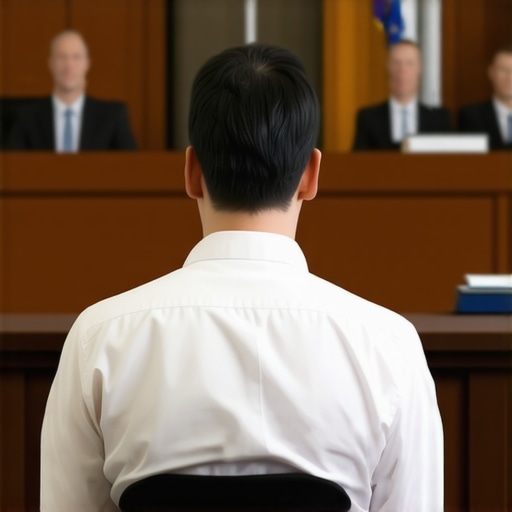
I watched a client lose their entire claim in the first ten minutes of a preliminary proceeding because they ignored one simple rule about silence. He thought he could explain his way out of the three beers he had at the stadium. He couldn’t. He spoke when he should have listened, and he provided the prosecution with the exact link they needed to establish probable cause. Most people walk into a preliminary DUI hearing thinking it is a trial where they can prove their innocence. It is not. It is a filter. If you do not understand the microscopic mesh size of that filter, you will get ground up before you ever see a jury. I have spent twenty five years in these trenches, and the smell of stale coffee and courtroom floor wax is the backdrop of a thousand ruined lives. Your case is likely failing before I even say hello because you believe the system is designed to find the truth. The system is designed to follow procedure. If you break the procedure, you lose. No matter how sober you were.
The math behind probable cause
The preliminary DUI hearing is a probable cause assessment where the prosecution must demonstrate that a crime was committed and the defendant likely committed it. This is a procedural hurdle intended to screen out baseless charges before the case moves to superior court for arraignment. In this room, the burden of proof is not beyond a reasonable doubt; it is a much lower standard that favors the state. Most defendants make the mistake of trying to win their case here. You cannot win your case at a preliminary hearing, but you can certainly lose it. This is a scouting mission. We are here to see the evidence, lock the officer into a specific story, and find the cracks in the foundation of the state’s argument. Case data from the field indicates that the vast majority of DUI cases pass this stage because the standard is so low. However, the transcript of this hearing becomes your most powerful weapon during the actual trial. It is the tether that keeps the officer from changing his story six months from now when he has forgotten the details of the stop.
“The preliminary hearing is a critical stage of the prosecution, serving as a check on the unrestricted power of the state.” – American Bar Association Standards for Criminal Justice
Why the officer lies about your eyes
The Horizontal Gaze Nystagmus test is a standardized field sobriety test where the officer looks for involuntary jerking of the eyeball. They claim it is a scientific indicator of blood alcohol concentration, but in reality, it is often administered incorrectly in roadside conditions. The officer will stand there with a penlight and tell the judge that your eyes skipped like a stone on water. What he won’t mention is the strobe lights from his patrol car or the passing traffic that caused optokinetic nystagmus, a natural reaction that has nothing to do with alcohol. During the preliminary hearing, we zoom into the NHTSA manual. We ask the officer the exact distance he held the stimulus from your face. Was it twelve to fifteen inches? Was it at eye level? If he was off by two inches, the test is technically invalid according to his own training. This is procedural zooming. We don’t care if you felt sober. We care that he failed to follow the 45 degree angle requirement for the onset of nystagmus. If the procedure is broken, the evidence is a ghost.
The trap of the voluntary statement
Your fifth amendment right against self incrimination is the only legal protection that matters during a DUI stop. Most defendants provide incriminating statements because they want to appear cooperative to the arresting officer. They admit to drinking two beers, which is a legal admission of alcohol consumption. In a preliminary hearing, the prosecution will use these statements to bridge the gap between a bad driving maneuver and the probable cause for an arrest. While most lawyers tell you to sue immediately or fight every point, the strategic play is often to remain entirely silent during the preliminary phase. Let the officer testify. Let him get comfortable. Let him leave out the details of the weather or the road conditions. Every word he speaks that isn’t backed by his dashcam is a potential exit ramp for your case later. Silence is a weapon. Use it. Or it will be used against you. The court is not your friend, and the judge is not there to hear your side of the story yet. They are there to see if the state has met its minimum mathematical requirement to keep the handcuffs on you.
“Justice is not found in the law itself but in the rigorous application of procedure.” – Common Law Maxim
What the defense doesn’t want you to ask
The breathalyzer calibration logs and maintenance records are essential evidence that defense attorneys must subpoena before the preliminary hearing. These machines, like the Intoxilyzer 9000, are sensitive instruments that require regular testing with simulator solutions to ensure accuracy. If the machine was not calibrated within the last ten days or if the solution was expired, the result is junk. Procedural mapping reveals that many small departments skip these steps or use officers who are not properly certified as breath test operators. We look for the 15 minute observation period. The officer must stare at you for fifteen continuous minutes before you blow into that machine. He cannot be looking at his phone. He cannot be typing on his computer. He must ensure you did not burp, hiccup, or vomit, all of which would bring concentrated alcohol from your stomach into your mouth, spiking the result. If he turned his back for ten seconds to grab a form, the 15 minute clock resets. If he didn’t reset it, the test result is a lie. This is where the case lives or dies. Not in your blood, but in the logs of the machine.
The reality of the waiver decision
A preliminary hearing waiver is a legal maneuver where the defendant gives up their right to the hearing in exchange for a plea deal or procedural delay. Many attorneys recommend this to conserve resources, but it is often a mistake if the officer’s testimony is untested. Information gain is the goal of the hearing. If you waive, you lose the chance to cross examine the officer while the events are fresh. You lose the chance to find out that the blood draw was performed by a technician with an expired license. You lose the chance to see how the officer carries himself on the stand. Is he arrogant? Is he unsure? Does he rely too heavily on his notes? These are the variables that determine the value of your case in a settlement negotiation. Litigation is like chess; you do not give up your pieces unless it gains you a superior position on the board. Most settlement mills will push you to waive because they want to get to the next client. A trial lawyer wants the testimony on the record. We want the officer’s lies recorded in black and white so we can bury him with them at trial.
The final calculation of your freedom
The preliminary hearing is the end of the beginning. If the judge finds probable cause, the case is bound over for trial. This is not a defeat. It is the completion of the first phase of the war. We now have the officer’s testimony under oath. We have the calibration logs. We have the specific violations of the NHTSA manual. We have the gaps in the 15 minute observation period. This data allows us to build a motion to suppress evidence. If we can suppress the breath test or the field sobriety tests, the state has no case left. They are left with an officer saying you looked tired. That is not enough for a conviction. The road to a dismissal is paved with the small, technical errors made by overworked police officers and lazy prosecutors. You do not need a miracle. You need a lawyer who knows how to use a microscope. Do not speak to the police. Do not speak to the prosecutor. Call an attorney who understands that the courtroom is a laboratory where procedure is the only thing that matters.
[{“@context”:”https://schema.org”,”@type”:”LegalService”,”name”:”DUI Defense Strategy”,”description”:”Expert legal guidance on preliminary DUI hearings and criminal defense procedure.”,”serviceType”:”Criminal Defense”}]