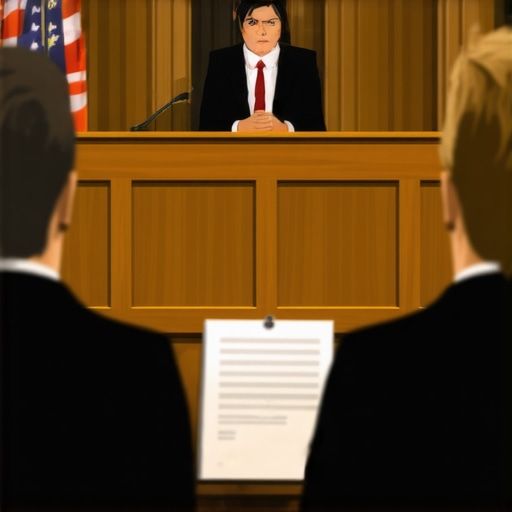
The myth of the impartial scientist
DUI attorney strategies often fail because defendants believe the prosecution expert witness is an objective scientist. This is a fatal error in judgment. The state expert is a professional witness who works for the crime lab or the police department. Their goal is to validate the arrest. DUI legal defense requires you to treat this person as a hostile adversary whose data is only as good as the calibration logs they often ignore. Procedural mapping reveals that most jurors default to believing anyone in a white lab coat. You must break that spell immediately. I watched a defendant lose their freedom in the first ten minutes of an expert’s testimony because they thought the truth would set them free. They waited for the expert to be fair. The expert was not fair. They were prepared. They had a script. They had folders full of data that the defense had never properly challenged during the discovery phase. This is the brutal reality of the courtroom. If you do not attack the foundation of their expertise, you are already convicted.
The curriculum vitae is a roadmap for failure
DUI defense begins with a microscopic examination of the witness’s credentials. Most state experts have a list of certifications that look impressive to a layperson but are actually participation trophies from weekend seminars. Case data from the field indicates that many lab technicians lack a legitimate degree in organic chemistry or toxicology. They are often glorified equipment operators who know how to push buttons but do not understand the underlying science of gas chromatography. You must demand the full curriculum vitae months before the trial. Look for gaps in their education. Look for failed certifications. Look for the number of times they have been disciplined for lab protocol violations. The state will try to gloss over these details. A skilled dui lawyer will use these gaps to paint a picture of incompetence. Every line on that CV is a potential point of leverage. If they claim to be an expert in the Intoxilyzer 8000, ask them to explain the specific infrared spectrometry wavelengths used to detect ethanol versus acetone. Most will stumble. That stumble is the first crack in the state’s case.
“Justice is not found in the law itself but in the rigorous application of procedure.” – Common Law Maxim
Why the breathalyzer is a black box
Call an attorney the moment you realize the state is relying on breath results. The breath machine is not a medical device. It is a calculator that makes assumptions about your physiology. It assumes your blood to breath ratio is exactly 2100 to 1. It assumes your body temperature is a perfect 38 degrees Celsius. It assumes you do not have acid reflux or dental work that traps alcohol in your mouth. These assumptions are often wrong. The dui attorney must zoom into the specific maintenance logs of the machine used in your case. These machines require frequent calibration. If the logs show a drift in accuracy or a history of repair issues, the entire test result becomes suspect. We look for the slope detector errors. We look for RFI or radio frequency interference from police radios. The machine is a black box that the prosecution wants the jury to trust blindly. Your job is to open that box and show the rust inside. Contrarian data shows that while most lawyers tell you to plead guilty if the breath test is high, the strategic play is to demand the source code and the raw data packets that the machine generated during your specific test. If the state cannot produce them, you have a motion to suppress.
The chain of custody trap
DUI legal professionals know that a blood sample is only as reliable as the hands that touched it. From the moment the needle enters your arm to the moment the vial is placed in the centrifuge, there are dozens of opportunities for contamination. We examine the exact type of anticoagulant used in the vial. We check the expiration date on the blood draw kit. If the phlebotomist did not use a non-alcoholic swab to clean the injection site, the sample is tainted. We track the temperature of the storage refrigerator. Blood is organic matter. It ferments. If it sits in a warm police locker for three days before being transported to the lab, the alcohol concentration will naturally increase due to Neo-genesis. This is not your alcohol. This is the alcohol produced by rotting blood. The state expert will try to minimize this. They will say it is negligible. You must show the jury that any increase in alcohol levels makes the test result a lie. The chain of custody is a chain of trust. If one link is weak, the whole case falls apart. We demand the logs for every person who entered the evidence room. We look for signatures that are missing or dates that do not align. Procedural errors are the best friends of the innocent.
“The right to cross-examine is the greatest legal engine ever invented for the discovery of truth.” – Wigmore on Evidence
The ghost in the settlement conference
DUI defense is often won before the jury is even selected. During the pretrial motions, we use the expert’s own past testimony against them. Most state experts have a paper trail of hundreds of previous cases. We find the transcripts where they admitted to limitations in the testing process. We bring those transcripts to the settlement conference. We show the prosecutor that their star witness has already admitted that the test can be wrong. This creates risk for the state. Prosecutors hate risk. They want a guaranteed win. When you show them that their expert is vulnerable, the plea offer changes. This is the ROI of litigation. You are not just paying for a lawyer. You are paying for the forensic research that turns a conviction into a reckless driving charge or a full dismissal. While the state tells you the evidence is overwhelming, the reality is that the evidence is fragile. It requires a specific narrative to hold together. If you pull the right thread, the whole tapestry of the prosecution’s case unravels. You must be aggressive. You must be relentless. You must never accept the state’s version of the facts at face value.
The final verdict on technical evidence
Your dui lawyer must be part scientist and part street fighter. When the expert witness takes the stand, the cross examination should not be a conversation. It should be an interrogation. We use short, leading questions. We do not let them explain. We demand yes or no answers. Did you personally calibrate this machine? No. Is it possible for the machine to produce a false positive? Yes. Can mouth alcohol affect the result? Yes. By the time we are done, the jury sees a machine that is fallible and a witness who is guessing. The state wants to talk about the law. We want to talk about the science. We want to talk about the fifteen minute observation period that the officer probably skipped. We want to talk about the GERD diagnosis that makes the breath test invalid. The courtroom is a territory of perception. If you control the evidence, you control the outcome. Do not wait for the state to make a mistake. Force them into one. This is how you win a DUI trial. This is how you protect your future from a system that is designed to process you like a number on a spreadsheet. You are a person, and your rights depend on the tactical execution of your defense. Seek counsel who understands the microscopic details of the lab because that is where the battle is won. The expert is not your friend. The machine is not your friend. Only the procedure is your friend.