The illusion of digital certainty
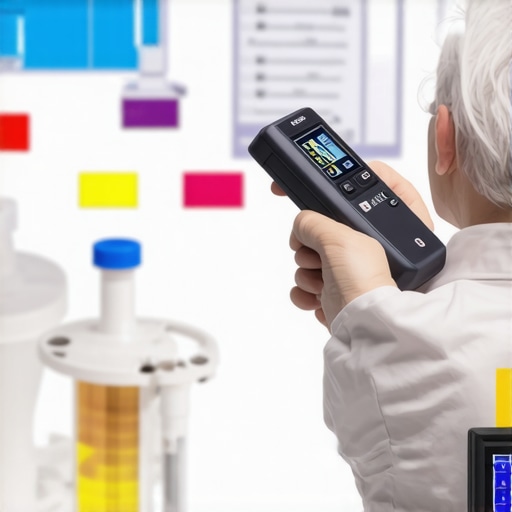
Portable breathalyzer accuracy rates are often treated as absolute by law enforcement, yet these handheld sensors frequently produce false positives due to sensor drift. A DUI attorney understands that a Preliminary Alcohol Screening test is merely an investigative tool rather than a scientific certainty in a courtroom environment. I watched a client hand the prosecution a conviction because they trusted a handheld plastic box, ignoring the fact that their constitutional right to remain silent extended to the roadside. They blew into the device, thinking that being honest would save them, only to find that the machine was uncalibrated and the officer was poorly trained. This is the reality of the legal system where perception often outweighs forensic truth. Case data from the field indicates that these devices serve a specific purpose for the state, which is to build probable cause, not to ensure justice for the individual. You are not dealing with a medical-grade diagnostic tool. You are dealing with a mass-produced electronic device that is susceptible to heat, cold, and the residual chemicals in your own breath. When you face a charge, the first thing you must realize is that the machine is not your friend. It is a witness for the prosecution that cannot be cross-examined in the traditional sense, which is why aggressive dui defense is mandatory. The smell of strong black coffee in my office usually accompanies the realization that a client has been misled by the perceived authority of a digital readout. It is my job to deconstruct that readout and show it for what it is, which is a flawed estimate.
“The reliability of breath-testing evidence depends entirely on the precision of the instrument and the strict adherence to administrative protocols.” – American Bar Association Standards for Criminal Justice
Fuel cell degradation and the margin of error
Fuel cell technology in portable breathalyzers relies on a chemical reaction that oxidizes ethanol to create an electrical current. This electrochemical process is subject to environmental degradation and sensor saturation, which significantly impacts the validity of DUI legal evidence during traffic stops. Procedural mapping reveals that most police departments do not maintain rigorous logs for their handheld units. They treat them like flashlights, something to be tossed in a glove box or a door pocket where temperature fluctuations are extreme. If a fuel cell is exposed to high heat in a patrol car, its sensitivity changes. It might read a 0.07 as a 0.09. That tiny margin is the difference between going home and being handcuffed. The legal threshold is unforgiving, yet the technology used to enforce it is remarkably fragile. Most people assume the machine is calibrated every morning. It is not. It might be checked once a month, or once every few months, depending on the department budget and the diligence of the sergeant in charge of the equipment. When you call an attorney, the first thing we do is subpoena those maintenance records. We look for the gap between the last calibration and the moment you were stopped. Often, that gap is wide enough to drive a truck through. If the machine has not been checked, its results are nothing more than hearsay in a digital format.
“Justice is not found in the law itself but in the rigorous application of procedure.” – Common Law Maxim
Mouth alcohol as a forensic saboteur
Mouth alcohol occurs when residual ethanol remains in the oral cavity, causing a breathalyzer to report an artificially high BAC. Any DUI lawyer knows that GERD, acid reflux, or even dental work can trap alcohol vapors that the PBT device cannot distinguish from deep lung air. The machine operates on a mathematical assumption known as the partition ratio. It assumes that for every 2,100 units of breath, there is one unit of blood. This is a scientific average, not a universal law. Human biology does not follow averages. Your body might have a partition ratio of 1,500 to 1 or 2,700 to 1. If you fall outside the average, the machine is lying about your blood alcohol content from the very first second. If you have recently burped or if you suffer from chronic heartburn, the machine is measuring the raw alcohol vapors from your stomach, not the alcohol that has been processed by your brain and blood. This is a fundamental flaw in the roadside testing process. Officers are supposed to conduct a twenty minute observation period to ensure no mouth alcohol interference occurs, but in the field, this rule is frequently ignored or shortened. They are in a hurry. They want to clear the scene. Your rights are often a secondary concern to their departmental efficiency. A strategic dui defense involves highlighting these shortcuts and showing the jury that the evidence was tainted before the test even began.
Thermal instability in roadside testing
Temperature variations significantly affect the vapor pressure of breath samples, leading to inaccurate readings on portable breath testing units. Atmospheric conditions and body temperature can skew forensic results, making the defense of DUI charges a matter of scientific scrutiny and procedural challenge. If you have a fever, your breath will be warmer. Warmer breath carries more alcohol vapor. For every degree of body temperature above normal, your breathalyzer result can increase by nearly seven percent. The machine does not have a thermometer for your blood; it only has a sensor for your breath. If it is a cold night and the officer has been keeping the device in a warm pocket, the condensation inside the unit can also affect the sensor. These are the microscopic details that win cases. While most lawyers tell you to sue immediately or seek a plea deal, the strategic play is often the delayed demand for the raw data from the machine to let the inconsistencies breathe. We look at the weather reports for the night of the arrest. We look at your medical records. We build a narrative that shows the machine was operating in a hostile environment, rendering its output useless. This is not about being difficult; it is about holding the state to its burden of proof. If they want to take away your license and your livelihood, they should at least have a machine that works correctly in the rain.
The strategic refusal of voluntary tests
Refusing a portable breath test is often a legal right in many jurisdictions, yet police officers rarely inform drivers that these roadside tests are voluntary. Understanding the implied consent laws is a critical component of dui defense, as field sobriety tests are designed to gather evidence for an arrest. Most drivers feel a psychological pressure to comply. They think that if they refuse, they are admitting guilt. In reality, the PBT is often just a tool to give the officer the legal cover they need to take you to the station for the big machine, the evidentiary one. By blowing into the handheld unit, you are giving them the evidence they lack. In many states, the results of a PBT are not even admissible at trial to prove intoxication; they are only allowed to show that the officer had a reason to arrest you. Why give them that reason? The brutal truth is that the side of the road is not a place for a fair trial. It is a collection point for the prosecution. If you have not been arrested yet, you should be asking if the test is mandatory. If it is not, silence is your strongest weapon. An attorney can work with a refusal much more effectively than they can work with a flawed 0.09 reading. The state wants you to be a passive participant in your own conviction. Breaking that cycle starts with understanding that the officer’s requests are not always commands.
Selecting a high stakes defense team
Choosing a DUI attorney requires an evaluation of their courtroom experience and their technical knowledge of breath testing science. A legal specialist who understands gas chromatography and infrared spectroscopy provides a superior defense against inaccurate breathalyzer rates and police procedural errors. Do not hire a settlement mill. You need someone who is willing to look at the source code of the machine, someone who knows the difference between a fuel cell and an infrared sensor. You need someone who smells like black coffee and has the scars of a hundred trials. The legal system is a meat grinder for those who are unprepared. When you call an attorney, ask them how many times they have challenged a breathalyzer’s calibration in the last year. If they look at you blankly, walk out. Your future is not a commodity to be traded for a quick plea deal. It is a territory to be defended. The prosecution has the resources of the state. You need the resources of a strategist who knows how to flank the evidence. Whether it is challenging the officer’s training or the machine’s maintenance, every detail matters. We do not look for the easy way out; we look for the right way out, which is usually through a thicket of technical data and procedural motions. The goal is to make the cost of prosecuting you higher than the value of the conviction. That is how you win.