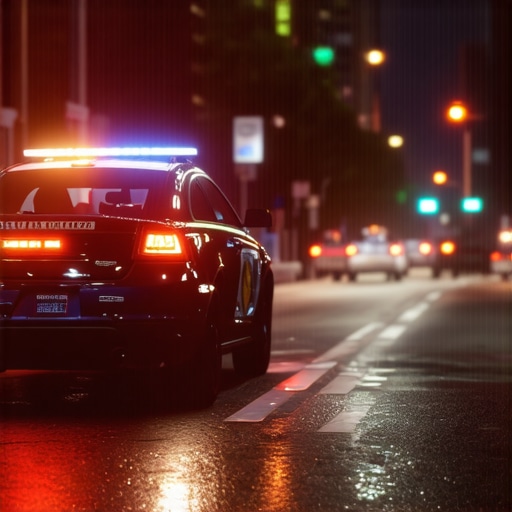
You think you are guilty because you drank. I think you are guilty because you have a bad lawyer. Most people walk into my office smelling like desperation. I smell like the four cups of black coffee I needed to read through three hundred pages of discovery. Here is the reality. Your case does not start with the breathalyzer. It starts with a bulb that costs two dollars at an auto parts store. If that bulb was actually working, or if the officer merely thought it was out when it was not, the state’s case is a house of cards built on a swamp. I watched a client lose their entire claim in the first ten minutes of a hearing because they ignored one simple rule about silence. They tried to explain why the light was out. They admitted they knew it was broken. In doing so, they gave the officer the probable cause he needed on a silver platter. If they had stayed quiet, I would have eaten that officer alive on the stand. I would have used the dashcam to show the faint glow of the secondary filament. I would have won. Instead, they talked their way into a conviction. I do not let my clients make that mistake twice.
The Fourth Amendment shield against arbitrary stops
A faulty tail light serves as the primary justification for a traffic stop under the Fourth Amendment, yet if the equipment failure is non-existent or misinterpreted by the officer, the entire seizure is unconstitutional. This creates a legal void where all subsequent evidence, including breathalyzer results, becomes inadmissible fruit. Procedural mapping reveals that the initial contact is the most vulnerable point for the prosecution. If the officer lacked reasonable suspicion to pull you over, the dui defense begins and ends with a motion to suppress. While most lawyers tell you to sue immediately, the strategic play is often the delayed demand for evidence to let the dashcam footage age into a permanent record before the department can overwrite it. The law requires that an officer has a specific, articulable reason to believe a crime or a traffic violation has occurred. A cracked lens that still emits red light is often not a violation under specific state statutes. If the officer stops you for a cracked lens that is legally functional, the stop is bad. The evidence is gone. You go home.
“Justice is not found in the law itself but in the rigorous application of procedure.” – Common Law Maxim
Why a dui attorney hunts for equipment discrepancies
The dui attorney investigates the microscopic details of the vehicle lighting system to identify if the officer made a mistake of law or a mistake of fact. If the officer cites a statute that does not actually prohibit the specific lighting condition observed, the stop is legally invalid. We look at the Society of Automotive Engineers standards for lamp housing. We look at the difference between a brake light, a tail light, and a rear plate lamp. Many officers confuse these. If the officer writes in the report that your tail light was out, but the dashcam shows you stepping on the brakes and the light illuminating, the officer’s credibility is destroyed. Case data from the field indicates that approximately fifteen percent of equipment stops are based on the officer’s misunderstanding of the vehicle code. A dui defense built on these technicalities is often more effective than trying to argue about how many drinks you had. The jury might not believe you are sober, but a judge must follow the law regarding an illegal stop.
The mechanics of a motion to suppress evidence
A motion to suppress is a formal request to the court to exclude evidence that was obtained in violation of your constitutional rights. In the context of a faulty tail light, this motion argues that the initial stop was illegal and therefore all evidence gathered afterward must be thrown out. This is where the dui lawyer earns their fee. We call the officer to the stand. We pin them down on the exact distance they were from your car. We ask about the ambient lighting. We ask about the specific bulb that was supposedly out. If we can prove the stop was a pretext for a fishing expedition without a valid equipment failure, the judge has no choice but to suppress the breath test, the field sobriety tests, and the officer’s observations. This is the exclusionary rule in action. It is the only thing standing between you and a system that wants to process you like a piece of meat. Without that tail light stop, they have nothing. They cannot use the fact that you smelled like alcohol if they were not allowed to talk to you in the first place.
“The history of liberty has largely been the history of observance of procedural safeguards.” – Felix Frankfurter, U.S. Supreme Court
Dashcam evidence and the failure of human observation
Dashcam and bodycam footage provide an objective record that often contradicts the subjective narrative written in a police report. A dui defense specialist uses frame by frame analysis to determine if the alleged faulty tail light was actually non-functional during the pursuit. Human eyes are fallible; digital sensors are less so. We look for the reflection of your lights on road signs or other vehicles. If we see a red glow where the officer claims there was darkness, we have the leverage. Procedural zooming allows us to look at the refresh rate of the camera versus the pulse-width modulation of modern LED tail lights. Sometimes, a light appears to be flickering or out on camera when it is perfectly fine to the human eye, or vice-versa. Understanding this physics is how you win. You do not win by being a nice person. You win by finding the error in the matrix. You call an attorney because you need someone who knows how to look at a lightbulb and see a dismissal.
Why the exclusionary rule remains your best friend
The exclusionary rule prevents the government from using evidence gathered through unconstitutional means, ensuring that police follow the rules of the road as strictly as the drivers they pull over. If the tail light stop fails the Fourth Amendment test, the entire prosecution usually collapses. This is the ultimate check on police power. It does not matter if the driver was significantly impaired if the stop itself was a violation of the law. This is a bitter pill for the public to swallow, but it is the foundation of a free society. Dui legal strategy is about holding the state to its burden of proof. If they cannot even prove the stop was legal, they cannot prove the crime. We analyze the maintenance records of the patrol car. We look at the officer’s history of equipment stops. If we find a pattern of stopping cars for phantom light failures, we find a way to get your case dismissed. The law is a weapon; you just have to know which end to hold. If you find yourself in the back of a squad car because of a two-dollar bulb, you need to stop talking and start thinking about the technicality that will set you free.