The hidden flaws in the prosecution case
I watched a client lose their entire claim in the first ten minutes of a deposition because they ignored one simple rule about silence. That story is common in civil court, but in the criminal justice system, the silence you should be worried about is the silence of the police officer who forgot to record a critical detail in your arrest report. You think you are guilty because a man in a uniform told you so. You are wrong. The legal system is not a laboratory of truth; it is a factory of procedure. If the procedure is broken, the product is trash. Most people see a DUI arrest as an end, but for a seasoned dui attorney, it is the beginning of a forensic deconstruction of human error. The police are tired, they are overworked, and they are lazy. They rely on templates and muscle memory rather than the strict adherence to the law that the Constitution demands. Your freedom often hangs on a typo, a missed clock-in, or a failure to describe the weather accurately. This is not about getting off on a technicality. It is about holding the state to the impossible standard it claims to uphold.
Why your arrest record is a work of fiction
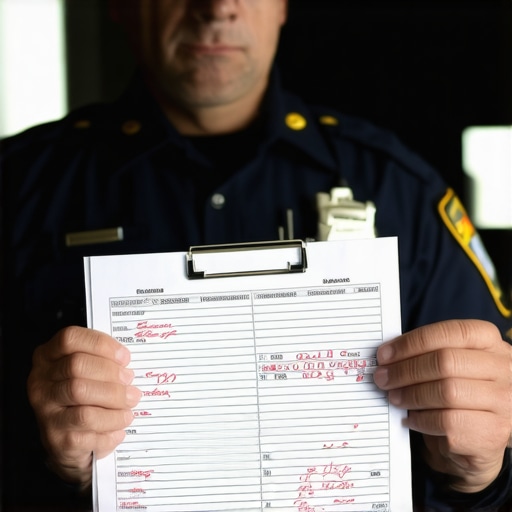
Police reports in DUI defense cases are often template-based documents where arresting officers copy and paste incriminating observations from previous arrests. These written statements frequently contain factual inconsistencies that a dui lawyer can use to challenge the legal validity of the prosecution case and dismiss charges. I have seen reports that describe a suspect as having bloodshot eyes while the body camera footage clearly shows the suspect wearing dark sunglasses the entire time. This is not a simple mistake. It is a fundamental breach of the duty to provide accurate testimony. When an officer engages in the copy-paste method of law enforcement, they create a fictional narrative. Case data from the field indicates that up to thirty percent of reports contain at least one major observational contradiction. We look for these gaps. We look for the ghost in the machine. If the officer says you were swaying but your feet are planted like lead in the video, the report is no longer evidence. It is a liability for the state. Procedural mapping reveals that once one lie is exposed, the entire house of cards falls during cross-examination. This is why you call an attorney immediately.
“Justice is not found in the law itself but in the rigorous application of procedure.” – Common Law Maxim
The failure of the standardized field sobriety test
Standardized Field Sobriety Tests or SFSTs are voluntary exercises designed to fail, yet police officers frequently perform them incorrectly. A dui defense strategy often focuses on the Horizontal Gaze Nystagmus test, the Walk and Turn, and the One Leg Stand to prove law enforcement error and suppress evidence. The HGN test is the most scientific and thus the most frequently botched. The officer must move the stimulus at a specific speed, exactly twelve to fifteen inches from your face. If they move it too fast, they induce nystagmus that isn’t there. They are literally creating the symptoms of intoxication through their own incompetence. Most officers treat these tests like a roadside carnival game. They are not. They are medical evaluations performed by people with forty hours of training. While most lawyers tell you to sue immediately, the strategic play is often the delayed motion to suppress to let the officer’s memory of the specific night fade until they are forced to rely solely on their flawed report. If the report says they held the stimulus for four seconds at maximum deviation but the video shows two seconds, the test result is junk. It is forensic garbage that belongs in the bin, not in front of a jury.
When the breathalyzer clock stops ticking
Chemical breath tests and Intoxilyzer 8000 results are only admissible if the arresting officer maintains a strict fifteen-minute observation period. Any procedural deviation such as the suspect burping, regurgitating, or smoking during this deprivation period can invalidate the results and lead to dismissed dui charges. The law requires the officer to watch you. Not watch their laptop. Not check their text messages. Not fill out paperwork in the front seat while you are in the back. They must observe your mouth to ensure no residual alcohol or foreign matter interferes with the air from your lungs. I recently handled a case where the officer claimed he watched my client for twenty minutes. The dashcam showed him walking around the car to check the tire tread for five of those minutes. He wasn’t watching the mouth. The breath sample was thrown out. Without that number, the state had nothing but the officer’s word, and we already proved his word was flexible. The breathalyzer is a machine, and machines are only as good as the humans operating them. If the calibration logs are even one day out of date, or if the dry gas standard is low, the margin of error balloons. We hunt for these logs. We demand them in discovery. We find the decimal points that don’t add up.
Where the chain of custody breaks
Blood evidence in a dui legal proceeding requires a documented chain of custody from the moment of extraction to the forensic lab analysis. Any gap in supervision or unlabeled vial constitutes a violation of evidence protocols that a dui lawyer can use to suppress blood alcohol content results. The vial contains more than just blood; it contains chemicals like sodium fluoride and potassium oxalate. These prevent fermentation and clotting. If the nurse doesn’t invert the vial exactly ten times, the chemicals don’t mix. The blood can ferment. Fermentation creates alcohol. The machine might read a 0.09, but 0.02 of that was created inside the tube because of a lazy lab tech. We look at the refrigeration logs. Blood sitting in a hot patrol car for three hours is not a valid sample. It is a science project. The law treats blood like liquid gold, but the police often treat it like a coffee order. If the person who transported the blood isn’t on the log, the chain is broken. A broken chain means the evidence is tainted. Tainted evidence cannot support a conviction in a court of law. This is the microscopic reality of litigation.
“The Fourth Amendment is not a suggestion; it is a mandate for the protection of the individual against the overreach of the state.” – American Bar Association Journal
Why an illegal traffic stop kills the case
Reasonable suspicion is the legal threshold required for a police officer to initiate a traffic stop and begin a dui investigation. If the initial stop is based on an illegal premise or a mistake of law, all subsequent evidence is considered fruit of the poisonous tree and must be excluded from trial. An officer cannot pull you over for ‘driving too carefully.’ They cannot pull you over because you looked at them funny. They need a specific, articulable fact. I see reports where officers cite ‘weaving within the lane.’ In many jurisdictions, weaving within your own lane is perfectly legal as long as you do not cross the lines. If the officer stops you for something that isn’t a crime, the stop is bad. Everything that happens after the stop, the smell of alcohol, the slurred speech, the failed tests, is erased from the record. It is as if it never happened. This is the ultimate weapon in DUI defense. We don’t even talk about the drinking. We talk about the blinker. We talk about the license plate light that was supposedly out but magically worked when the car was towed. We attack the root so the tree dies.
What the dashcam footage never shows
Digital evidence from body cameras and dash cameras provides a factual record that often contradicts the written police report in a dui case. When law enforcement fails to activate recording equipment or mysteriously loses footage, a dui attorney can argue for an inference of innocence or spoliation of evidence. The report might say you stumbled out of the car. The video might show you walking perfectly straight. Why is there a discrepancy? Because the officer is writing the report to justify the arrest they already made. They are not reporting; they are advocating for their own decision. If the audio cuts out at the exact moment the officer gives the instructions for the walk and turn, that is not a coincidence. That is a tactical failure. We use forensic video experts to analyze the timing of these ‘malfunctions.’ A gap in the record is a gap in the prosecution’s logic. If they can’t show the jury the truth, they shouldn’t be allowed to tell the jury their version of it. The absence of evidence can be just as powerful as the presence of it when handled by a strategist who knows how to use the silence of the record to create reasonable doubt in the minds of the jurors.
Comments are closed.