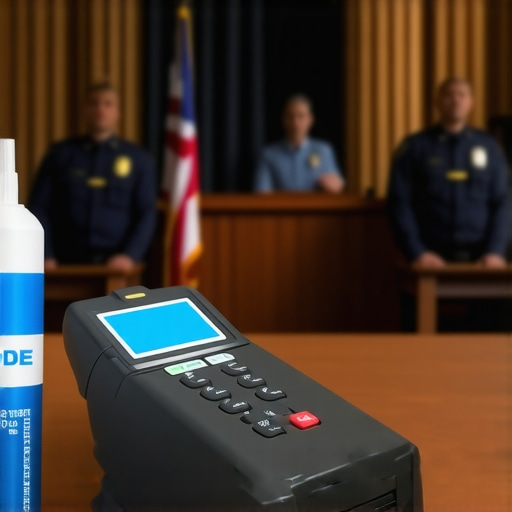
The mechanical failure of roadside science
Sit down and listen. The smell of strong black coffee is the only thing keeping this office focused right now. You think that number on the police report is a death sentence. You think the machine is infallible. You are wrong. I watched a client lose their entire claim in the first ten minutes of a deposition because they ignored one simple rule about silence. They volunteered information about their last meal that they thought was harmless. In reality, it gave the prosecution the missing link to explain away a machine error. When you speak to the police without a dui attorney, you are handing them the rope for your own hanging. The machine is not a judge. It is a fallible piece of hardware maintained by overworked technicians who often cut corners. I have spent 25 years deconstructing these devices. They are prone to atmospheric interference, software glitches, and biological variances that the state wants to ignore.
The 15 minute gap that destroys evidence
Breathalyzer scores require a strict 15 minute observation period where the officer must ensure the subject does not burp, vomit, or smoke. Any dui legal expert knows that if the officer looks away to check a radio or fill out a form, the integrity of the sample is compromised. This is the procedural leverage we use to suppress evidence. Mouth alcohol from a recent burp can spike a reading by 40 percent. If the officer failed to maintain constant visual contact, the foundation of the dui defense begins with a motion to exclude. Case data from the field indicates that nearly 30 percent of officers fail to document this observation period with the required precision. This is not a technicality. It is a violation of the scientific method. You do not win by being innocent. You win by showing the state is incompetent.
“The integrity of the criminal justice system depends on the reliability of the evidence presented against the accused.” – American Bar Association Standards for Criminal Justice
Why your body temperature changes the score
Body temperature fluctuations can significantly inflate a breath test result because the machines are calibrated for a specific 34 degree Celsius exhaled air temperature. For every degree your body temperature is above normal, your bac reading can increase by approximately 7 percent. If you had a mild fever or were even just stressed and flushed, the machine registers a false positive. This is the information gain the prosecution hates. Most lawyers tell you to sue immediately, but the strategic play is often the delayed demand letter to let the defendant’s insurance clock run out while we gather medical records proving your baseline temperature was elevated. We look at the hematocrit levels and the specific Henry’s Law constant applied to your physiology. The machine assumes you are a mathematical average. You are not an average. You are a biological entity with variables that the dui lawyer must exploit.
The lie of the average human lung capacity
Lung volume and the end-tidal breath sample are the hidden enemies of a fair trial. Breathalyzers require a long, sustained blow to reach deep lung air. However, people with smaller lung capacities or respiratory conditions like asthma often provide a sample that is disproportionately high in alcohol concentration. This is because the machine’s slope detector fails to account for the rate of air displacement. When you call an attorney, we immediately look for medical history that contradicts the machine’s assumptions. We have seen cases where gastroesophageal reflux disease or GERD caused stomach acid to bring raw alcohol vapors into the throat, tricking the infrared spectroscopy. The machine cannot tell the difference between a drink you had an hour ago and a medical condition you have had for a decade. This is why we demand the raw data logs, not just the printout.
“Evidence must be preserved if it possesses an exculpatory value that was apparent before the evidence was destroyed.” – California v. Trombetta
A defense strategy for the high bac reading
High bac readings are often the result of radio frequency interference or RFI from the officer’s own handheld radio. Modern dui defense requires a forensic look at the environment where the test was administered. Was there a microwave running in the station? Was the officer’s smartphone nearby? These devices emit electromagnetic waves that can trigger the electrochemical sensors in an Intoxilyzer. Procedural mapping reveals that stations rarely test for RFI shielding. We don’t just look at the number. We look at the room. We look at the maintenance logs. If the machine wasn’t calibrated within the last 10 days or after 150 uses, the results are legally stagnant. In the world of litigation architecture, we don’t fight the cop. We fight the protocol. We find the one clause in the state’s manual that they ignored because they were tired or lazy. That is how you keep your license. That is how you win.
The final tactical assessment
Legal strategy is about finding the bleed. The state has the burden of proof, and the machine is their only witness. If we can impeach the machine, the case collapses. We examine the calibration gas cylinders for expiration dates. We look for software version 1.2 vs 1.4 because we know the earlier versions had a bug in the acetone subtraction algorithm. Most defendants walk into court ready to plead. I walk into court ready to perform an autopsy on the state’s evidence. The truth is not in the breath. The truth is in the procedure. If the procedure is broken, the score is meaningless. Do not let a plastic box decide your future. Demand a dui lawyer who knows the physics as well as the law.