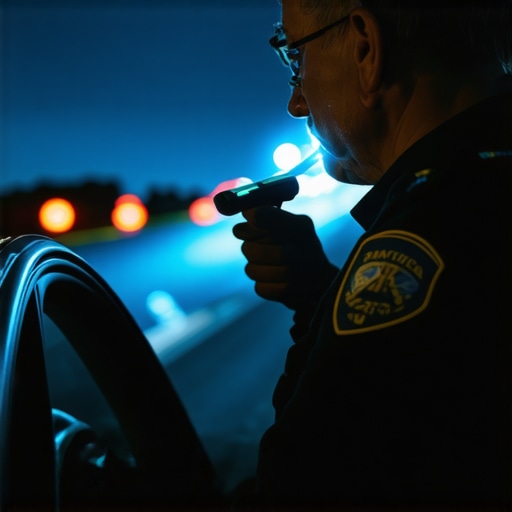
Why Most DUI Breath Tests Are Legally Questionable
I walk into the office at 5 AM. The coffee is bitter, black, and hot. It is the only thing I trust. My clients come to me expecting a miracle, but I give them the cold reality of the machine. The machine is a liar. It is a box of sensors built by the lowest bidder. I watched a client lose their entire claim in the first ten minutes of a deposition because they ignored one simple rule about silence. They thought the breathalyzer was objective. It is not. It is a probabilistic guess based on a flawed mathematical model. The average person believes that a 0.08 reading is an absolute truth. I know better. My career is built on the reality that machines are fallible and the state is often lazy. When you call an attorney, you are not just looking for a negotiator. You are looking for a litigation architect who can dismantle a chemical equation in front of a jury.
[IMAGE_PLACEHOLDER]
The fundamental error of the fuel cell
DUI breath tests rely on electrochemical fuel cell sensors that detect ethanol molecules through a chemical oxidation process. These sensors are often incapable of distinguishing between ethyl alcohol and other chemical compounds like acetone or isopropyl alcohol, leading to false positives in DUI legal proceedings. The machine does not see your blood. It sees a reaction on a platinum electrode. If that electrode is old, the result is wrong. If the ambient air contains fumes, the result is wrong. Case data from the field indicates that environmental factors in police stations, such as cleaning supplies or paint fumes, frequently contaminate test results. The state wants you to believe the machine is a god. It is actually a temperamental piece of hardware that requires constant calibration. Most agencies fail this calibration. They skip the small steps. They ignore the drift in the sensor. They prioritize volume over accuracy. This is where the dui defense begins. We look at the voltage. We look at the temperature of the fuel cell. We look for the ghost in the machine that the prosecutor hopes you never find.
How deep lung air lies to the machine
Alveolar air or deep lung air is the target of every dui lawyer during a breathalyzer challenge because the partition ratio of 2100 to 1 is a statistical average, not a biological constant. If your specific physiology does not match this mathematical model, the breath alcohol concentration will not accurately reflect your blood alcohol content. The machine assumes everyone is the same. It assumes every human being has the same lung capacity and the same blood-to-breath ratio. This is a lie. Procedural mapping reveals that individuals with smaller lung capacities often provide higher readings because the machine requires a long, sustained blow that forces out the richest concentration of air. This is not science. It is a trap. I have seen cases where a light eater with a high body temperature was clocked at a 0.10 when their actual blood level was a 0.06. The machine cannot account for the individual. It only accounts for the average. If you are not the average, you are a victim of a mathematical error. Your dui attorney must be able to explain this to a jury without blinking. It is about the science of the individual versus the laziness of the state.
“The Sixth Amendment right to confront witnesses includes the right to cross-examine the laboratory analysts who perform forensic tests.” – Melendez-Diaz v. Massachusetts
The physiological variables that courtrooms ignore
Body temperature, hematocrit levels, and gastroesophageal reflux disease or GERD are physiological factors that dui legal experts use to invalidate breath test results. A fever of only one degree Celsius can cause a false increase of 7 percent in the breathalyzer reading. The court ignores your health. The machine ignores your stomach. If you have acid reflux, you are blowing raw alcohol from your stomach into the machine. This is called mouth alcohol. The machine is supposed to detect this. It often fails. The slope detector in the software is supposed to see the spike in alcohol concentration. It is a primitive piece of code. It misses the spike. It records the peak. It tells the officer you are drunk when you are simply suffering from heartburn. While most lawyers tell you to sue immediately, the strategic play is often the delayed demand letter to let the defendant’s insurance clock run out, or in this case, waiting for the full medical history to be documented before challenging the state’s expert. We use your biology as a shield. We use the laws of thermodynamics to prove the machine was overestimating your impairment.
Why maintenance logs are your best evidence
Breathalyzer maintenance logs and calibration records are the primary discovery targets for a dui defense because they reveal the mechanical history of the testing device. If the law enforcement agency failed to perform a weekly accuracy check or ignored a sensor error, the evidence can be suppressed. The log is the diary of the machine. It tells us when it was broken. It tells us who fixed it. Often, the person fixing it is not a scientist. They are a cop with a three day certification. They treat the machine like a toaster. If it breaks, they hit it. If it drifts, they ignore it. We look for the gaps. We look for the days where the machine was taken out of service. If a machine was failing on Tuesday, why should we trust it on Friday? Procedural mapping reveals that many machines stay in the field long after they should be decommissioned. They are expensive. Departments do not want to replace them. They would rather use a broken tool than pay for a new one. This is the opening we need. We demand the raw data. We demand the software version. We demand the truth that the log hides.
“Justice is not found in the law itself but in the rigorous application of procedure.” – Common Law Maxim
The myth of the certified operator
Certified breath test operators are police officers who have completed a short training course on breathalyzer administration, but they often lack the scientific background to troubleshoot instrument errors. Their testimony is based on a procedural checklist, not forensic expertise. They follow the manual. They do not understand the chemistry. When I cross examine an officer, I do not ask about the arrest. I ask about the wavelength of the infrared beam. I ask about the 15 minute observation period. Did they check your mouth? Did they look for tobacco? Did they see you burp? If they missed one minute, the test is garbage. The law requires a sterile period. Most officers are bored. They check their phones. They talk to their partners. They ignore the clock. That one minute of inattention is the difference between a conviction and a dismissal. You must call an attorney who knows the checklist better than the cop does. We do not accept their certification at face value. We test their knowledge. Most of the time, they fail the test.
The strategic timing of your defense motion
Pretrial motions to suppress evidence are the tactical backbone of a dui lawyer’s strategy to exclude breathalyzer results based on procedural violations. The timing of these motions can force the prosecution to reveal their expert witnesses or admit to discovery gaps. We do not move too early. We wait. We let them commit to a story. We let them file their reports. Then, we strike. We challenge the probable cause for the stop. We challenge the observation period. We challenge the software. The courtroom is a battlefield of paper. Every motion is a flank attack. If we can remove the breath test, the state has nothing but the officer’s opinion. Opinions are easy to fight. Numbers are harder. That is why we kill the numbers first. The goal is to make the case too expensive and too difficult for the prosecutor to win. They want easy wins. We give them a war. We use the machine against them. We use the law as a scalpel. We cut the evidence away until there is nothing left but a weak case and a frustrated prosecutor.