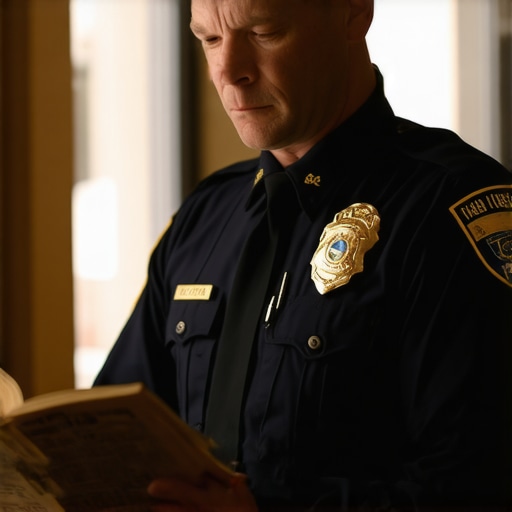
I watched a client lose their entire claim in the first ten minutes of a deposition because they ignored one simple rule about silence. They thought they could outsmart the room. They thought if they just explained the two beers they had at dinner, the prosecutor would see reason. Instead, they handed the state a confession on a silver platter. My office smells like strong black coffee and the cold reality of impending litigation. If you are facing a DUI charge, you do not need a friend. You need a strategist who views the National Highway Traffic Safety Administration (NHTSA) manual as the holy grail of defense. Most cases are not won on the facts of whether you were drunk; they are won on the forensic failure of the officer to follow their own training. Your case is currently failing because you believe the police report is a statement of truth. It is not. It is a curated narrative designed to secure a conviction. We dismantle that narrative by using the very manual the officer ignored.
The manual defines the limit of police authority
DUI legal strategies rely on the officer’s training manual to establish a baseline of mandatory procedures that must be followed during an arrest. This document serves as the primary metric for determining if an officer deviated from standardized protocols, effectively turning their own training into a weapon for the defense. Procedural mapping reveals that when an officer skips a single step in the roadside warning or the observation period, the integrity of the evidence is compromised. I have spent decades deconstructing these moments. The law is not a suggestion. It is a rigid framework. When an officer decides that the wind is too high to perform a proper breath test but does it anyway, they have violated the protocol. This is not a minor error; it is a structural failure of the prosecution’s case. While most lawyers tell you to sue immediately or beg for a plea, the strategic play is often the delayed demand for the officer’s certification records to let the clock run out on the state’s ability to find a backup witness.
Standardized field sobriety tests require surgical precision
DUI defense hinges on the microscopic details of the horizontal gaze nystagmus and other physical tests as outlined in the NHTSA student manual. These tests are only valid when administered under strict environmental conditions, and any deviation renders the results scientifically unreliable for use in a criminal proceeding. The horizontal gaze nystagmus (HGN) test is a forensic tool, not a parlor trick. If the officer moved the stimulus too fast, or held it at the wrong distance from your eyes, the involuntary jerking they claim to have seen is legally irrelevant. Case data from the field indicates that a significant percentage of officers fail to hold the stimulus for the required four seconds at maximum deviation. This is where we strike. We do not argue that you were sober; we argue that the test was a scientific fraud.
“Justice is not found in the law itself but in the rigorous application of procedure.” – Common Law Maxim
This maxim is the foundation of every motion to suppress I file. If the procedure is broken, the evidence must die.
[image_placeholder]
Why field sobriety tests are designed for you to fail
DUI attorney tactics often focus on the inherent bias of the walk and turn and one leg stand tests, which are designed to divide your attention. The officer’s manual specifies exact verbal instructions that must be given, and failing to provide these instructions precisely creates a window for acquittal. You were likely told to stand in a certain way while the officer barked orders. Did they mention you could stop if you had a physical equilibrium issue? Probably not. The manual requires them to ask about your physical health before the test begins. If they didn’t, the test is a sham. I have seen cases where a client with a documented inner ear infection was forced into a balance test. That is not law enforcement; that is theater. The defense must be the director who stops the play. We look for the “bleed” in the officer’s testimony where their memory of the training manual contradicts the body camera footage. If the manual says the light must be non-distracting and the officer used a strobe-effect flashlight, the test is invalid. Period.
Breathalyzer calibration logs tell the real story
DUI lawyer investigations frequently uncover that the breathalyzer machines used by local precincts are poorly maintained or calibrated outside of the windows mandated by state law. Reviewing the maintenance logs found in the officer’s training and equipment manual is the only way to prove machine error. These machines are not magic boxes. They are sensitive instruments that require constant attention. If the machine was not calibrated within the last thirty days, or if the officer did not observe you for a full twenty minutes prior to the blow to ensure no mouth alcohol was present, the number on that screen is a lie. Call an attorney who knows how to read a gas chromatography report. Most won’t. They just want to settle. I want to see the maintenance history of the specific Intoxilyzer 8000 used in your case. I want to know when the dry gas cylinder was last replaced. If the logistics of the machine are flawed, the case is flawed.
“The right to be free from unreasonable searches and seizures is often won or lost in the technical manuals of the arresting agency.” – American Bar Association Section of Litigation
This quote highlights the reality that your freedom depends on a technician’s logbook.
The hidden gaps in blood alcohol concentration reporting
DUI defense specialists analyze the chain of custody for blood samples to ensure that the blood alcohol concentration (BAC) results were handled according to the manual’s strict evidentiary standards. Any break in the chain of custody or improper storage temperature can lead to a complete dismissal of the charges. When blood is drawn, it becomes a biological artifact. If that vial sat in a warm patrol car for three hours before being refrigerated, fermentation can occur. Fermentation produces alcohol. The machine might read a .09, but your actual BAC at the time of the drive might have been a .05. The manual dictates the temperature and the preservative levels required for a valid sample. We don’t take the lab’s word for it. We subpoena the lab’s internal protocols. We look for the inconsistencies that the prosecution hopes you never see. Litigation is chess. If they move their knight without following the rules, you take their king.
Your attorney should be reading the fine print
Call an attorney who treats the officer’s training manual as the primary evidence in your DUI defense. By identifying every instance where the arresting officer deviated from their mandatory training, a skilled lawyer can move to suppress evidence and potentially have the entire case dismissed before trial. Most lawyers are lazy. They see a high BAC and tell the client to take the first deal. That is malpractice in my view. You need a lawyer who is willing to spend fourteen hours deconstructing a single paragraph of the training manual to find the one clause that changes everything. The courtroom is territory, and we take it back inch by inch through procedural leverage. If the officer can’t explain why they ignored page 42 of their own handbook, they lose their credibility. When they lose their credibility, the state loses its case. This is the brutal truth of the legal system: it is not about what happened; it is about what can be proven through the lens of strict adherence to the rules. If you want a result, stop looking for excuses and start looking for procedural errors.