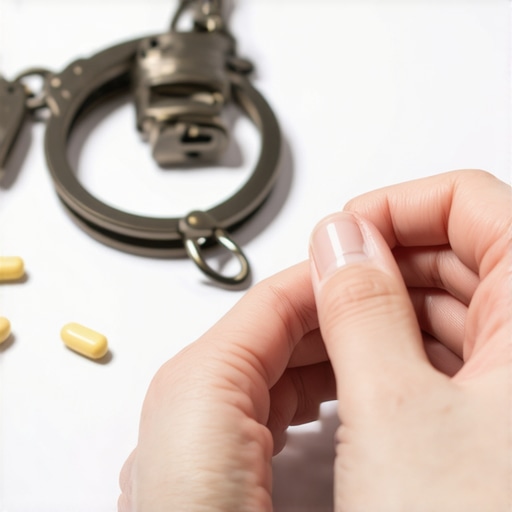
The smell of stale coffee and the hum of a flickering fluorescent light are the backdrops of a legal system that does not care about your doctor’s orders. I have spent twenty-five years watching the machine grind well-meaning people into dust. Most people think that because a doctor wrote the script, they are safe from the flashing lights in the rearview mirror. They are wrong. The law is a cold instrument, and it does not distinguish between a street dealer and a patient following a medical regimen if the officer on the scene decides you look too tired or your eyes do not track quite right. I watched a client lose their entire claim in the first ten minutes of a deposition because they ignored one simple rule about silence. They thought explaining their medical history would earn them sympathy. Instead, it gave the prosecutor the exact admission needed to prove impairment without a single drop of alcohol in the blood. This is the reality of the courtroom. It is not about what you took; it is about how the state can frame your physiology against you.
The blood chemistry trap
Prescription drugs like benzodiazepines, stimulants, or even high-dose antihistamines create chemical markers that officers interpret as criminal impairment. Even if your blood levels are within therapeutic ranges, a DUI lawyer knows that the state will argue any presence of a substance proves you were unable to operate a motor vehicle safely. The biological half-life of your medication is a weapon for the prosecution. You might have taken a sleep aid fourteen hours ago, but the residual metabolites in your system are enough for a lab technician to testify that you were driving under the influence. This is where the technical defense begins. We look at the absorption rates and the specific metabolic pathways that the state ignores. Your body is a biological site of evidence, and the state often misreads the data. Call an attorney the moment they ask for a blood draw. Do not wait. The clock is your enemy in these cases.
Legality does not protect you from handcuffs
A valid prescription is a medical authorization, not a legal shield against a DUI charge or the procedural machinery of the police department. If you are pulled over and the officer detects a slow speech pattern or a lack of coordination, your prescription becomes the primary evidence of your guilt rather than an excuse for your behavior. The officer is not there to diagnose you. They are there to build a case. When you tell them you have a prescription, you are handing them the motive for the crime. You are confirming that a substance was in your system. This is a strategic error that leads to years of litigation. A DUI defense requires a surgical approach to the officer’s observations. We have to dismantle the narrative that your physical baseline is a sign of intoxication. Many medications cause dry mouth or dilated pupils, which are classic signs officers look for. They see a criminal; I see a side effect.
“Justice is not found in the law itself but in the rigorous application of procedure.” – Common Law Maxim
The failure of standard field sobriety tests
Standardized field sobriety tests were validated for alcohol consumption and frequently produce false positives when applied to individuals taking legal pharmaceutical medications. The walk and turn test or the one-leg stand are balance exercises that assume a healthy, unmedicated central nervous system. If you take medication for blood pressure or chronic pain, your equilibrium is already altered. The officer will record your stumble as a failure. They will not record that your medication causes dizziness as a known side effect. This is the procedural gap where a DUI attorney finds leverage. We cross-examine the officer on their lack of medical training. We force them to admit they cannot distinguish between a pharmacological side effect and illegal intoxication. The police report is a work of fiction designed to support an arrest. Our job is to edit that fiction with the truth of clinical data. The prosecution relies on your silence and your lack of technical knowledge. We break that reliance by attacking the validity of the roadside tests themselves.
The drug recognition expert deception
Drug Recognition Experts are police officers with minimal training who claim the ability to identify specific drug categories through physical observation alone. They use a twelve-step process that looks like science but functions like guesswork. They check your pulse and look at your tongue. They claim that a fast heart rate proves you are on a stimulant, even if you are simply terrified of being arrested. This pseudo-scientific approach is the cornerstone of many prescription DUI cases. A sophisticated DUI legal strategy involves bringing in actual toxicologists to debunk the DRE’s findings. We show the jury that a weekend seminar for a police officer does not equal a medical degree. The DRE is a witness for the state, and their testimony is often the only thing standing between you and a conviction. We target the gaps in their training and the subjectivity of their observations. If the pulse was high, was it because of the medication or the fact that a man with a gun was screaming at you? Context is everything.
“The Sixth Amendment right to counsel is a fundamental component of our justice system, ensuring that the accused are not left to navigate the complexities of the law alone.” – ABA Standards for Criminal Justice
Why the officer is not your friend
Law enforcement officers use rapport and artificial empathy to coax drivers into admitting they have taken medication before a formal arrest. They will ask if you have had a long day or if you are feeling okay. They want you to say you took a pill for a headache or a muscle relaxer for your back. Once you say yes, the trap is set. They have a confession. They will then use that confession to justify a blood warrant. The strategic play is to remain silent. You do not have to explain your medical history on the side of a highway. You do not have to help them build their case. When you call an attorney, you are installing a barrier between yourself and their interrogation. The state has unlimited resources to prosecute you. You need a defense that understands the nuances of pharmaceutical litigation. The goal is not just to win; the goal is to prevent the state from ever getting the evidence they need to convict. Every word you speak to the officer is a potential nail in the coffin of your freedom.
Chemical shadows in the discovery phase
The discovery process allows a DUI attorney to examine the lab equipment and the specific testing protocols used to analyze your blood sample. We look for the ghost in the machine. Gas chromatography and mass spectrometry are complex processes that require perfect calibration. If the lab technician was overworked or the machine was not maintained, the results are junk. We demand the raw data. We look for the outliers. Often, the state’s lab will find a substance but fail to quantify it accurately. They report a positive result without explaining that the concentration was too low to cause any actual impairment. This is the microscopic reality of a DUI defense. We are not just arguing about the law; we are arguing about the physics of the lab. If the chain of custody is broken for even an hour, the evidence is tainted. We use these procedural errors to file motions to suppress. If the blood evidence is thrown out, the case usually dies with it. This is how high-stakes litigation is won. It is won in the details that everyone else ignores.
The strategic timing of the demand letter
While most lawyers tell you to sue immediately, the strategic play is often the delayed demand letter to let the defendant’s insurance clock run out. In the context of a wrongful arrest, we want to gather all the medical records and the officer’s body camera footage before we show our hand. We want the state to commit to their version of events. Once they have filed their reports, they are locked into a story. We then use the medical evidence to prove that their story is impossible. This creates a conflict that the prosecution cannot resolve. They are stuck with a lab report that contradicts the officer’s observations. This is the point where we negotiate from a position of power. A DUI defense is about creating doubt in the mind of the prosecutor before the case ever reaches a jury. We show them the holes in their logic and the flaws in their evidence. If we can prove the arrest was based on a misunderstanding of a legal prescription, the leverage shifts entirely to our side. You are not a criminal for taking your medicine. You are a victim of a system that prioritizes arrests over accuracy.