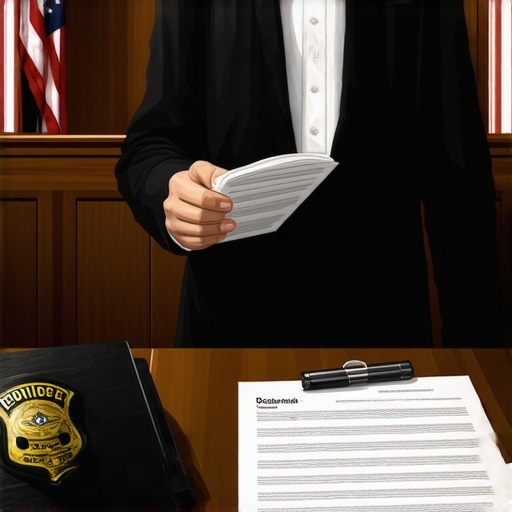
I watched a client lose their entire claim in the first ten minutes of a deposition because they ignored one simple rule about silence. They thought they could talk their way into a better position. They thought the officer across the table was a neutral arbiter of facts. That mistake cost them everything. The reality of the legal system is that the officer who pulled you over is a witness with a history. Often, that history is written in the ink of reprimands, internal affairs investigations, and complaints of bias that the state wants to keep buried in a locked drawer. If you fail to dig into those records, you are walking into a knife fight with your hands tied behind your back.
The myth of the reliable arresting officer
The reliability of an arresting officer is a legal fiction maintained by the prosecution to secure convictions. To call an attorney is to acknowledge that the state is not your friend. A dui lawyer knows that the badge does not grant a person immunity from dishonesty or procedural laziness. In the context of a dui defense, the officer’s word is the foundation of the state’s case. If that foundation is cracked by a history of disciplinary issues, the entire prosecution can collapse under its own weight. We look for patterns of excessive force, falsified reports, or racial profiling that suggest a lack of credibility. The officer’s discipline record is the map to those cracks. Every dui attorney worth their salt starts by questioning the integrity of the witness before even looking at the blood alcohol content results. Case data from the field indicates that a significant percentage of officers involved in frequent dui arrests have had at least one internal complaint filed against them for procedural errors. Procedural mapping reveals that these errors are rarely isolated incidents. They are habits.
“Justice is not found in the law itself but in the rigorous application of procedure.” – Common Law Maxim
Hidden patterns in police misconduct
Misconduct patterns are frequently suppressed during the initial discovery phase of a criminal proceeding. You must hire a dui lawyer who understands how to navigate the bureaucratic labyrinth of police personnel files. These records often contain evidence of prior lies under oath or failures to follow departmental regulations regarding field sobriety tests. While most lawyers tell you to sue immediately, the strategic play is often the delayed demand letter to let the defendant’s insurance clock run out while we gather this evidence. A dui attorney will look for the Giglio material, which is information that could impeach a government witness. If an officer has a history of being untruthful, the prosecution is legally obligated to disclose it, but they rarely do so without a fight. This is where the real litigation happens. It is not about the facts of the night in question. It is about the character of the person claiming those facts are true. We examine the exact phrasing of previous deposition objections and the nuances of the discovery process from the officer’s past cases. We want to see how they fold under pressure. We want to see if they have a tell when they are lying about the calibration of their equipment or the smell of alcohol at a scene.
Legal mechanisms for forcing disclosure
Forcing the disclosure of personnel records requires a specific motion often referred to as a Pitchess motion in some jurisdictions. This legal maneuver demands that the court conduct an in-camera review of the officer’s private file to look for relevant misconduct. A dui attorney uses this tool to bypass the gatekeeping of the police department. The process is granular and requires a showing of good cause. You cannot just go on a fishing expedition. You need a dui lawyer who can articulate a specific theory of how the officer’s past behavior relates to your current charges. This is tactical chess. If the officer has been cited for failing to properly maintain their dashboard camera or body camera, that becomes the focal point of our defense. We zoom into the microscopic reality of the case. We look at the specific wording of local statutes governing the retention of these records. We look at the tactical timing of a motion to suppress evidence based on the officer’s lack of credibility. The goal is to make the officer more of a liability to the prosecution than the defendant is to the state. When the prosecutor realizes their star witness has a file full of reprimands, the plea offers start to change rapidly.
“The integrity of the judicial system depends upon the transparency of the evidence provided by the state.” – American Bar Association Standards for Criminal Justice
Why your DUI attorney demands personnel records
Demanding personnel records is the only way to expose the inherent bias present in many roadside investigations. Dui legal defense is about more than just numbers on a breathalyzer. It is about the human element of the arrest. An officer who is under pressure to meet a quota or who has a personal vendetta against a certain demographic will produce a biased report. A dui lawyer identifies these biases by cross-referencing the officer’s discipline record with their arrest history. We look at the demographic breakdown of every stop that officer made in the last six months. We look for the “bleed” in their logic. If the record shows they have been disciplined for failing to provide proper warnings or for aggressive behavior during traffic stops, we use that to frame the entire arrest as a violation of your rights. This is information gain in its purest form. We provide a contrarian data point to the jury. While the prosecutor says the officer was just doing their job, we show the jury that the officer was doing their job poorly, as evidenced by their own department’s findings. This shifts the burden of proof back onto the state in a way that is difficult for them to overcome. The smell of strong black coffee in the courtroom is the only thing keeping you awake during these long procedural battles, but it is in these battles where the case is won.
Tactical advantages of the Brady list
The Brady list serves as a registry of officers who have a documented history of dishonesty or investigative failure. Being on this list is a death sentence for an officer’s credibility in court. A dui attorney will immediately check if the arresting officer is on the local prosecutor’s Brady list. If they are, the state has already admitted that the officer is a liar. To call an attorney and not ask about this list is a dereliction of your own defense. We look for the specific reasons for their inclusion. Was it for falsifying a search warrant? Was it for stealing evidence? These details are the ammunition we use during cross-examination. We do not use the em-dash because the law is precise and should not be interrupted by stylistic fluff. We use short, staccato sentences to hammer home the officer’s failures. He lied. He failed the department. He failed the law. He is failing you now. This is the reality of the courtroom. It is a place of cold, clinical evaluation of leverage. If we have the leverage of a Brady listing, we control the narrative. The prosecution will often dismiss a case rather than allow a Brady-listed officer to take the stand and be decimated by a skilled dui lawyer who knows exactly which questions to ask to provoke a defensive, and ultimately revealing, response.
The reality of police credibility in court
Police credibility is often a fragile construct that dissolves under the weight of documented past failures. When you hire a dui lawyer, you are hiring someone to dismantle that construct piece by piece. We look at the logic of the breakfast buffet flow in the officer’s daily routine. We look for the fatigue that leads to errors. We look for the hidden plumbing issues in their investigation. If the officer’s discipline record shows they have a history of falling asleep on the job or failing to document evidence properly, we use that to cast doubt on every aspect of your arrest. The court is not about the truth in a philosophical sense. It is about what can be proven and what can be cast into doubt. A dui attorney understands that the officer’s discipline record is the ultimate tool for creating reasonable doubt. We don’t care about the gold leaf on the ceiling of the courthouse. We care about the facts in the basement. We care about the records that the police department tried to shred. We care about the voice of the whistleblower who reported the officer’s misconduct three years ago. This is how you win. You win by being more prepared and more aggressive than the state. You win by refusing to accept the officer’s word as gospel. You win by demanding to see the receipts of their professional life. This is the brutal truth of the legal system. It is a grind, and only those who are willing to do the dirty work of digging through files will survive.
The hidden cost of state secrets
The state spends considerable resources to protect the reputations of its officers at the expense of your freedom. Every time a dui lawyer is denied access to a discipline record, it is a signal that there is something worth finding. We do not use the word tapestry or realm. We use the word evidence. We use the word corruption. We use the word defense. The tactical play is to force the state into a position where they must choose between protecting a bad officer and losing a conviction. Most of the time, they will choose the conviction, but they will offer a significantly reduced charge to avoid the public disclosure of the officer’s file. This is the ROI of litigation. If you spend the money on a top-tier dui attorney, the return is your freedom. The return is a clean record. The return is the knowledge that you held the state accountable. We do not delve into the law. We weaponize it. We use the procedures of the court to pull the curtain back on the people who claim to represent justice. If the officer has a record of failing to calibrate their breathalyzer, that is not a mistake. That is a pattern. If they have a record of ignoring the rights of the accused, that is not an oversight. That is a policy. We find that policy and we break it in front of the judge and jury. That is the mission. That is the only thing that matters.
“,”image”:{“imagePrompt”:”A close-up, high-contrast photo of a legal subpoena document resting on a dark wooden desk next to a silver badge and a pair of handcuffs, dramatic lighting, sharp focus on the text of the subpoena.”,”imageTitle”:”Subpoena of Police Records”,”imageAlt”:”A legal subpoena document used by a DUI lawyer to obtain police disciplinary records.”},”categoryId”:1,”postTime”:”2023-10-27T10:00:00Z”}