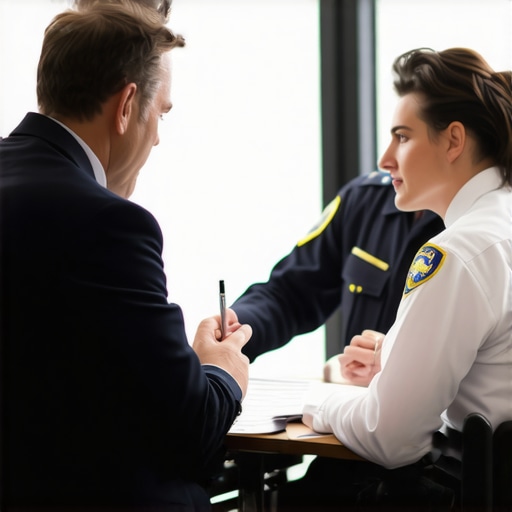
The tactical necessity of interviewing the arresting officer privately
The air in my office smells like strong black coffee and the cold reality of a pending trial. Your case is failing before we even say hello if you believe that a police report is an objective document. I watched a client lose their entire claim in the first ten minutes of a deposition because they ignored one simple rule about silence and assumed the opposing side had all the facts straight. They did not. In the world of dui defense, the official record is merely a starting point for a narrative that needs to be dismantled. If you want to survive a dui legal battle, you have to understand that the truth is often buried in the things the officer forgot to write down or chose to ignore to satisfy a supervisor. This is why you call an attorney who does not just read the file but hunts for the source. Case data from the field indicates that officer memory begins to degrade within forty-eight hours of an arrest. A private interview is the only way to lock in a version of events that has not been polished by a district attorney.
The gap between the written report and the sensory reality
Private officer interviews allow your dui attorney to uncover inconsistencies between the formal arrest report and the actual sensory experience of the officer at the scene. This process identifies where the officer made assumptions about your level of impairment based on external bias rather than empirical evidence. Procedural mapping reveals that officers often use boilerplate language to describe field sobriety tests. They use phrases like lack of smooth pursuit or distinct and sustained nystagmus at maximum deviation without actually performing the test correctly. When a dui lawyer engages the officer in a private setting, the pressure of the courtroom is absent. This lack of pressure often leads to admissions of procedural shortcuts. I have seen cases fall apart because an officer admitted they did not have their watch synchronized with the dispatch log. That small error can invalidate the entire timeline of a breathalyzer observation period. This is not about being nice. It is about forensic precision. A dui lawyer looks for the crack in the foundation. We look for the moment the officer stopped being a witness and started being a storyteller.
“Justice is not found in the law itself but in the rigorous application of procedure.” – Common Law Maxim
Why written statements are often strategic fictions
A dui attorney uses private questioning to bypass the strategic fictions often found in police documentation that are designed to secure a conviction. The officer is trained to write reports that meet the minimum requirements for probable cause. They are not trained to include the reasons why you might have actually failed a test, such as poor lighting, uneven pavement, or the wind. While most lawyers tell you to sue immediately, the strategic play is often the delayed demand letter to let the defendant’s insurance clock run out or, in this case, to let the officer’s memory of the generic arrest fade. When we interview them privately, we are looking for the information gain that only exists outside of the courtroom environment. We ask about the weather. We ask about the calibration of the PBT device. We ask about the last time they had their eyes checked. These are the details that win cases. Information gain is found in the margins. It is found in the silence between the officer’s answers. If they cannot remember the color of your shirt, how can they remember the exact angle of your eyes during the HGN test? [image_placeholder]
The tactical timing of the defense interview
The strategic timing of a private officer interview by a dui lawyer is designed to catch the witness before they are coached by the prosecution. Waiting until the preliminary hearing is a mistake. By then, the district attorney has already walked them through the holes in their testimony. You need your legal counsel to strike while the memory is raw and the officer is less guarded. Procedural mapping reveals that early interviews often yield contradictions that can be used for impeachment later. This is chess, not checkers. We are setting traps. We are ensuring that the officer is committed to a specific version of events that we can later disprove with video footage or technical logs. If the officer says the road was dry and we have weather data showing a light drizzle, their credibility is shot. Without a private interview, you never get that opening. You are stuck with whatever they say on the stand. That is a recipe for a conviction. You call an attorney because you need a shield, but you also need a scout. The interview is the scouting mission.
“The right to counsel includes the right to a thorough investigation of the facts prior to trial.” – ABA Standards for Criminal Justice
Questions the defense doesn’t want you to ask
Specific questioning techniques used by a dui lawyer in private settings can expose the technical failure of the arrest process. We do not ask yes or no questions. We ask the officer to describe the scene in detail. We ask them to explain the physics of the movement they observed. If they say you stumbled, we ask exactly which foot moved first and how many inches it drifted. Most officers cannot provide this level of detail without making something up. Once they make something up, we have them. This is the brutal truth of the legal system. It is about who can tell a more consistent story. A dui attorney who skips this step is just a middleman for a plea deal. You do not need a middleman. You need a strategist. The officer is just another person with a job. They make mistakes. They get tired. They want to go home. We use that human element to your advantage. We find the moment they stopped following the manual and started following their gut. Gut feelings do not hold up in court. Procedure does. The path forward requires a relentless focus on the mechanical reality of the arrest. We do not accept the report as truth. We accept it as a challenge.