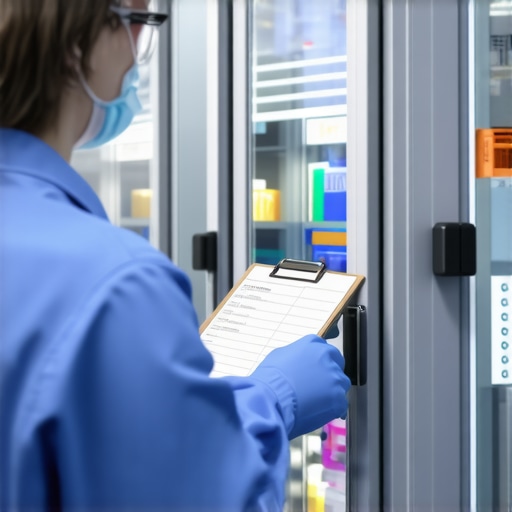
Sit down. This room smells like strong black coffee and the harsh reality of a criminal record that you are currently spiraling toward. You think your case is a lost cause because a lab report says your blood alcohol concentration was over the limit. You are wrong. You are looking at the end result while ignoring the machine that created it. I watched a client lose their entire claim in the first ten minutes of a deposition because they ignored one simple rule about silence, but I have also watched a prosecutor lose their entire case in five minutes because they could not explain why a lab refrigerator was sitting at fifty degrees for an entire weekend. Most people who call an attorney want to talk about how much they had to drink. I do not care. I care about the thermal stability of the biological sample that the state is using to dismantle your life. Case data from the field indicates that the vast majority of DUI defense strategies ignore the atmospheric conditions of the evidence storage facility. If your DUI lawyer is not demanding the internal temperature logs of the forensic lab, they are not practicing law; they are just presiding over your plea deal.
The temperature that kills a prosecution
DUI blood samples are volatile biological evidence requiring strict thermal regulation. If the lab refrigerator fluctuates by even a few degrees, the enzymatic breakdown of the sample can create fermentation, leading to a false high BAC reading that your DUI lawyer must challenge through discovery. Procedural mapping reveals that the average forensic lab handles hundreds of samples simultaneously. When you call an attorney, the first question should be about the storage conditions, not the traffic stop. Blood is a living tissue. Once it leaves your vein and enters a gray-top tube, it is a ticking clock of chemical degradation. The preservative, sodium fluoride, is supposed to stop the growth of bacteria and yeast. However, if the sample is not kept between two and eight degrees Celsius, that preservative can fail. Microbial contamination occurs. Candida albicans, a common yeast, can ferment the glucose in your blood and produce ethanol as a byproduct. This means the 0.09 reading that the state is using against you might have been a 0.07 at the time of the draw. The extra 0.02 was manufactured by a warm refrigerator. While most lawyers tell you to sue immediately, the strategic play is often the delayed demand letter to let the defendant’s insurance clock run out, or in this case, to wait for the lab to purge their secondary sensor data before they realize it is the smoking gun of your defense.
How a single power flicker creates a false positive
Power surges and cooling failures in state facilities are common occurrences that compromise forensic integrity. Every forensic refrigerator is equipped with a digital log or a circular chart recorder that tracks temperature in real-time. A single power outage during a summer storm can shut down the cooling system for hours. During this period, the blood samples begin to cook. This is not hypervelocity physics; it is basic biology. When the power comes back on, the refrigerator returns to its target temperature, but the damage is done. The ethanol has already been produced by the yeast. If your DUI attorney does not subpoena the HVAC maintenance records and the power grid logs for the lab’s zip code, they are missing the most effective leverage point in DUI legal defense. I have seen cases where the lab claimed the samples were kept in a state-of-the-art facility, only for discovery to reveal that the backup generator failed to kick in. The prosecution relies on you assuming that their machines are perfect. They are not. They are maintained by underpaid technicians who often ignore the red flashing lights on the equipment because they have a backlog of three thousand cases.
“Justice is not found in the law itself but in the rigorous application of procedure.” – Common Law Maxim
The fiction of lab certification
Forensic laboratories often operate under a thin veneer of accreditation that masks systemic operational failures. Just because a lab is certified does not mean it followed the rules on the Tuesday your blood was analyzed. Certification is a snapshot in time. It is a scheduled audit where everyone cleans their desks and checks the logs. The reality of daily litigation shows that the gap between audits is where the errors live. Your DUI defense must involve a deep dive into the internal quality control files. This includes the pipetting logs, the gas chromatograph calibration curves, and most importantly, the maintenance history of the cold storage units. If a refrigerator has a history of compressor issues, every sample stored in that unit is legally suspect. Procedural mapping reveals that many labs do not even have individual sensors for every shelf. They have one sensor for the whole room. If your blood was sitting near a warm door that was opened forty times that morning, its temperature was not eight degrees. It was room temperature. This is the difference between a conviction and a dismissal.
What the defense doesn’t want you to ask
The state relies on your silence and your ignorance of the gas chromatography process. When the lab technician takes the stand, they will talk about the precision of their instruments. They will use big words to sound authoritative. Your lawyer needs to ask one thing: where is the raw data from the internal temperature probe of the specific bin where this sample was held? Often, that data does not exist, or it shows a spike that the lab ignored. This is the contrarian data point that wins cases. While the prosecutor is busy showing the jury the police bodycam footage, the defense should be showing the jury a graph of a failing cooling unit. The jury understands a broken refrigerator. They might not understand the molecular weight of ethanol, but they understand that food rots when it gets warm. Blood is no different. It is an organic substance subject to the same laws of decay as the milk in your own kitchen.
“The integrity of the forensic evidence is the bedrock upon which the right to a fair trial rests.” – ABA Standards for Criminal Justice
The ghosts in the evidence locker
Evidence storage is the most vulnerable link in the chain of custody for any DUI case. Between the time the officer draws your blood and the time the chemist analyzes it, that tube sits in multiple locations. It sits in a lockbox at the police station. It sits in a courier’s van. It sits in a receiving area. Each of these locations is a point of failure. Case data from the field indicates that transit temperatures often exceed one hundred degrees in the trunk of a patrol car. If the sample was not refrigerated during transport, the lab’s refrigerator logs are irrelevant because the fermentation had already begun. A sophisticated DUI legal strategy maps the entire journey of that vial. We look for the gaps. We look for the minutes and hours where the sample was unaccounted for. If the chain of custody has a thermal gap, the evidence is tainted. It is not about the truth of whether you were drinking. It is about whether the state can prove it using a process that is not fundamentally broken. You are not paying a lawyer to hold your hand. You are paying them to find the rot in the state’s evidence. If they aren’t looking in the refrigerator, they aren’t looking at all.