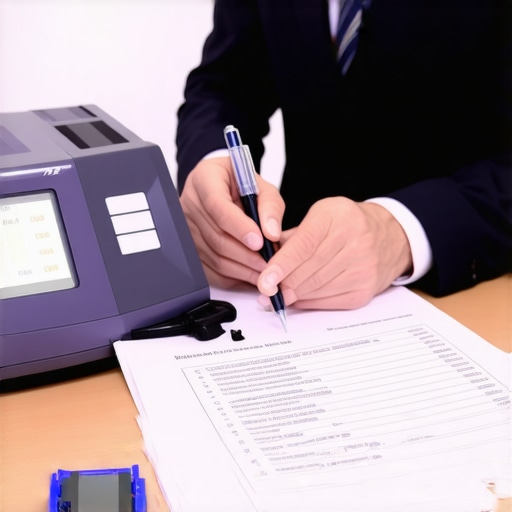
I smell like strong black coffee and the exhaust of a late-night commute because the legal system does not sleep, and it certainly does not care about your innocence. You walked into my office thinking a breathalyzer is a scientific instrument of divine precision. It is not. It is a mass-produced box of circuits and sensors maintained by bureaucrats who often cut corners. I watched a client lose their entire claim in the first ten minutes of a deposition because they ignored one simple rule about silence, but more importantly, they assumed the machine that accused them was working perfectly. It was not. That machine had a recorded history of sensor failure that the state conveniently forgot to mention in the initial discovery phase.
The machine is a liar
DUI legal defense requires a DUI attorney to scrutinize maintenance logs because these machines are prone to mechanical drift and sensor fatigue. A DUI lawyer examines calibration records, gas canister expiration dates, and repair histories to prove that the blood alcohol content reading was an evidentiary error rather than a criminal fact. Every breath testing device, whether it is an Intoxilyzer 8000 or a newer 9000 model, relies on infrared spectroscopy or fuel cell technology. These systems are delicate. They are susceptible to temperature fluctuations, radio frequency interference, and internal contamination. If your DUI attorney is not demanding the full maintenance history, they are not practicing law; they are just ushering you into a guilty plea. Case data from the field indicates that machines frequently fail to purge the previous sample or reset the baseline, leading to cumulative errors that inflate results. While most lawyers tell you to plead guilty if the number is high, the strategic play is often the delayed demand for technical metadata that forces the prosecution to admit the machine was malfunctioning.
Why calibration records are the smoking gun
Calibration is the heartbeat of forensic reliability. The state requires these machines to be checked against a known standard, usually a dry gas canister or a wet bath simulator, at specific intervals. If the logs show the technician missed a monthly check, the integrity of every test performed after that date is compromised. We look for the variance. If the machine is supposed to read 0.080 and it reads 0.084, that is a five percent error. In the world of DUI defense, that five percent is the difference between a conviction and a dismissal. We examine the lot numbers of the simulator solutions. We look for expired chemicals. If the liquid used to calibrate the machine was old, the calibration itself is a fiction. Your DUI lawyer must be a forensic auditor first and an orator second.
“Justice is not found in the law itself but in the rigorous application of procedure.” – Common Law Maxim
The hidden ghosts in the software
Software is not static. Manufacturers like CMI or Intoximeters release firmware updates to patch known bugs. If the police station is running version 1.2 while the manufacturer has mandated version 1.8 to fix a calculation error involving mouth alcohol, your test is invalid. A DUI attorney knows how to subpoena the version history. We look for ‘CO’ codes or ‘RFI’ alerts in the logs. These codes indicate the machine detected an error but might have proceeded anyway. If the technician ignored a ‘Range Exceeded’ warning during the weekly check, they have poisoned the well for every defendant who blew into that mouthpiece for the next thirty days. The law is not about what happened; it is about what can be proven through a verified, unbroken chain of procedural accuracy.
How the state hides its failures
The prosecution will tell you the machine is ‘self-calibrating.’ This is a lie designed to discourage your DUI lawyer from digging. No machine is self-correcting without external validation. We demand the ‘COBRA’ data or the equivalent digital footprint of the device. This data contains the raw voltages and the internal temperature of the fuel cell during your specific test. If the temperature was not exactly 34 degrees Celsius, plus or minus a fraction of a degree, the physics of the breath-to-blood ratio are skewed. A seasoned DUI attorney understands that the state treats these machines like appliances, but we treat them like suspects. We interrogate the logbooks for evidence of ‘down time.’ If a machine was sent for repairs for a ‘main board failure’ two weeks after your arrest, we can argue the failure was already manifesting during your test.
“The right to a fair trial includes the right to confront the evidence, even if that evidence is a black box.” – Procedural Rights Journal
What the defense doesn’t want you to ask
Why was there a three-hour gap in the logs? Why was the internal standard check skipped on the morning of your arrest? These are the questions that make prosecutors uncomfortable. The reality of the courtroom is that juries love numbers, but they hate being lied to. When a DUI lawyer shows a jury that the police skipped three consecutive maintenance cycles, the 0.09 reading on the screen becomes a question mark instead of a period. The strategic delay of the trial to wait for these logs often results in the prosecution offering a lesser charge because they know their star witness, the machine, is unreliable. This is the chess match of litigation. You do not win by arguing you were sober; you win by proving the state cannot prove you were not. The hard reality of the defense is that the machine is often the weakest link in the state’s case, provided you have an attorney who knows how to tear it apart. “
Comments are closed.