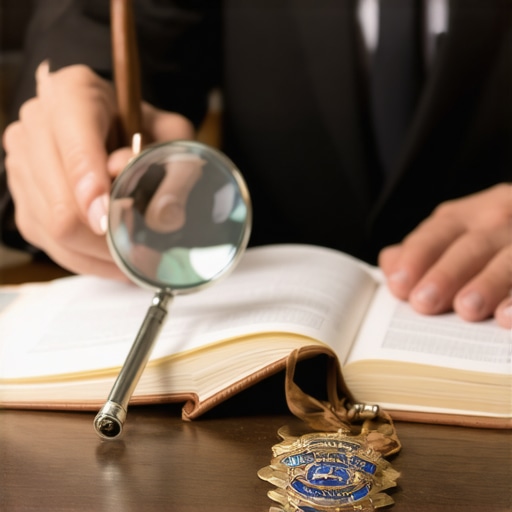
The air in a courtroom often carries a faint scent of ozone and mint when a high-stakes trial is about to commence. I have spent twenty-five years navigating these corridors, treating every case like a lethal game of chess where the pieces are made of evidence and the board is the rule of law. I watched a client lose their entire claim in the first ten minutes of a deposition because they ignored one simple rule about silence. They felt the need to fill the void, and in that void, they handed the prosecution a confession disguised as a clarification. This is the reality of the legal system. It is not about what happened; it is about what can be proven and, more importantly, what can be discredited through rigorous procedural leverage.
The hidden weakness in professional police certifications
A DUI attorney must examine the officer’s training log because these records often reveal expired certifications, incomplete National Highway Traffic Safety Administration (NHTSA) training, or a history of procedural errors that invalidate the arrest. Case data from the field indicates that many officers operate on legacy knowledge rather than current legal standards. If a DUI lawyer can prove that the arresting officer failed to maintain their proficiency in Standardized Field Sobriety Testing (SFST), the foundational evidence of the stop begins to crumble. We do not look for minor typos. We look for systemic failures in the officer’s professional history. Litigation is about finding the gap between the officer’s testimony and their documented capability.
“Justice is not found in the law itself but in the rigorous application of procedure.” – Common Law Maxim
What the prosecution hides about field sobriety testing
Standardized Field Sobriety Tests are scientific instruments that require precise administration to be valid in a DUI defense strategy. When a DUI attorney scrutinizes the training log, they are checking for the officer’s specific scores during their last certification cycle. Most people assume that failing a balance test means they are guilty. This is a fallacy. The test is designed to measure divided attention, not physical grace. If the officer’s log shows they haven’t attended a refresher course in over three years, their ability to accurately ‘grade’ your performance is legally suspect. Procedural mapping reveals that the Horizontal Gaze Nystagmus (HGN) test is the most frequently botched element of the roadside investigation. A DUI lawyer knows that if the officer did not hold the stimulus at the correct distance or for the correct duration, the results are scientifically worthless.
The specific failure points in chemical breath test maintenance
Breathalyzer results are only as reliable as the maintenance logs and the training of the operator conducting the test. To call an attorney is to initiate a forensic audit of the machine used in your arrest. Every Intoxilyzer or Alcotest unit has a history. It has a repair record. It has a calibration schedule. If the officer’s training log does not show a current certification for that specific model, the state’s primary evidence may be suppressed. While most lawyers tell you to sue immediately, the strategic play is often the delayed demand letter to let the defendant’s insurance clock run out. This forces the state to scramble for records that may have been poorly archived or lost. A DUI legal professional uses this timing to create pressure.
“The integrity of the judicial process depends upon the absolute transparency of the evidence-gathering phase.” – American Bar Association Standards
Why local DUI defense depends on forensic scrutiny
Local DUI defense requires a deep understanding of how specific jurisdictions manage their officer training files and equipment maintenance schedules. In many cases, the ‘training’ consists of a weekend seminar held years ago. This is where the case is won. When you hire a DUI attorney, you are paying for their ability to find the ghost in the machine. We look for the ‘bleed’ in the prosecution’s case. Is the officer a ‘settlement mill’ regular who expects everyone to plead out? They hate it when we demand the full file. They hate the silence that follows a pointed question about their 2018 recertification. We don’t accept ‘close enough’ when your freedom is on the line. The courtroom is territory, and the training log is the map that shows us where the enemy’s defenses are thinnest.
Tactical advantages of the delayed demand strategy
A delayed demand for training records allows a DUI lawyer to identify inconsistencies between the officer’s initial report and their official certification history. This contrarian data point is often overlooked by less experienced counsel. By waiting until the officer has committed to a specific narrative in a preliminary hearing, the defense can then introduce the training logs to highlight contradictions. This is not just about the law; it is about forensic psychology. When an officer is confronted with their own lack of qualification, their credibility before a jury evaporates. We use the procedural rules to dictate the pace of the litigation. This is chess, not checkers. Every motion to dismiss is a calculated strike against a fragile foundation. If you are facing charges, you need a strategist, not a clerk. You need someone who understands that the training log is the most dangerous document in the station house.