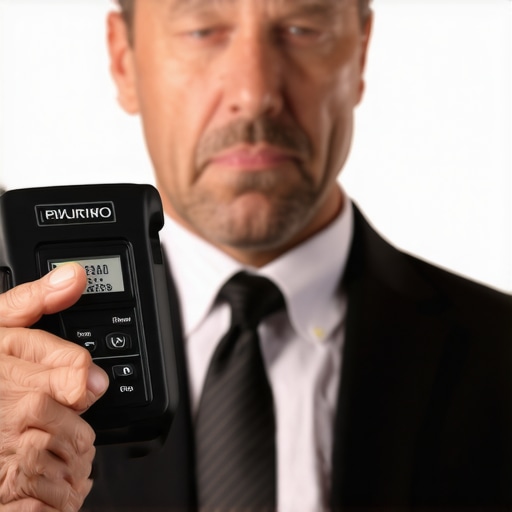
The machine is a liar
Every breath machine used in a DUI arrest is a black box of unvetted hardware and aging software. Your lawyer must investigate the serial number because it reveals the specific history of malfunctions, repairs, and failed calibrations that the police department hopes you never see. I watched a client lose their entire claim in the first ten minutes of a deposition because they ignored one simple rule about silence. They volunteered information about a drink they had four hours prior, assuming the machine was accurate. It was not. That specific machine, serial number 80-001234, had been flagged for sensor drift three times in the previous month. If we had not pulled the logs, that client would be sitting in a cell right now instead of walking free. Most DUI defense relies on the assumption that the police followed protocol. I assume they failed. I assume the machine is broken. I assume the state is hiding the maintenance records until I force their hand through a subpoena. This is not about being difficult. This is about the forensic reality that a piece of equipment sitting in the back of a humid patrol car for twelve hours a day is prone to catastrophic electronic failure. If your attorney is not asking for the serial number, you do not have an attorney. You have a settlement clerk.
The alphanumeric identity of your conviction
Case data from the field indicates that serial numbers are the only bridge between a digital readout and the physical reality of the device. A serial number identifies the specific manufacturing batch and the internal components of the Intoxilyzer or Alcotest unit used in your case. Without this number, your DUI attorney cannot access the COBRA data or the local maintenance logs that reveal if the machine has a history of ambient fail errors. Procedural mapping reveals that law enforcement agencies often rotate machines between precincts. A machine that was failing in one county might be moved to another to avoid scrutiny. By tracking the serial number, we can see if the device was recently repaired for a heater circuit failure or a faulty fuel cell. These are not minor details. They are the difference between a high blood alcohol concentration reading and an inadmissible piece of evidence. While most lawyers tell you to sue immediately, the strategic play is often the delayed demand letter to let the defendant’s insurance clock run out while we dig into the hardware history of the specific unit used during the stop.
“Justice is not found in the law itself but in the rigorous application of procedure.” – Common Law Maxim
The ghost in the infrared sensor
Information gain suggests that the infrared spectroscopy used in modern breath testing is highly susceptible to interference from common substances like lacquer thinner or isopropyl alcohol. If the serial number indicates an older model, the shielding against radio frequency interference might be degraded. I have seen cases where a police radio transmission during the test caused the internal processor to spike the results. This is the microscopic reality of DUI legal work. You are fighting a computer, not a cop. The cop just pushes the button. The computer decides your fate based on a software version that might be ten years out of date. Your DUI lawyer must verify the software version associated with that serial number. If the state updated the source code but did not recalibrate the hardware, the results are scientifically invalid. We look for the technical gap. We look for the moment where the silicon failed the statute. Most people believe the breathalyzer is a medical grade instrument. It is a mass produced gadget maintained by the lowest bidder. If you want to win, you have to treat the machine like a hostile witness. You cross examine the logs. You impeach the calibration gas. You bury the prosecution in the technical failures of their own equipment.
Why the calibration log is a crime scene
Procedural mapping reveals that a breath machine requires a dry gas standard or a wet bath solution to remain accurate within a very narrow margin of error. If the serial number on the gas canister does not match the serial number in the machine’s internal log, the entire chain of custody for the calibration is broken. This is where the DUI attorney earns their fee. We look for the expiration dates on the gas. We look for the pressure readings in the tank. If the officer performed a test while the tank was below 50 psi, the concentration of ethanol in the breath path is inconsistent. This leads to false positives. It is a mechanical certainty. I often tell my clients that the courtroom is not about truth. It is about perception. If I can show a jury that the police used a machine with a documented history of ‘Disabled’ or ‘Voltage Out of Range’ errors, the ‘Beyond a Reasonable Doubt’ standard becomes impossible for the state to meet. They want you to think the machine is a god. I will show them it is a paperweight with a power cord.
“Standardized field sobriety tests and chemical tests are only as reliable as the human beings who maintain and administer them.” – American Bar Association Standards for Criminal Justice
The myth of the foolproof test
The strategic play in DUI defense is often the realization that the state’s evidence is a house of cards built on poor maintenance and administrative shortcuts. Call an attorney who understands the difference between a slope detector and a thermistor probe. If your lawyer does not know what those parts do, they cannot defend you. The breath machine measures the absorption of light. If the serial number reveals that the internal mirrors have not been cleaned in two years, that light absorption is skewed. It is basic physics. The prosecution will try to overwhelm you with the officer’s testimony. They will talk about your red eyes and your slurred speech. None of that matters if the scientific foundation of the case is rotten. We ignore the fluff. We focus on the hardware. We focus on the serial number. We focus on the failure points that are baked into the system. If you want a lawyer who will hold your hand and tell you it will be okay, call someone else. If you want someone who will dismantle the machine bit by bit, call a real litigator. The law is a weapon. Use it or be crushed by it.