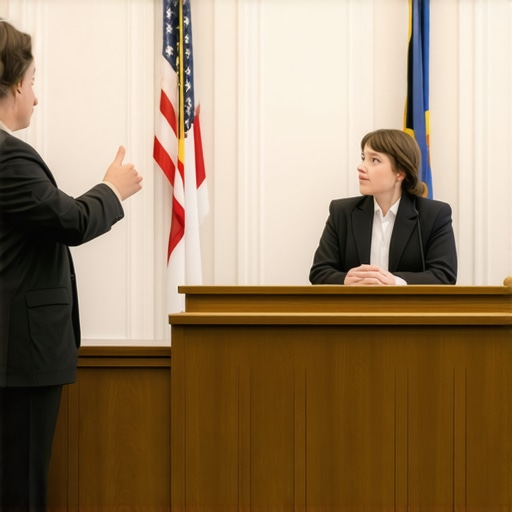
The air in my office usually smells like strong black coffee and the metallic tang of old law books. It is a scent that reminds me that the legal system is a machine that grinds up the unprepared. I watched a client lose their entire claim in the first ten minutes of a deposition because they ignored one simple rule about silence. They thought being honest and being fast was the same thing as being smart. They were wrong. The same lethal mistake happens every morning in traffic courts across the country. People walk into their first appearance, overwhelmed by the sterile fluorescent lights and the judge’s booming voice, and they say the word that ends their future. Guilty. They think they are taking responsibility. In reality, they are surrendering before the battle has even begun. A DUI defense requires a surgical approach to the facts, not an immediate admission of defeat. When you face a DUI attorney, the first thing they should tell you is that the government is not your friend. The state has a burden of proof that is often built on shaky foundations of subjective police observations and uncalibrated machinery. If you plead guilty at your arraignment, you are handing the prosecutor a victory they might not have been able to earn. You are bypassing the discovery process, the evidentiary hearings, and the constitutional checks that keep the system from becoming a conveyor belt for convictions. You need to call an attorney before you even think about entering a plea. The law is a game of leverage, and you have the most leverage when the state is forced to prove its case through the rigorous application of procedure.
The illusion of the quick fix
DUI defense starts with the understanding that the first court date is merely a procedural bridge. It is not the final judgment. By entering a plea of not guilty, you are securing your rights to inspect the evidence and challenging the DUI legal premises that the prosecution intends to use against you in the future. Many defendants believe that a quick guilty plea will result in leniency from the court. This is a fallacy. The judge is bound by statutory minimums that do not care about your promptness. In fact, a rapid plea often results in a harsher long term outcome because you have waived your ability to negotiate a reduction based on evidentiary flaws. The prosecution is looking for the path of least resistance. When you stand your ground, you force them to actually work. You force them to produce the dashcam footage, the bodycam audio, and the maintenance logs for the breathalyzer. Most people do not realize that these machines are finicky. They require constant maintenance and specific environmental conditions to be accurate. If the machine was not calibrated within the specific window required by state law, the results are essentially worthless. But you will never know that if you plead guilty on day one. You are effectively telling the court that the police did everything perfectly. I have been in this business long enough to know that the police rarely do everything perfectly. They are human. They get tired. They cut corners. My job is to find those corners and use them to tear the state’s case apart. Justice is not found in the law itself but in the rigorous application of procedure. This is why your initial appearance is the most dangerous moment of your case. It is the moment where your instinct to apologize overrides your right to a defense.
“Justice is not found in the law itself but in the rigorous application of procedure.” – Common Law Maxim
Discovery remains the primary engine of defense
DUI attorney experts know that the discovery phase is where cases are won or lost. In this phase, we demand every piece of evidence from the prosecution including the CAD reports and toxicology lab notes which often reveal significant gaps in the state’s narrative of the arrest. We are looking for the raw data. We do not want the police officer’s summary of the night. We want the actual timestamps. We want to know how long the officer observed you before the breath test. Most states require a twenty minute observation period. If the officer was busy filling out paperwork or talking to a colleague, they did not observe you. If they did not observe you, the test result can be suppressed. This is the microscopic reality of litigation. It is not about whether you had a drink. It is about whether the state followed the rules of the road. If the state breaks the rules, they do not get to use the evidence. It is that simple. I have seen cases where the blood sample was left in a warm car for six hours before being refrigerated. That ruins the sample. It causes fermentation, which creates alcohol in the vial that was not in the person’s body. If you plead guilty at your first court date, that blood sample stays in the lab, unchallenged, and your life is changed forever. A DUI lawyer is not just a representative. They are a forensic investigator. We look at the software version of the breathalyzer. We look at the officer’s training records. If their certification expired two days before your arrest, the stop is compromised. These are the details that the prosecutor will never tell you. They want you to see the big picture. I want you to see the cracks in the foundation.
The prosecution relies on your ignorance
DUI legal strategy often hinges on the fact that the average citizen does not understand the burden of proof or the limitations of police technology. Prosecutors rely on your fear and your desire to get the process over with to secure a conviction without having to go through a full trial. They use the first court date to apply maximum pressure. They might offer a slightly better deal if you plead today. Do not take it. That deal is a trap designed to save the state time and money. If they are offering a deal that early, it usually means they know their case has problems. They are trying to buy your silence before you hire a professional who can spot those problems. You have to understand the logistics of the courtroom. The prosecutor has a pile of files on their desk. They want to get through that pile as fast as possible. If you become a difficult file, you become a problem they want to solve through a better plea bargain later on. It is a game of attrition. We use the discovery process to create work for them. We file motions to suppress evidence. We file motions to dismiss. Every motion we file is a hurdle they have to jump. Most of the time, they would rather settle for a lesser charge like reckless driving than run the hurdles. But you have to be willing to run the race. If you quit at the starting line, you get the maximum penalty every single time. The system is designed to reward those who contest it and punish those who submit to it blindly.
“The right to be heard would be, in many cases, of little avail if it did not comprehend the right to be heard by counsel.” – Powell v. Alabama, 287 U.S. 45 (1932)
Breathalyzer science is often junk science
Breathalyzer results are often treated as absolute truth by the public, but a skilled DUI attorney understands that these machines are prone to error and influenced by factors like body temperature, hematocrit levels, and lung capacity. These machines do not measure your blood alcohol content directly. They measure breath alcohol and then use a mathematical formula called a partition ratio to guess what your blood alcohol might be. The problem is that the partition ratio is based on an average person. If your physiology is not average, the machine is wrong. If you have acid reflux or GERD, the machine can pick up mouth alcohol and give a reading that is double your actual level. If you were wearing dentures, the adhesive can trap alcohol and ruin the test. The state does not care about your dentures. They care about the number on the screen. This is why we bring in expert witnesses. We hire toxicologists who can explain to a jury why the machine’s number is a fiction. We look for the ghost in the machine. Sometimes the software has bugs. Sometimes the power supply was unstable. The level of detail required to defend a DUI is staggering. It involves physics, chemistry, and biology. It is not something you can do yourself. And it is certainly not something you can do at a first court date. You need time to build this defense. You need time to let the experts do their work. A conviction on your record is permanent. A plea of not guilty is just the beginning of the investigation.
Challenging the initial stop mechanics
Police officer testimony regarding the initial stop is frequently the weakest link in the DUI prosecution chain. By examining dashcam footage and GPS data, a defense team can often prove that the reasonable suspicion required for the stop was non existent or fabricated. The Fourth Amendment protects you against unreasonable searches and seizures. If the officer stopped you because they had a hunch, and not because you committed a traffic violation, the entire case is poisonous fruit. I have seen reports where an officer claimed a driver was swerving, but the video showed the car was perfectly within the lines. Without that video, the judge would believe the officer every time. With the video, the case is dismissed. This is why you must never plead guilty before seeing the video. The video is the only objective witness in the case. Officers have a narrative they need to support to justify their arrest. Sometimes that narrative is polished in the police report after the fact. We look for the contradictions. We look for the things the officer forgot to mention. Did they ask you to perform field sobriety tests on a gravel shoulder in high heels? That is not a fair test. Was the ground sloped? That ruins the balance tests. Was it windy? That affects the gaze nystagmus test. The police manual has very specific instructions on how these tests must be administered. If they deviate from the manual, the results are compromised. We use their own training manuals against them. We show the court that the officer failed to follow their own protocols. When the officer looks incompetent, the state’s case starts to bleed.
Negotiating from a position of strength
Pre-trial motions are the primary tool used by a DUI lawyer to create the necessary leverage for a reduction in charges or a total dismissal. While most lawyers tell you to sue immediately, the strategic play is often the delayed demand letter or a series of evidentiary challenges that wear down the prosecution’s resolve over several months. This is about the ROI of litigation. The state has limited resources. They do not want to spend forty hours of a prosecutor’s time on a single misdemeanor DUI if they know they might lose. If we can show them that their star witness is unreliable or that their evidence is likely to be suppressed, we change the math for them. We make it easier for them to offer a plea to a non alcohol related offense. But this takes time. It takes patience. It requires you to sit in a state of uncertainty for several months while we do the heavy lifting. Most people cannot handle the uncertainty. They want the weight off their shoulders today. But the weight of a conviction is much heavier than the weight of a pending case. A conviction affects your insurance, your employment, and your freedom of movement. It is a scarlet letter that never fades. We are not just fighting a court case. We are protecting your career and your reputation. We are ensuring that one night of bad luck or one overzealous officer does not define the rest of your life. We are the shield between you and a system that views you as a statistic.
The long term cost of a conviction
DUI conviction costs extend far beyond the initial fines and court fees. A permanent criminal record can lead to job loss, professional license revocation, and a massive increase in SR-22 insurance premiums that lasts for years. When you calculate the true cost of a guilty plea, it is often in the tens of thousands of dollars. Hiring a DUI attorney is an investment in your future. It is the cost of ensuring that you do not pay the state for the next decade. Think about the background checks. Think about the travel restrictions. Some countries will not even let you cross the border with a DUI conviction. You are essentially putting yourself in a cage of your own making if you plead guilty at that first hearing. The court will not explain this to you. The prosecutor will not warn you. They will just ask you if you understand your rights and then they will take your plea. You must be smarter than the machine. You must realize that the first court date is not the end. It is the opening move in a very long game of chess. If you lose your queen in the first move, you cannot win. Your plea is your queen. Hold onto it. Force the state to play the game. Force them to prove every single element of the crime. More often than not, they cannot do it. But you have to give your defense the space to work. You have to call an attorney and you have to do it now.