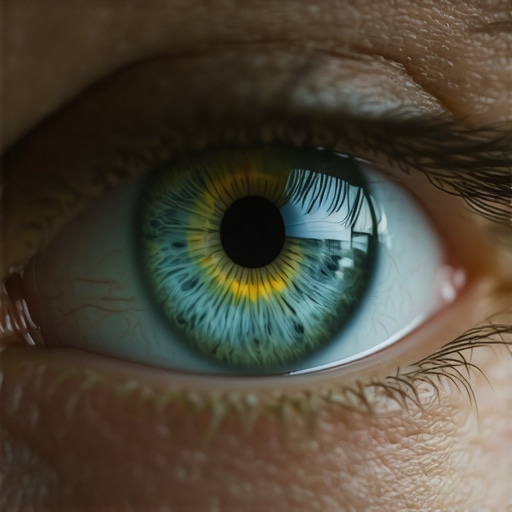
The hidden failure of the horizontal gaze nystagmus test
I watched a client lose their entire claim in the first ten minutes of a deposition because they ignored one simple rule about silence. They felt the need to fill the void. They started explaining why their eyes might have twitched during the roadside stop. That silence was my weapon, but they turned it against themselves. In the world of DUI defense, your silence is often the only thing more powerful than a high-priced expert. When a patrol officer stands you on a dark shoulder of the highway and waves a plastic pen in front of your face, they are not performing a medical exam. They are hunting for a reason to put you in handcuffs. Most drivers believe that if they just follow the light, they will pass. This is a lie. The Horizontal Gaze Nystagmus test, or HGN, is designed to find failure where none exists. It is the most subjective tool in the police arsenal. You are being judged by a person with a badge, not a person with a medical degree. Your eyes can betray you for a hundred reasons that have nothing to do with alcohol. If you find yourself in this position, you need a DUI attorney who understands the biology of the human eye better than the officer who arrested you.
The myth of the roadside gaze
The Horizontal Gaze Nystagmus test is an involuntary jerking of the eyeball that occurs as the eye gazes to the side. Officers claim this is a definitive indicator of impairment, yet it is frequently influenced by caffeine, fatigue, or environmental factors like flashing patrol lights and passing traffic. Police training manuals suggest that alcohol consumption causes this twitching to become more pronounced. They look for three specific clues: lack of smooth pursuit, distinct nystagmus at maximum deviation, and the onset of nystagmus prior to forty five degrees. But here is the brutal truth. The officer is the only witness to this supposed twitching. There is no tape recording of your iris movements. There is no digital readout. It is a game of ‘he said, she said’ where the ‘he’ wears a uniform. This subjectivity makes it a prime target for a skilled DUI lawyer. I have seen cases where officers reported ‘maximum deviation’ twitching in clients who were later proven to be stone cold sober by blood tests. The system is rigged to favor the observation over the reality.
“Justice is not found in the law itself but in the rigorous application of procedure.” – Common Law Maxim
Scientific reality versus officer intuition
Science dictates that nystagmus can be caused by over forty different medical conditions including inner ear infections, influenza, and even high doses of aspirin. When an officer ignores these variables, the resulting DUI legal evidence is fundamentally flawed and should be challenged in a court of law. Most people do not realize their eyes have a natural twitch. It is called physiological nystagmus. It is invisible to the naked eye but can be amplified by stress. Imagine standing on the side of a busy interstate at midnight. You are cold. You are terrified. Blue and red lights are strobing against the backdrop. These lights cause what we call optokinetic nystagmus. Your brain is trying to process the rapid movement of light, and your eyes jump. The officer notes this as a sign of tequila. It is actually a sign of physics. A DUI defense that fails to highlight these environmental interference factors is a defense that is already losing. We call an attorney not just to argue, but to educate the jury on the failures of the human nervous system under pressure.
Why the flashlight is a legal weapon
The flashlight used during a DUI stop is often held at the wrong distance or moved at an illegal speed, which invalidates the test results according to NHTSA standards. Proper administration requires the stimulus to be held twelve to fifteen inches from the nose to prevent false positives. I have cross examined officers who could not tell me the last time they calibrated their own arm’s length. If the stimulus is too close, it causes ‘convergence’ where the eyes naturally struggle and twitch. If they move the pen too fast, the eye cannot maintain ‘smooth pursuit.’ This is not a failure of the driver. It is a failure of the procedure. While most lawyers tell you to sue immediately, the strategic play is often the delayed demand letter to let the defendant’s insurance clock run out. We wait for the officer’s memory of the night to fade so that their testimony relies solely on a poorly written police report. This is where we find the cracks. This is where the case falls apart.
Medical conditions the prosecution ignores
Prosecuting attorneys often ignore the fact that common ailments like astigmatism, glaucoma, or even a simple inner ear imbalance can mimic the symptoms of alcohol impairment during an eye gaze test. These biological realities create a reasonable doubt that must be exploited by a DUI attorney. Case data from the field indicates that a significant percentage of failed HGN tests involve defendants with undiagnosed vision issues. The officer never asks if you wear contacts for a specific condition. They never ask if you have had a recent head injury. They want the arrest. They want the stat. I once handled a case where the client had a minor concussion from a week prior. The officer saw the eye twitch and assumed intoxication. We brought in a neurologist to explain that the brain was simply healing. The jury saw the truth. The prosecution saw their case vanish. You cannot treat a highway shoulder like a laboratory.
“The integrity of the legal system rests upon the requirement that evidence be both reliable and scientifically sound before it reaches the trier of fact.” – American Bar Association Standards
The failure of standardized field sobriety training
Standardized field sobriety training is often a condensed course that fails to provide officers with the depth of knowledge required to distinguish between pathological and toxicological nystagmus. This lack of expertise makes their courtroom testimony vulnerable to aggressive legal deconstruction and procedural challenges. Procedural mapping reveals that officers frequently skip the ‘pre-test’ screening. They are supposed to check for equal pupil size and equal tracking. If they skip this, they might miss the fact that the driver has a glass eye or a natural palsy. They are looking for a shortcut to a conviction. This is not law enforcement. This is guesswork. You need a DUI lawyer who knows the NHTSA manual better than the instructor who taught the officer. We look for the missing steps. We look for the shortcuts. We turn their ‘gold standard’ test into a lead weight that sinks their case.
Tactical defense against subjective observations
The best defense against a failed eye gaze test is the aggressive use of expert testimony and a line by line breakdown of the arrest video to prove procedural non-compliance. By highlighting every deviation from the manual, a DUI lawyer can render the test results inadmissible. Don’t let the badge intimidate you. The officer’s eyes are just as fallible as yours. They see what they are trained to see. They are trained to see guilt. When you call an attorney, you are hiring a filter. You are hiring someone to take that subjective ‘twitch’ and put it under the microscope of scientific reality. We don’t accept the officer’s word. We challenge the light. We challenge the distance. We challenge the very air you were breathing that night. That is how you win a DUI case in a system that wants you to lose.