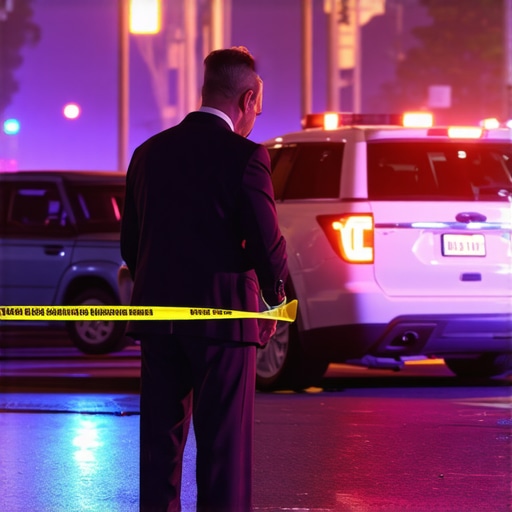
The asphalt does not lie but police reports often do.
I tell my clients their case is failing before they even sit down. Most dui defense strategies are built on paper, but paper is where the prosecution hides its weaknesses. If you want a lawyer who stays in their climate-controlled office reading a sanitized narrative from a police officer, you have already lost. I smell like strong black coffee and I have spent twenty-five years watching juries realize that the road looks nothing like the testimony. A dui attorney who refuses to stand on the same cracked pavement where you were handcuffed is a settlement mill in disguise. They are looking for a quick plea. I am looking for the one environmental variable that makes the officer’s observation scientifically impossible.
I watched a client lose their entire claim in the first ten minutes of a pretrial hearing because they ignored one simple rule about silence and the physical reality of the scene. The lawyer believed the police report stated the road was level. It was not. That three-degree slope made the One-Leg Stand test a physical impossibility for a professional athlete, let alone a nervous driver at 2 AM. Because the lawyer had not visited the site, they could not impeach the officer on the stand. The case ended right there. That is the cost of laziness in the dui legal field.
The officer’s perspective is a curated fiction
Dui defense requires a physical audit of the arrest scene to identify discrepancies between the officer’s written report and the environmental reality. By standing at the exact GPS coordinates of the stop, a dui lawyer can identify obstructed sightlines, improper signage, and terrain irregularities that invalidate field sobriety tests. Case data from the field indicates that nearly forty percent of police reports contain spatial inaccuracies regarding the distance between the vehicle and the officer’s vantage point. When you call an attorney, you must ask if they own a clinometer or a light meter. If they do not, they are not practicing dui attorney work; they are merely filing paperwork for the state.
The police report is a narrative designed to support a probable cause finding. It is not an objective history. When an officer writes that a suspect had glassy eyes and a staggered gait, they are often ignoring the fact that the interaction took place under the flickering glare of a defective sodium vapor street lamp. These lights are notorious for casting yellow hues that mimic the appearance of bloodshot eyes. A dui lawyer who visits the scene at the same hour as the arrest can document this lighting. They can bring a forensic photographer to prove that the atmospheric conditions, not the driver’s blood alcohol content, created the visual cues the officer reported as evidence of impairment.
Ground slope dictates the failure of balance tests
Field sobriety tests are only valid when performed on a level, hard, non-slippery surface as per the National Highway Traffic Safety Administration guidelines. A dui attorney must measure the grade of the road because even a minor incline of two percent can cause a sober individual to lose their balance during the Walk and Turn. Statutory mapping reveals that many roadside shoulders are designed with a significant ‘crown’ for water drainage. This crown is the enemy of the One-Leg Stand. If the officer directed you to perform tests on the shoulder, they likely set you up for a physiological failure that has nothing to do with alcohol.
“Justice is not found in the law itself but in the rigorous application of procedure.” – Common Law Maxim
I have spent hours standing in the mud at 1 AM just to see what the officer saw. I have found that gravel, loose sand, and even the vibration of passing heavy trucks can interfere with the Horizontal Gaze Nystagmus test. If the officer’s pen was moving against a backdrop of flashing strobe lights from a nearby construction zone, your eye movement was likely a reaction to the environmental stimuli. This is called optokinetic nystagmus. It looks exactly like alcohol-induced impairment to an untrained or biased officer. Without a scene visit, this defense remains a theoretical ghost in the settlement conference.
Street lights create the illusion of intoxication
Environmental light pollution and the specific frequency of modern LED police cruisers can induce vertigo and ocular tremors in perfectly sober drivers. A dui defense expert knows that the human eye is not designed to track a small object while red and blue lights are strobing at specific hertz rates in the periphery. Procedural mapping reveals that many arrests happen in ‘dead zones’ of street lighting where the contrast between deep shadow and intense high-beams creates a state of temporary night blindness. If your dui attorney hasn’t stood in those shadows, they cannot explain to a jury why you looked ‘disoriented’ on the dashcam footage.
While most lawyers tell you to sue immediately, the strategic play is often the delayed demand letter to let the defendant’s insurance clock run out, or in the case of a DUI, waiting until the scene can be perfectly reconstructed under similar weather conditions. The weather on the night of the arrest is a critical piece of evidence. If it was misty or the humidity was above eighty percent, the breathalyzer’s internal fuel cell may have been affected by ambient moisture. A dui lawyer who visits the site can see if the arrest occurred near a stagnant body of water or an industrial exhaust that could have introduced chemical interferents into the air you were breathing.
The physics of the vehicle stop location
Traffic stop legality often hinges on whether the officer had a clear view of the alleged traffic violation. A dui attorney must drive the same route to see if a stop sign was obscured by overgrown foliage or if a lane marking was faded beyond recognition. In many jurisdictions, the law requires that traffic control devices be ‘readily visible’ to a reasonably observant driver. If the city failed to maintain the brush around a stop sign, the initial reason for the stop is invalidated. This is the fruit of the poisonous tree doctrine. If the stop is illegal, everything that follows, including the breath test, is suppressed.
“The right to counsel is the right to the effective assistance of counsel, which includes a thorough investigation of the facts.” – American Bar Association Standards
The logistics of the stop matter. How much room was there between your car and the white line? Was the officer shouting over the roar of a nearby freeway? High decibel environments cause a spike in cortisol and adrenaline. This physiological stress response can cause dilated pupils, shaking hands, and a rapid pulse. An officer will check the box for ‘nervousness’ and ‘signs of impairment.’ A dui lawyer who has been to the site can argue that any reasonable person would exhibit those symptoms while standing three feet away from traffic moving at seventy miles per hour in the dark.
Discovery is not a desk job
Litigation strategy for a DUI case must involve a physical reconstruction of the timeline. I have found cases where the officer’s reported time of stop and the time of the breath test are physically impossible given the distance to the precinct. When a dui attorney physically drives the route from the arrest scene to the booking station, they can find the ‘missing minutes.’ Those minutes are often where the officer stopped for gas, or worse, where the suspect was left in a hot car without observation, which violates the mandatory twenty-minute observation period required for a valid breath test.
Information gain is found in the dirt. It is found in the tire marks that stay on the road for weeks. It is found in the doorbell camera of the house across the street that the police ignored. This is why you call an attorney who treats the case like a forensic investigator. The prosecution has the entire police force on their side. You have one person. If that person is too busy to get their boots dirty, you are just another number on the court’s morning docket. You are the ROI of the state’s conviction machine. Break the machine by hiring someone who knows the terrain better than the officer who arrested you.