I watched a client lose their entire claim in the first ten minutes of a deposition because they ignored one simple rule about silence. They felt the need to fill the empty air with explanations. They spoke until they provided the prosecution with enough rope to hang their case. In the world of dui legal defense, that same impulse to explain yourself at the roadside is a death sentence for your freedom. The air smells like ozone and mint in my office. It is the smell of high-stakes preparation and the cold reality of the law. You think you were pulled over because you were drunk. I know you were pulled over because the officer had a quota and you gave them a visual excuse. The courtroom is not a place for truth. It is a place for evidence. If your dui attorney does not understand the difference between a lane deviation and impairment, you have already lost.
The myth of the perfect driver
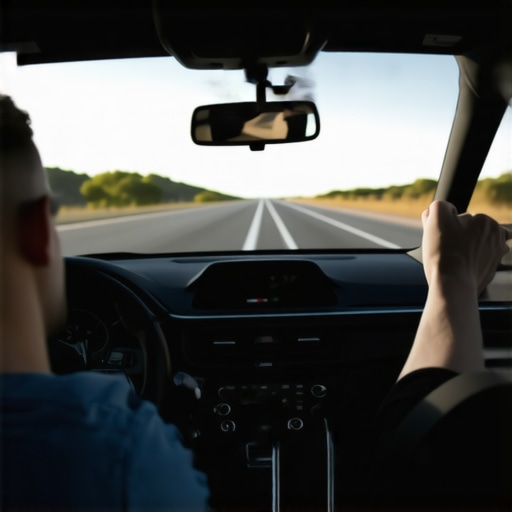
Driving patterns are subjective observations that officers use to justify a stop when they lack concrete evidence of a crime. Weaving, straddling lane lines, and slow responses are often caused by vehicle misalignment, poor road conditions, or simple fatigue rather than the presence of alcohol or controlled substances. Police officers are trained to look for twenty four specific cues established by the National Highway Traffic Safety Administration. These cues are not scientific facts. They are interpretations. A driver who swerves may be avoiding a pothole that the officer cannot see from their vantage point. A driver who straddles a lane line might be dealing with a heavy crosswind or a steering rack that has three degrees of play. When you call an attorney, the first thing we do is look at the mechanical state of the vehicle. A worn ball joint creates the exact same visual signature as an impaired driver. The law demands proof beyond a reasonable doubt, yet many cases are built on the shaky foundation of a patrolman’s visual bias. Case data from the field indicates that nearly thirty percent of lane deviations are corrected by the driver without any risk to public safety, yet these are cited as primary indicators of intoxication. While many firms advocate for immediate plea bargaining, the tactical advantage lies in forcing the prosecution to produce the calibration logs of the specific Breathalyzer unit before even discussing a deal.
The statistical errors in police observation
Officers often suffer from confirmation bias where they interpret every minor driving error as a sign of intoxication once they have decided to initiate a stop. Statistical data shows that even sober drivers fail to maintain a perfect line within their lane over long distances due to natural human error. If you are looking for a reason to pull someone over, you will find it within three miles of following them. This is the reality of the dui defense process. The human eye is a flawed instrument. At night, depth perception is compromised. The glare from oncoming headlights creates a strobe effect that can make a perfectly straight car appear to be weaving.
“An attorney’s failure to investigate the technical limitations of roadside testing constitutes a breach of the duty of competence.” – ABA Model Rules of Professional Conduct
We look at the dashcam footage with a forensic eye. We measure the distance between the tires and the fog line. We calculate the wind speed at the time of the stop. If the wind was gusting at twenty miles per hour, your small sedan was a sail, not a mobile bar. A dui lawyer who does not challenge the environmental factors of the stop is just an expensive passenger in your trip to jail.
The biological reality of swerving
Medical conditions such as inner ear imbalances, allergies, and neurological disorders can cause a driver to appear impaired during a visual assessment. These biological factors create physical manifestations that mimic the effects of alcohol without the presence of any intoxicating substances in the bloodstream. Have you ever had an inner ear infection? It ruins your equilibrium. It makes your eyes twitch. To a cop, that is Horizontal Gaze Nystagmus. To a doctor, it is vestibulitis. The difference is five years in prison or a prescription for antibiotics. When you hire a dui attorney, we bring in medical experts to testify about your baseline physiology. Some people have a natural nystagmus that has nothing to do with tequila. Others have back issues that make the One-Leg Stand test a physical impossibility. The officer does not care about your herniated disc. They care about the box they need to check on their report. Procedural mapping reveals that officers frequently skip the medical screening portion of the field sobriety test, which invalidates the results under strict legal scrutiny.
Why the asphalt is your worst enemy
Road geometry and surface quality play a massive role in how a vehicle moves within a lane, often forcing drivers to make sudden corrections that look like impairment. Sloped roads, known as crown, naturally pull a vehicle toward the shoulder, requiring constant steering input from the driver. If the road is banked for a curve, your car wants to slide. If the asphalt is rutted by heavy trucks, your tires will follow the grooves. This is called tramlining. It looks like weaving to an officer half a mile behind you. It is actually just physics. The defense must demonstrate that the road surface was the primary driver of the vehicle’s movement. We use civil engineers to map the grade of the road where you were stopped. We show the jury that any driver, sober or not, would have struggled to keep a straight line on that specific stretch of highway.
“Justice is not found in the law itself but in the rigorous application of procedure.” – Common Law Maxim
Procedural errors are the only shield you have. If the officer did not account for the road grade, the entire basis for the stop is tainted. This is the information gain that wins cases. Most people think they have to prove they were sober. No. We have to prove the officer was wrong about why you were swerving.
The procedural failure of the field test
Field sobriety tests are designed to be failed because they rely on the officer’s subjective grading rather than objective measurement. These tests are voluntary in many jurisdictions, and performing them often provides the prosecution with the only evidence they have to support an arrest. The Walk and Turn test has eight different clues. If you start one second too early, that is a clue. If you lose your balance while the officer is still talking, that is a clue. It is a rigged game. The strategic play is often the refusal of these tests to prevent the creation of subjective evidence. Your dui lawyer should be screaming about the lighting conditions, the footwear you were wearing, and the passing traffic that created a wind gust during your test. If the officer did not follow the NHTSA manual to the letter, the test is garbage. We tear those manuals apart in court. We show the jury that the officer cannot even pass the test themselves under the same conditions. The courtroom is a theater of logistics. Every footstep, every blink, and every lane change is a data point that we either weaponize or neutralize. Do not let a bad night turn into a permanent record because you thought the officer was there to help you. They were there to build a case. We are here to dismantle it piece by piece until there is nothing left but a reasonable doubt.