Why Your Arraignment is the Wrong Time to Plead Guilty
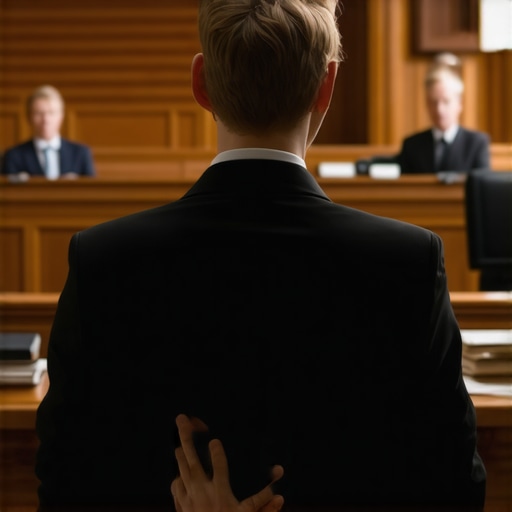
The courtroom smells like stale coffee and floor wax. I once watched a client lose their entire claim in the first ten minutes of a legal proceeding because they ignored one simple rule about silence. They stood before the judge, weary from a night in a holding cell, and thought that admitting guilt was the fastest way home. They were wrong. A DUI defense begins with the realization that the state is not your friend and the arraignment is not a conversation. It is a tactical ambush designed to close a file with the least amount of resistance. If you plead guilty now, you waive your right to see the evidence that might have saved you. You surrender before the first shot is fired in the litigation war.
The trap of the early plea
Pleading guilty at an arraignment constitutes a total waiver of legal rights and immediate conviction without a DUI attorney reviewing the prosecution evidence or arrest report. This legal maneuver bypasses discovery, prevents evidence suppression, and results in a permanent criminal record that could have been avoided via strategic defense.
When the judge looks over their spectacles and asks for your plea, the pressure is immense. You want to go back to your life. You want the shame to end. But the legal system does not reward honesty; it rewards procedural compliance. A DUI lawyer knows that the arraignment is merely the formal reading of charges. It is the beginning of the clock, not the end of the game. If you plead guilty, you are telling the court that the police did everything perfectly. You are testifying that the breathalyzer was calibrated, the officer had probable cause, and your constitutional rights were respected. In my twenty five years of trial work, I have rarely seen a case where the police did everything perfectly. There is always a crack in the foundation. Your job is to wait for your attorney to find the sledgehammer.
What the prosecutor hides in the discovery phase
DUI legal discovery involves the mandatory disclosure of police bodycam footage, breathalyzer maintenance logs, and officer training records which are often exculpatory. Without a dui lawyer to subpoena evidence, the prosecution will never volunteer technical failures or procedural errors that lead to a case dismissal or reduced charges.
Consider the technicality of the breathalyzer. These machines are not magic. They are sensitive instruments that require meticulous maintenance. If the temperature in the room was off, or if the officer did not observe you for a full twenty minutes before the test, the results are garbage. By pleading guilty at the start, you are accepting garbage as gospel. A dui attorney will look for the gaps. They will look for the missing calibration logs. They will look for the flicker in the bodycam footage where the officer violated protocol. This is the microscopic reality of litigation. It is won in the margins, not in the broad strokes of admission. You must call an attorney before you ever consider uttering the word guilty in a court of law.
“Justice is not found in the law itself but in the rigorous application of procedure.” – Common Law Maxim
The technical failure of the breathalyzer evidence
Breathalyzer results are scientific data points subject to calibration errors, mouth alcohol contamination, and physiological variables that a dui defense attorney can challenge in court. Expert witness testimony often reveals that blood alcohol content readings are statistically unreliable due to improper device maintenance or officer error during the administration of the test.
I have sat in depositions where the arresting officer could not remember the last time they were certified on the specific model of the Intoxilyzer used during the arrest. That silence is the sound of a case falling apart. When you rush to plead, you are effectively silencing your own defense. You are telling the state they don’t have to prove a thing. The legal system is a machine that runs on the fuel of your cooperation. Stop feeding the machine. The strategic play is to enter a plea of not guilty, which is not a lie, but a procedural requirement to force the state to meet its burden of proof. It is the only way to protect your license, your job, and your reputation from the fallout of a conviction.
How an attorney dissects the arrest report
Police reports serve as subjective narratives containing officer bias and factual inconsistencies that a defense lawyer identifies to impeach witness credibility. By cross-referencing dispatch logs with arresting officer statements, a legal professional can identify unconstitutional stops and illegal searches that invalidate the prosecution’s entire case against the defendant.
A police officer’s notes might say you had slurred speech and bloodshot eyes. To a layperson, that sounds like an open and shut case. To a skeptic, it sounds like a template. Every DUI report looks the same because officers use the same language to justify their actions. A seasoned attorney looks at the timing of the stop. They look at the road conditions. They look at the specific physical mechanics of the field sobriety tests. Did you fail the walk and turn because you were intoxicated, or because you were standing on a sloped shoulder in the dark while cars sped by at sixty miles per hour? The jury needs to know that the environment was the enemy, not your sobriety.
“The right to be heard would be, in many cases, of little avail if it did not comprehend the right to be heard by counsel.” – Powell v. Alabama
The silent cost of a fast conviction
Immediate guilty pleas result in summary judgments that trigger mandatory minimum sentencing, license revocation, and insurance premium spikes without legal mitigation. DUI defense strategies aim to negotiate plea bargains or alternative sentencing that can save your career and prevent jail time by leveraging evidentiary weaknesses found during pre-trial motions.
Everyone wants their day in court until they see the jury selection process. It isn’t about truth; it’s about perception. But you never even get to that stage if you surrender at the arraignment. Think about the ROI of your freedom. Is the convenience of a five minute hearing worth the five years of collateral damage to your life? The strategic play is often the delayed demand letter to let the defendant’s insurance clock run out or to let the prosecutor’s workload pile up until your case becomes a burden they want to resolve favorably. Patience is a weapon in the courtroom. Use it. Do not let the adrenaline of the arrest dictate the outcome of your life. Call an attorney and let them do the heavy lifting in the shadows of the law.