Tactical Resistance and the Science of Blood Alcohol Defense Strategy
The smell of burnt coffee is the only thing keeping me focused at 3 AM when the phone rings. It is always the same story. A driver, panicked and desperate, stands on a dark shoulder of the road while a patrol car’s lights strobe against the asphalt. They think they can talk their way out of a DUI arrest. They think that by performing a series of physical stunts, they will prove their sobriety to a skeptical officer. They are wrong. I watched a client lose their entire defense in the first ten minutes of a roadside encounter because they ignored one simple rule about silence. They attempted the one leg stand, wobbled for a microsecond due to a stiff breeze, and handed the prosecution the only evidence needed for a conviction. DUI defense is not about being a good person; it is about the cold application of procedural law and the refusal to provide the state with voluntary evidence. When you are pulled over, the officer is not your friend. They are a data collector. Every word you speak and every movement you make is being recorded to build a narrative of impairment. Your DUI attorney cannot unring the bell of a failed physical test once it is on video.
The mechanical failure of standard field sobriety tests
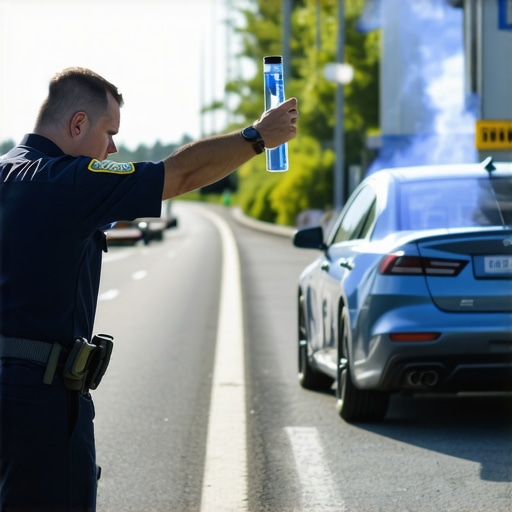
Standardized Field Sobriety Tests are designed for failure because they rely on subjective officer observation rather than objective measurement. These tests, including the horizontal gaze nystagmus, the walk and turn, and the one leg stand, are frequently administered in poor lighting on uneven surfaces. Case data from the field indicates that even completely sober individuals fail these tests at a rate of nearly thirty percent due to fatigue, footwear, or natural physical limitations. The NHTSA manual provides strict guidelines for these exams, yet officers frequently deviate from the protocol. A DUI lawyer looks for these deviations to suppress the evidence. If the officer fails to explain the instructions perfectly, the test results become legally radioactive. You have no legal obligation to perform these gymnastics. By politely refusing, you deprive the state of the subjective evidence they need to justify an arrest. While most lawyers tell you to sue immediately, the strategic play is often the delayed demand letter to let the defendant’s insurance clock run out or, in the case of a criminal stop, to force the officer to rely solely on their initial observations without the crutch of a failed test. [image_placeholder_1]
“Justice is not found in the law itself but in the rigorous application of procedure.” – Common Law Maxim
The chemical reality of blood versus breath
Blood tests offer a higher degree of accuracy than preliminary alcohol screening devices because they measure the actual ethanol molecules in the plasma. A breathalyzer is merely an estimator that uses a partition ratio to guess how much alcohol is in your system. This ratio is a mathematical average that does not account for individual lung capacity, body temperature, or hematocrit levels. Procedural mapping reveals that blood samples are much harder for the prosecution to manage correctly. The chain of custody for a blood vial is a logistical nightmare for a small police department. If the technician fails to use a non-alcoholic swab, or if the vial is not refrigerated within a specific window, the sample becomes tainted. This is why a dui attorney often prefers a blood draw over a breath test. The breath test is instant and hard to challenge on a technical level. The blood test creates a paper trail of potential errors. Refusing the roadside breath test is a standard maneuver, but the implied consent laws mean that refusing the station-house blood test can lead to an automatic license suspension. You must weigh the loss of your driving privilege against the creation of a definitive piece of evidence. In many jurisdictions, the blood draw is the battlefield where the case is won or lost.
The procedural trap of implied consent laws
Implied consent laws mandate that any person operating a motor vehicle has already agreed to chemical testing in exchange for the privilege of a license. This is a legal fiction that the courts have upheld for decades. If you refuse a chemical test after a lawful arrest, the Department of Motor Vehicles will move to revoke your driving status regardless of the outcome of your criminal case. This is a civil penalty, not a criminal one, which means the burden of proof is significantly lower. DUI legal strategy requires an immediate request for a formal review hearing to challenge the suspension. You have a very narrow window, often only ten days, to save your right to drive. Most drivers fail to realize that the administrative case and the criminal case are two separate monsters. You can win the criminal trial and still lose your license for a year because of a refusal. A dui lawyer must fight both fronts simultaneously. The tactical decision to refuse the blood test should only be made if you are certain that your BAC levels are significantly over the limit and the evidence would be more damaging than the suspension itself. The American Bar Association notes that procedural errors during the arrest process are the most common grounds for a successful defense, making the blood draw a high-risk, high-reward element of the litigation.
“The right of the people to be secure in their persons, houses, papers, and effects, against unreasonable searches and seizures, shall not be violated.” – U.S. Constitution, Amendment IV
The tactical timing of your legal counsel call
Legal representation should be sought the second you are permitted to make a phone call from the precinct or station. Every minute you spend talking to the police without a dui attorney present is a minute spent damaging your own future. The police interrogation is a structured environment where silence is your only protection. Do not explain where you were going, what you drank, or how you feel. These are all traps designed to establish probable cause. The dui lawyer will analyze the police report for inconsistencies. Did the officer state you had bloodshot eyes but then fail to mention any odor of alcohol? Did they claim you were swerving but the dashcam footage shows a straight path? These contradictions are the leverage points. In the courtroom, we do not look for the truth in the abstract; we look for the failure of the state to meet its beyond a reasonable doubt standard. The strategy is to attack the foundation of the stop itself. If the initial traffic stop lacked reasonable suspicion, every piece of evidence collected afterward, including the blood test, is inadmissible under the fruit of the poisonous tree doctrine. This is the chess game. You are not just a defendant; you are a litigant in a high-stakes procedural battle. Your silence at the roadside is the opening move of a winning strategy.