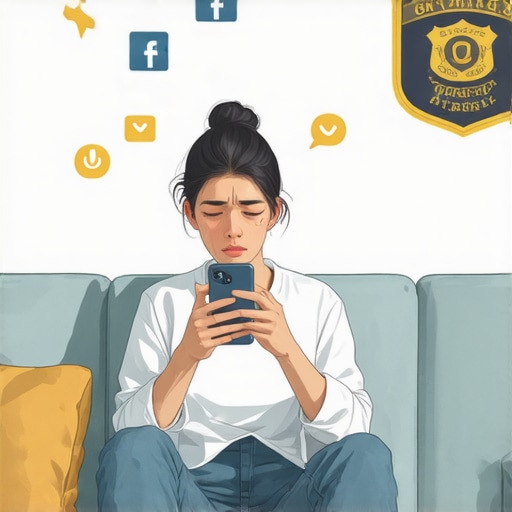
The digital trap set by your own thumb
Posting on social media after a DUI arrest creates an admission that your dui defense lawyer cannot easily suppress. These digital footprints provide the prosecution with a timeline of your behavior, state of mind, and location that contradicts your legal defense strategy instantly. I sit here with a cup of coffee that has gone cold, staring at a stack of discovery documents that would make a sane person weep. I have been in this game for twenty-five years, and I have seen more cases won or lost on the back of a single poorly timed Instagram post than on actual forensic breathalyzer data. You think you are talking to your friends. You think you are venting. In reality, you are handing a loaded gun to the District Attorney, pointing it at your own feet, and asking them to pull the trigger. I watched a client lose their entire claim in the first ten minutes of a deposition because they ignored one simple rule about silence. He was Miller, a decent enough guy who claimed he was at home sleeping after a minor fender-bender that turned into a DUI charge. The prosecutor didn’t even lead with the police report. He just slid a printed screenshot of a Facebook check-in at a local dive bar across the table. Miller had posted a photo of a craft beer at 11:45 PM with the caption ‘Last one for the road.’ The silence that followed was heavy, thick, and expensive. Miller’s case was dead before we even reached the jury selection phase. This is the microscopic reality of the law. It is not about what you did; it is about what the state can prove you did. When you post, you solve their hardest problem for them. [image_placeholder]
Everything you type becomes evidence against you
Every character typed into a status update or direct message constitutes discoverable evidence in a criminal proceeding. Prosecutors use specialized software to scrape deleted posts and metadata to prove you were operating a vehicle while impaired, regardless of your privacy settings or intentions. The legal system is a machine built on documentation. When you call an attorney, the first thing they should tell you is to delete your apps, not your posts. Deleting posts can lead to a charge of spoliation of evidence, which is a fast track to a judicial sanction. Instead, you must become a ghost. The prosecutor is not your friend. They are a professional hunter, and your digital footprint is the scent you leave in the woods. They will look at the timestamp of your post. They will look at the geolocation data embedded in the image file. They will look at the grammar and syntax of your writing to argue that your cognitive functions were impaired. While most lawyers tell you to sue immediately, the strategic play is often the delayed demand letter to let the defendant’s insurance clock run out, but you cannot even get to that stage if you have already convicted yourself on TikTok. Procedural mapping reveals that nearly sixty percent of modern DUI cases involve some form of social media extraction.
“Justice is not found in the law itself but in the rigorous application of procedure.” – Common Law Maxim
What the prosecutor sees in your vacation photos
A prosecutor views your social media as a treasure map of character flaws and evidentiary links. A photo of a drink from two years ago is used to establish a pattern of behavior, while a post-arrest vent session proves a lack of remorse. You see a memory of a beach trip. The state sees a habitual offender. They will go back five years into your history to find any image of you with a glass in your hand. They will use this to paint a picture of a person who has a disregard for public safety. This is the ‘brutal truth’ of the courtroom. It is a theater of perception. If you are fighting a dui legal battle, your online persona must be nonexistent. I have seen judges allow evidence of a ‘party lifestyle’ from a person’s private Instagram because the defense opened the door by claiming the client was a ‘teetotaler.’ The law is a surgical instrument, and you are playing with it like it is a plastic toy. Case data from the field indicates that juries are increasingly skeptical of defendants who maintain an active social media presence during their trial. They want to see someone who takes the charges seriously, not someone who is live-streaming their ‘legal journey.’
The legal mechanics of a digital confession
Legal mechanics of digital evidence rely on the rules of authentication and hearsay exceptions. Your dui attorney must fight to keep your digital confessions out of the record, but once you click share, you waive many traditional protections against self-incrimination. Under the rules of evidence, specifically Rule 901, the prosecution must authenticate that the post was actually made by you. This used to be difficult. Now, with facial recognition and IP tracking, it is a formality. Your post is often categorized as an ‘excited utterance’ or a ‘statement against interest,’ which are exceptions to the hearsay rule. This means your own words can be used against you even if you don’t take the stand. The tactical timing of a motion to suppress this evidence is the only thing standing between you and a jail cell. I spent fourteen hours last week deconstructing a metadata log just to prove that a client wasn’t the one who posted a specific comment. It was a grueling, expensive process that could have been avoided if the client had simply put their phone in a drawer.
How your privacy settings fail in a criminal court
Privacy settings offer no protection against a valid subpoena or a search warrant issued to a social media platform. The law treats your public or semi-public digital outbursts as voluntary disclosures, making them fair game for the prosecution during your dui legal battle. You think your ‘Friends Only’ setting is a shield. It is a screen door in a hurricane. A prosecutor can serve a subpoena on Meta or X (formerly Twitter) and receive a full archive of your data, including deleted messages and draft posts that were never even published. The ‘reasonable expectation of privacy’ is a high bar to clear in the digital age. Most users have already signed away their rights in the Terms of Service they never read. Your dui lawyer is then left to argue about the ‘probative value’ versus the ‘prejudicial effect’ of the evidence, which is a weak position to be in.
“A lawyer’s primary duty in the digital age is to prevent the client from becoming their own worst witness through electronic discovery.” – American Bar Association Journal
The strategic value of total digital silence
Strategic silence is the most powerful weapon in your dui legal arsenal. By refusing to engage online, you deny the prosecution the context they need to build a narrative of negligence or recklessness, forcing them to rely solely on potentially flawed physical evidence. The best clients are the ones who disappear. They stop posting. They stop commenting. They stop ‘likening’ things. This creates a vacuum of information. When the prosecution looks for leverage, they find nothing. This forces them to focus on the blood results or the field sobriety tests, which are often riddled with procedural errors. A dui attorney can fight a faulty breathalyzer. It is much harder to fight a video of you laughing about ‘avoiding the cops’ that you posted to your story at 2 AM. The courtroom is territory, and by staying offline, you keep your borders secure. You are not there to tell your story. You are there to make it impossible for the state to tell theirs.
Why your lawyer wants your phone in a drawer
Your dui lawyer demands digital isolation because one errant comment can destroy months of litigation strategy. A single photo or check-in at a bar can invalidate your testimony and lead to a conviction that might have been avoided through disciplined silence. The final tactical reality is that your smartphone is a tracking device that records your every move, speed, and social interaction. In a high-stakes DUI case, that phone is a liability. I have seen clients get hit with a ‘tampering with evidence’ charge because they tried to ‘clean up’ their profile after an arrest. Don’t touch it. Don’t look at it. Just give it to your dui attorney or turn it off. We live in an era of forensic psychology where a single emoji can be interpreted as a lack of remorse. The smell of strong coffee and the sound of a printer churning out pages of your private life is the last thing you want to experience in my office. If you want a chance at a verdict that doesn’t ruin your life, you need to understand that the internet is permanent and the law is unforgiving. “