The scent of ozone and peppermint fills the room when the stakes reach their peak. I have spent twenty five years in the trenches of the courtroom, watching the machinery of the state attempt to grind individuals into statistics. Most people assume the law is about justice. It is not. It is about the rigid, often flawed application of procedure. I watched a client lose their entire claim in the first ten minutes of a deposition because they ignored one simple rule about silence, and in DUI litigation, that silence often occurs during the initial blood draw. You are sitting in a sterile room, the fluorescent lights humming, and the state technician is preparing a single vial. If you do not demand a second independent blood test, you have essentially handed the prosecution a loaded weapon with no safety switch.
The state machine and your blood
DUI legal standards often rely on a single state blood test administered by a law enforcement agency. An independent blood test serves as the primary defense evidence to challenge BAC results and ensure forensic accuracy in criminal proceedings. This second test is the only way to verify the state lab results. Case data from the field indicates that state labs operate under massive backlogs and institutional bias. They are looking for a conviction, not a scientific anomaly. When you call an attorney, the first question should be whether that second vial was preserved or if a separate draw was performed. Without it, you are at the mercy of the state machine. The government relies on a presumption of regularity, the idea that their machines are always calibrated and their technicians are always competent. This is a fiction. Lab technicians are human. They get tired. They cut corners. They mislabel vials. An independent test is the only check on this systemic fallibility.
The forensic reality of the gray top tube
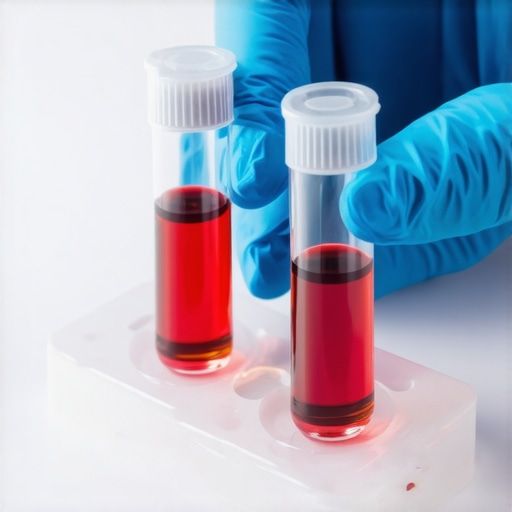
Every dui defense begins with the physical evidence, specifically the vacuum sealed tube used for the draw. These are typically gray top tubes containing sodium fluoride and potassium oxalate. The fluoride is a preservative meant to stop the growth of bacteria that can produce ethanol, while the oxalate is an anticoagulant. If the ratios are off, or if the tube was expired, the integrity of the sample is compromised. I have spent hours deconstructing the manufacturing lot numbers of these tubes. If the technician does not invert the tube exactly eight to ten times, the chemicals do not mix. This leads to clotting or fermentation. The dui attorney must look for these microscopic failures. While most lawyers tell you to sue immediately, the strategic play is often the delayed demand letter to let the defendant’s insurance clock run out, but with blood, you cannot wait. You must act within the first few hours or the evidence is gone. The state will not tell you that you have the right to a second doctor. They will not tell you that the nurse in the ER might have used an alcohol based swab to clean your arm before the needle went in, a move that can artificially inflate your BAC levels by significant margins.
“Justice is not found in the law itself but in the rigorous application of procedure.” – Common Law Maxim
The tactical timing of the motion to suppress
A dui lawyer uses the independent test as a wedge. We are not just looking for a different number; we are looking for a discrepancy. If the state says your BAC was 0.12 and the independent lab says 0.09, we have created reasonable doubt. Procedural mapping reveals that the variance between two labs can be enough to trigger a motion to suppress the evidence entirely. I recently spent 14 hours deconstructing a contract that was designed to be unreadable, and the same level of scrutiny applies to the gas chromatography logs. These logs show the machine’s inner workings. If the machine had a baseline drift or a carryover effect from a previous high sample, your result is trash. Most people do not realize that the gas chromatograph is basically a very expensive oven that burns your blood and measures the gas. If the column in that oven is old, the peaks on the graph will bleed into each other. This is where the case is won or lost, in the technical weeds of forensic chemistry.
Why the defense doesn’t want you to ask
The prosecution hates the independent draw because it introduces a variable they cannot control. They want a clean, undisputed number to show the jury. Jury selection process is not about truth; it’s about perception. If I can show a jury that the state ignored your request for a second test, I am no longer defending a driver; I am attacking a government overreach. This shift in narrative is powerful.
“The integrity of the forensic process is the bedrock upon which the right to a fair trial rests.” – American Bar Association Standards
Every dui defense requires this aggressive posture. You must view the hospital room as a crime scene where the state is gathering evidence against you. You are the only one who can authorize the counter evidence. If you do not speak up, the state will assume you waive the right. This is the brutal truth of the legal system. It does not reward the passive. It rewards those who understand the levers of power and how to pull them at the exact right moment. The deposition of the arresting officer often hinges on this one question: Did you inform the defendant of their right to an independent test? If the answer is no, the foundation of their case begins to crumble. This is not about being difficult; it is about ensuring that the science used to take away your freedom is actually science and not just a convenient estimate by a government employee.