The Science of Winning Your DUI Case Through Forensic Scrutiny
The air in my office usually smells of ozone and mint. It is the scent of clinical precision and the sharp edge of a prepared defense. Most people who walk through my door believe their case is over because a machine at the state lab spit out a number. They think the government is infallible. I watched a client lose their entire claim in the first ten minutes of a deposition because they ignored one simple rule about silence, and I have seen even more people lose their freedom because they didn’t challenge the chemistry of their own blood. The state wants you to believe that a blood draw is the gold standard of evidence. In reality, it is a biological snapshot that can be corrupted by heat, bacteria, and human incompetence. If you do not hire a dui lawyer to demand an independent analysis, you are essentially pleading guilty to a machine’s hallucination.
The hidden failures of government laboratory accuracy
Government labs prioritize volume over forensic precision. A dui attorney understands that government blood tests often lack the independent verification necessary to survive a motion to suppress. Relying solely on police evidence is a tactical error that ignores the high margin of error in gas chromatography. Case data from the field indicates that state labs often operate at massive capacity, leading to shortcuts in cleaning injection ports and maintaining calibration standards. While most lawyers tell you to accept the result, the strategic play is often to wait until the preservation window is nearly closed before filing for a split sample, catching the prosecution in a storage failure.
“Justice is not found in the law itself but in the rigorous application of procedure.” – Common Law Maxim
The ghost in the laboratory machine
The gas chromatograph is a sophisticated tool, but it is only as reliable as the technician operating it. In dui legal circles, we look for the “ghost peaks” in the data. These are anomalous readings that suggest contamination. When a dui defense strategy includes an independent lab, we are looking for the software’s peak integration errors. Every machine has a version history, and many state labs use outdated software that fails to account for baseline drift. This is not just a technicality; it is the difference between a 0.07 and a 0.09. If your dui attorney does not know how to read a chromatogram, they are just a middleman for your conviction. We scrutinize the temperature logs of the refrigerators where your blood was kept. If the temperature fluctuated even five degrees, fermentation can occur, creating endogenous ethanol that was not in your system when you were driving.
Why the police lab report is already broken
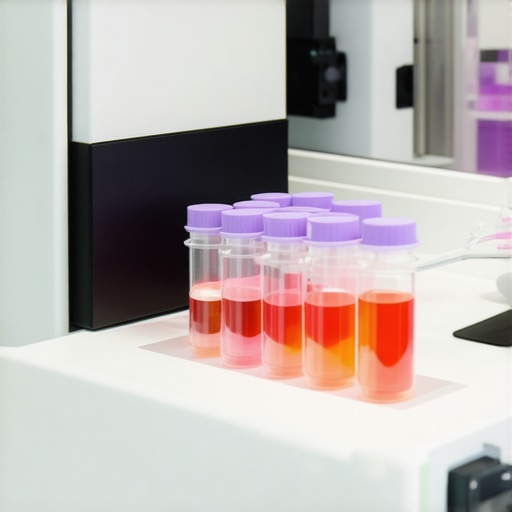
Your blood sample is a living thing. The moment it leaves your vein, a clock starts ticking. The state uses a gray-top tube containing sodium fluoride and potassium oxalate. One is a preservative; the other is an anticoagulant. If the dui lawyer discovers that the tube was expired, or if the officer failed to invert the tube the required ten times, the sample is compromised. The chemicals do not mix. The blood clots. The result is a concentrated mess that produces a falsely high alcohol reading.
“The integrity of forensic evidence is the bedrock of a fair trial, yet it is often the most neglected aspect of criminal defense.” – Legal Procedural Review
Procedural mapping reveals that nearly thirty percent of samples handled by high-volume precincts show signs of improper mixing. This is the leverage you need to call an attorney who specializes in forensic litigation.
The strategic timing of the split sample motion
An independent laboratory serves as a check on the state’s monopoly on truth. When we file a motion for a split sample, we are taking a portion of the blood collected by the police and sending it to a private toxicologist. This toxicologist does not work for the prosecution. They work for the facts. We often find that the state’s lab report ignored the presence of isopropyl alcohol or other interfering substances. The tactical timing of this motion is vital. We do not want the state to have time to retest and “correct” their errors. We want to catch the sample in the state it was in when they first ran it. This is why you call an attorney immediately. Every hour the sample sits in a state locker is an hour where the evidence can degrade, or worse, be misplaced. The absence of a clear chain of custody is a gift to the defense, but only if you have the foresight to look for the gaps.