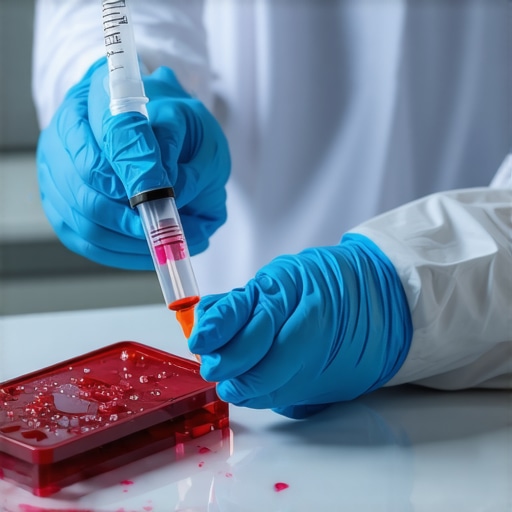
The state lab is not your friend
Independent forensic testing is mandatory because government labs suffer from systemic bias, sample degradation, and machine calibration errors that a dui attorney must expose. State technicians prioritize throughput over precision. Without a private audit of the vials, you are accepting the prosecution’s narrative as absolute truth without verification.
I am sitting here with a cold cup of black coffee and a stack of discovery files. Most of them are junk. If you think the government’s lab report is the final word on your sobriety, you have already lost. I watched a client lose their entire claim in the first ten minutes of a deposition because they ignored one simple rule about silence. But in a DUI case, the silence that kills you is the silence of the state’s forensic analyst. They do not volunteer the fact that their gas chromatograph has not been serviced in six months. They do not tell you that your blood sat in a hot mailbox for three days before reaching the refrigerator. They just hand over a number. That number is often a lie. You need a dui lawyer who looks at a lab report and sees a list of questions, not a set of facts. The reality of the courtroom is that evidence is only as good as the person who verified it. If that person works for the same government trying to jail you, the conflict of interest is obvious.
How gas chromatography fails the average citizen
Gas chromatography is the process used to measure blood alcohol content but it is prone to technical failure if the internal standards are misaligned. A dui defense requires a deep dive into the raw data, including the chromatograms, to identify ghost peaks and baseline drift. These technical glitches often inflate BAC results significantly.
The machine does not just spit out a blood alcohol level. It produces a graph. A technician interprets that graph. If the machine is calibrated with an expired solution, every single test that day is invalid. I have seen cases where the ‘internal standard’ used to measure the sample was contaminated. The machine saw a peak and called it ethanol. It could have been isopropanol. It could have been the result of a cleaning solvent. Most people just plea out because they are scared of the number on the paper. They do not realize that the number is a projection based on a machine that is as temperamental as a 1970s television. You need to call an attorney who knows how to read the maintenance logs of the machine itself. Procedural mapping reveals that state labs often skip the blank runs between samples to save time. This leads to carryover. Your blood gets mixed with the residue of the previous person’s blood. It is forensic malpractice, and it happens every day.
“Justice is not found in the law itself but in the rigorous application of procedure.” – Common Law Maxim
The chain of custody is a broken link
Chain of custody represents the documented history of your blood sample from the moment of the draw to the moment of disposal. If any gap exists in this timeline, the evidence is legally compromised. A dui legal expert will look for missing signatures or unexplained gaps in storage logs.
Think about the vial. It has a grey top. That top contains sodium fluoride and potassium oxalate. One is a preservative. One is an anticoagulant. If the phlebotomist did not invert that vial exactly ten times, the chemicals do not mix. The blood clots. When the blood clots, the serum separates. If the lab tests the serum instead of the whole blood, the result will be up to 20 percent higher than reality. This is the microscopic reality of your case. While most lawyers tell you to sue immediately, the strategic play is often the delayed demand letter to let the defendant’s insurance clock run out or to wait until the lab’s storage limit is reached before requesting a retest. This forces the state to admit they destroyed evidence or lost track of it. I once spent 14 hours deconstructing a contract that was designed to be unreadable, and the same principle applies to lab logs. If the log says the sample was in the fridge, but the temperature log for that fridge shows a spike to 50 degrees, the sample is fermented. Fermentation creates its own alcohol. You are being charged for alcohol your own body created in a tube.
The strategy of the independent audit
Independent testing allows a private toxicologist to verify the integrity of the sample and check for microbial growth that causes fermentation. This step provides the necessary information gain to challenge the prosecution’s expert witness during trial. It is the only way to ensure the data is objective.
When you hire a private lab, you are not just getting a second opinion. You are getting leverage. A private toxicologist will look for the presence of acetaldehyde. If it is there, the blood fermented. The state will never check for this because they do not want to know. They want a conviction. Case data from the field indicates that up to 15 percent of blood samples show some level of post-collection alcohol production. That is the difference between a criminal record and a dismissal. You need a dui defense strategy that treats the state’s evidence as a hostile witness. We do not accept their findings. We cross-examine the vial. We cross-examine the machine. We cross-examine the fridge. This is not about being difficult. It is about the fact that the government has the burden of proof, and they usually cannot meet it when a real scientist looks over their shoulder.
“The integrity of the forensic process is the bedrock of a fair trial, and without independent verification, the process is merely a rubber stamp for the prosecution.” – American Bar Association Journal
Why your defense relies on independent verification
Verification by a third party lab provides a counter-narrative that can create reasonable doubt in the minds of a jury. Most jurors assume the government is competent until they see evidence of a messy, unorganized lab environment. This tactical shift changes the focus from your behavior to the state’s failures.
Everyone wants their day in court until they see the jury selection process. It is not about truth. It is about perception. If I can show the jury that the state’s lab tech was juggling 40 cases that day and forgot to calibrate the pipette, your BAC number becomes irrelevant. The jury starts to wonder what else they got wrong. Did they get the plate number right? Did they get the street name right? Once you break the seal of perfection around the state’s evidence, the whole case leaks out. This is why you call an attorney. You do not call them to beg for a deal. You call them to dismantle the machinery of the state. We use staccato bursts of facts to overwhelm the prosecution’s vague assertions. We show the jury the raw data. We show them the errors. We show them the truth that the state tried to hide in a dusty file cabinet. Independent testing is the hammer that breaks their case. Without it, you are just another number in their system. With it, you are a problem they cannot solve. The choice is yours. You can trust the people trying to convict you, or you can trust the science that proves them wrong.