Sit down. Drink your coffee. It is bitter, just like the news I have for you. You think a blood test is the end of the road. You think the number on that piece of paper is a mathematical certainty. It is not. It is a calculated guess made by a machine that has likely not been properly maintained since the last administration. If you are facing a charge, you do not just need a dui lawyer; you need a scientist with a law degree. I watched a client lose their entire claim in the first ten minutes of a deposition because they ignored one simple rule about silence. In the world of dui legal strategy, the silence of a lawyer who does not understand the Flame Ionization Detector is just as deadly. They will accept the state’s number as gospel, and you will pay for their ignorance with your freedom.
The invisible failure in your blood vial
A dui defense requires a dui lawyer who can identify biological contamination and analytical errors in gas chromatography results. Most dui legal cases rely on blood alcohol concentration (BAC) data that is inherently flawed due to improper storage, fermentation, or software glitches within the laboratory setting. When your blood is drawn, it is placed into a grey-top vial containing sodium fluoride and potassium oxalate. One is an anticoagulant; the other is a preservative. Case data from the field indicates that if the lab technician fails to invert that vial exactly eight times, the chemicals do not mix. The result is a blood clot. A blood clot in the vial changes the ratio of liquid to solid. When the machine draws a sample from a clotted vial, it pulls a higher concentration of alcohol than what was actually in your veins. While most lawyers tell you to challenge the traffic stop, the strategic play is often the delayed demand for the raw data files, letting the lab’s internal audit window close so they cannot explain away the discrepancies in the batch logs.
“Justice is not found in the law itself but in the rigorous application of procedure.” – Common Law Maxim
Where the lab technician hides the truth
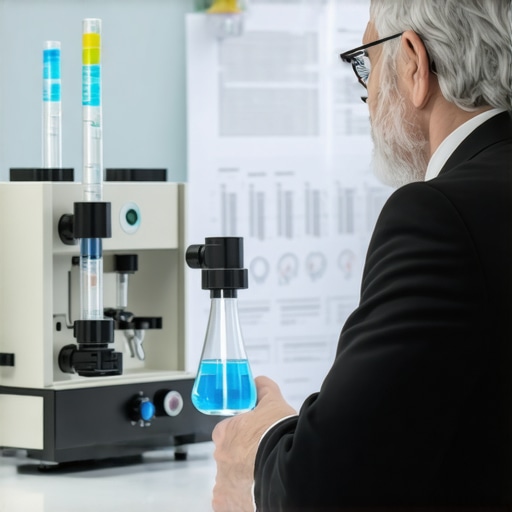
The dui attorney you hire must look beyond the final report to the raw data and the chromatogram. Every dui lawyer knows the state claims a 99 percent accuracy rate, but procedural mapping reveals that human error during the headspace sampling process is rampant. The machine used is a Gas Chromatograph. It does not measure blood; it measures gas. It heats your blood until the volatile organic compounds rise into a vapor. That vapor is then pushed through a long, thin tube called a column. The time it takes for the alcohol to travel through that column is its retention time. But here is the problem: other substances can have the same retention time as ethanol. Isopropanol, methanol, or even the cleaning solvents used in the lab can mask themselves as alcohol on the final chart. If your lawyer does not know how to read the peaks and valleys of a chromatogram, they will never see the “ghost peaks” that shouldn’t be there.
[IMAGE_PLACEHOLDER]
The myth of the perfect machine
The gas chromatography process is sensitive to environmental factors and carrier gas purity, meaning your dui legal team must audit the maintenance logs. A dui attorney who specializes in scientific defense understands that the helium tank or hydrogen generator must provide a stable flow rate. If the flow rate fluctuates by even a fraction of a milliliter, the results are junk. The machine uses a Flame Ionization Detector (FID). It literally burns the sample. If the flame temperature is not consistent, or if the detector has not been cleaned of carbon deposits from previous tests, the machine will report a higher BAC. This is not a theory; it is physics. Most firms are settlement mills. They see a 0.12 and tell you to take the plea. They do not want to spend the twenty hours required to deconstruct the lab’s calibration curve. They want the easy exit. I do not.
“A lawyer’s duty is to ensure that the scientific evidence presented against a defendant meets the highest standards of reliability.” – ABA Standards for Criminal Justice
Why your defense starts in the maintenance log
A call an attorney request should be followed by an immediate subpoena for the lab’s maintenance history and column logs. Every dui lawyer should know that the stationary phase of the chromatographic column degrades with every single injection. After a few hundred tests, the column begins to “bleed.” This column bleed shows up as baseline noise on your test results. If the lab is trying to save money by stretching the life of an old column, your blood test result is being added to the background noise of every other person who was tested that week. We look at the injection port septum. It is a tiny rubber disk. It is supposed to be replaced every 50 to 100 injections. If it is used for 200, it begins to leak. A leak means a loss of pressure. A loss of pressure means a longer retention time. A longer retention time means the machine might misidentify a harmless chemical as alcohol. This is the microscopic reality of your case.
The high price of cheap legal representation
Choosing a dui attorney based on a low flat fee is the fastest way to ensure a conviction and a permanent record. A dui legal expert must invest in independent toxicology experts and expensive software to reprocess the state’s electronic data. If your lawyer is not talking to you about the “internal standard” used in the test, they are failing you. The lab adds a known amount of a chemical, usually n-propanol, to your blood. They use this to compare the alcohol peak to a known quantity. If the technician pipettes the internal standard incorrectly, the entire math equation used to calculate your BAC is broken. Most lawyers wouldn’t know an internal standard if it hit them in the face. They are too busy looking for a way to get you to sign a plea deal so they can move on to the next file. Litigation is not a volume business; it is a forensic one. You are not paying for a suit in a courtroom; you are paying for the knowledge of how to dismantle a government scientist who thinks they are untouchable.