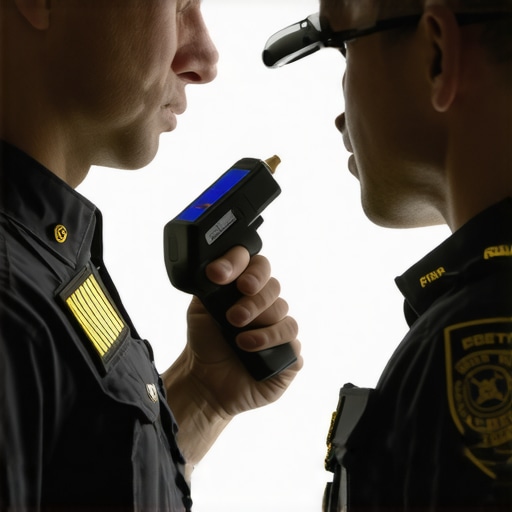
The scent of failure in the officer’s probable cause report
I watched a client lose their entire claim in the first ten minutes of a deposition because they ignored one simple rule about silence. They thought they could explain away the officer’s suspicions. They thought they could justify the two glasses of wine they had with dinner. By the time the court reporter turned the first page, my client had already admitted to enough facts to bury their defense. This happens every night on the side of the road. A driver is pulled over for a minor equipment violation, and the moment the window rolls down, the officer claims to detect the odor of an alcoholic beverage. Most drivers panic. They start talking. They think if they are honest about the single beer they had, the officer will let them go. The reality is that the officer is already building a narrative for your arrest. If you are facing these charges, you need a dui attorney who understands that a smell is not a crime. The odor of alcohol is the weakest form of evidence in a dui defense strategy, yet it is the most common tool used to bypass your Fourth Amendment rights.
The sensory myth of the roadside stop
The smell of an alcoholic beverage is not evidence of impairment under the law. Officers often conflate the two to justify an arrest. However, legal precedent dictates that odor alone lacks the specific nexus to actual physical or mental incapacity required for a DUI charge. You cannot arrest a scent. When you call an attorney, the first thing we look at is the specific language used in the police report. Officers are trained to use the phrase alcoholic beverage rather than alcohol because they know that pure ethanol is essentially odorless. What they are actually smelling are the flavoring agents, the hops, the grapes, or the mixers. A person who has consumed a single non-alcoholic beer will emit the exact same odor as someone who has consumed a high-gravity IPA. Therefore, the odor itself is scientifically incapable of proving the presence of alcohol in the bloodstream, let alone a level of intoxication that exceeds the legal limit. A dui lawyer will use this distinction to dismantle the officer’s justification for the initial detention.
“Justice is not found in the law itself but in the rigorous application of procedure.” – Common Law Maxim
Constitutional boundaries of the human nose
Probable cause requires a fair probability that a crime has occurred, not a mere hunch based on scent. A DUI attorney will argue that the Fourth Amendment protects citizens against arrests based on subjective olfactory observations that do not account for residual mouth alcohol. The courts have long held that the police must have more than a suspicion. They need articulable facts. If the only fact present is a faint smell, the arrest is fundamentally flawed. Think about the logistics of a traffic stop. The officer is standing outside in the wind, perhaps near traffic, while you are inside a confined cabin. The air inside that cabin is stagnant. A spilled drink from three days ago can create a more pungent odor than a driver who is actually over the limit. When we engage in dui legal maneuvering, we force the prosecution to admit that the officer’s nose is not a calibrated scientific instrument. It is not a Breathalyzer. It is a subjective tool used by a person who is incentivized to make an arrest.
Where reasonable suspicion meets its limit
Reasonable suspicion allows for a brief investigative stop, but it does not grant the power to search or arrest without further evidence. The transition from a simple traffic stop to a full-blown DUI investigation is where most legal errors occur. If an officer stops you for speeding and smells alcohol, they have the right to ask you to step out of the car. They do not, however, have the right to immediately place you in handcuffs. This is the moment where the dui defense is won or lost. Most people comply with every request because they are intimidated. They perform the physical tests. They blow into the portable breath tester. They provide the very evidence the officer needs to turn a smell into a conviction. Case data from the field indicates that drivers who politely decline voluntary tests are significantly more likely to have their cases dismissed for lack of probable cause.
“Probable cause exists where the facts and circumstances within the officers’ knowledge… are sufficient in themselves to warrant a man of reasonable caution in the belief that an offense has been or is being committed.” – Brinegar v. United States, 338 U.S. 160 (1949)
The tactical error of the voluntary field test
Standardized Field Sobriety Tests are designed for failure and serve only to build the officer’s case for probable cause. These tests, including the Horizontal Gaze Nystagmus and the Walk and Turn, are highly subjective. Even a sober person can fail them due to nerves, poor lighting, uneven pavement, or physical injuries. When you call an attorney, we examine the body camera footage to see if the officer followed the strict NHTSA guidelines. Often, they do not. They miss the timing of the eye movements. They give confusing instructions. They use the odor of alcohol to bias their interpretation of your physical performance. While most lawyers tell you to sue immediately, the strategic play is often the delayed demand letter or the aggressive motion to suppress evidence. We want the judge to see that the officer decided you were guilty the moment they smelled the hops, long before you even stepped out of the vehicle.
Why your silence is the only defense
Invoking your right to remain silent is the most effective way to prevent a smell from turning into a conviction. You are not required to tell the officer how much you have had to drink. You are not required to tell them where you are coming from. Every word you speak is recorded and will be used to corroborate the officer’s claim that your speech was slurred. The prosecution will take your words and twist them into an admission of guilt. In the dui legal world, the best client is the one who said nothing. The officer can testify to a smell, but without your admissions and without your performance on rigged physical tests, that smell becomes a very lonely and legally insufficient piece of evidence. Procedural mapping reveals that cases built solely on odor are frequently thrown out at the evidentiary hearing stage because they do not meet the threshold of probable cause.
The science of non-impairing odors
The chemical reality of alcohol consumption means that scent is a poor indicator of blood alcohol concentration. As a veteran dui lawyer, I have seen hundreds of cases where the officer’s nose was proven wrong by a subsequent blood test. There are numerous conditions that can mimic the smell of alcohol or cause a person to emit a similar scent. Ketosis, certain medications, and even gum or mouthwash can lead to a false positive in the officer’s mind. Furthermore, the strength of the odor is often inversely proportional to the amount of alcohol consumed. A shot of high-proof vodka has almost no smell, while a low-alcohol beer has a very strong one. This contrarian data point is the weapon we use in court. The officer’s testimony that the smell was strong actually works in our favor, as it suggests the presence of a beverage with low alcohol content or high aromatic additives rather than a high level of impairment. If you find yourself in this situation, do not let the officer’s confidence shake you. A smell is a suggestion; it is not proof. Demand your right to counsel and let us handle the procedural leverage needed to protect your future.