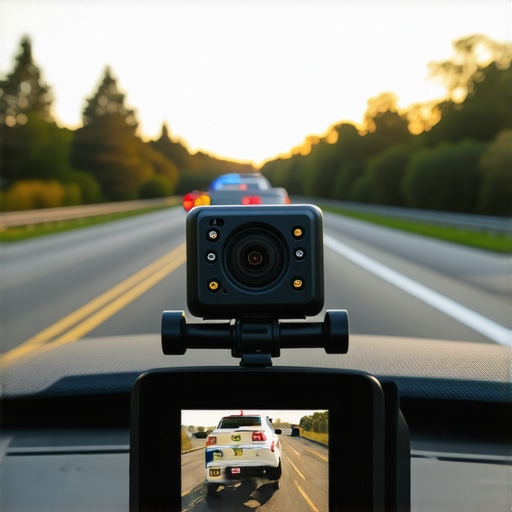
Why the Police Dashcam Is the Best Witness for Your Defense
I watched a client lose their entire claim in the first ten minutes of a deposition because they ignored one simple rule about silence. This client thought he could charm the arresting officer. He believed his charisma would negate the fact that he had consumed three craft beers. He was wrong. The dashcam was recording every stumble and every slurred syllable while he tried to explain his way out of a pair of handcuffs. However, that same digital eye is often the only thing standing between a wrongful conviction and a dismissed charge. In the world of dui legal strategy, the police report is a work of fiction. The dashcam is the nonfiction counterpoint. It does not have a career to protect. It does not have a bias. It simply records the frame rate of reality.
The objective lens vs the subjective report
Police officers and law enforcement agencies often rely on subjective observations in a DUI investigation to justify an arrest. The dashcam footage provides a factual record of lane deviations and driving patterns that can contradict the written police report in criminal court proceedings. When you call an attorney, the first thing they should look for is the gap between what the officer wrote and what the camera saw. Case data from the field indicates that officers frequently exaggerate the severity of a weave or the duration of a stop to satisfy the probable cause requirement. A dui attorney uses this footage to dismantle the officer’s credibility. If the report says you crossed the double yellow line three times but the video shows you stayed within your lane, the entire foundation of the stop crumbles. This is not about being lucky. It is about the forensic application of evidence. Litigation is a game of margins. The dashcam captures those margins in high definition.
“Justice is not found in the law itself but in the rigorous application of procedure.” – Common Law Maxim
How video evidence destroys officer credibility
Officer credibility is the prosecution’s most fragile asset during a DUI trial or suppression hearing. When a dui lawyer cross-examines an arresting officer, they use dashcam timestamps to prove procedural errors or false statements made under oath. Procedural mapping reveals that many officers do not follow the strict NHTSA guidelines for field sobriety tests. They skip instructions. They demonstrate the tests incorrectly. They claim a suspect failed the walk and turn test because of a slight heel to toe gap that is invisible on the 1080p recording. While most lawyers tell you to sue immediately, the strategic play is often the delayed demand letter to let the defendant’s insurance clock run out or to wait for the digital evidence to be fully processed. This footage is the only witness that cannot be intimidated by the blue wall of silence. It stands as a silent observer to the mechanical reality of the interaction. You are not just fighting a charge. You are fighting a narrative. The video is your counter-narrative.
The physics of the horizontal gaze nystagmus test
The Horizontal Gaze Nystagmus or HGN test is a scientific procedure that measures the involuntary jerking of the eyeball. A dui defense strategy often involves analyzing the dashcam to see if the officer held the stimulus at the correct distance and elevation from the suspect’s face. If the officer’s hand is shaking or moving too fast, the test results are scientifically invalid. Most people do not realize that the HGN test requires specific timing. Each pass must take approximately four seconds. If the camera shows the officer moving the pen back and forth in two seconds, the evidence should be suppressed. This is where the case is won. It is won in the seconds and the inches. It is won by a lawyer who understands that a DUI is a technical crime requiring a technical defense. Your dui lawyer must be part scientist and part investigator. They must look at the angle of the officer’s arm and the lighting conditions on the side of the highway. Shadows can mimic the signs of impairment. The camera captures these shadows. A skilled attorney exploits them.
Statutory requirements for digital evidence preservation
State laws and departmental policies dictate how police departments must preserve dashcam video and audio recordings after an arrest. If a law enforcement agency fails to save the footage, a dui attorney can file a motion for sanctions or a spoliation of evidence claim. This can lead to the dismissal of charges because the defendant’s right to a fair trial has been compromised. Procedural mapping reveals that many departments have a thirty day overwrite cycle. If you do not call an attorney immediately, that footage might be erased forever. This is the