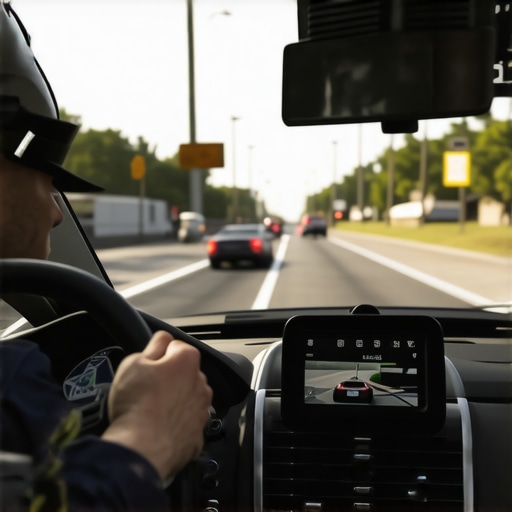
The Dashcam Does Not Lie
I watched a client lose their entire claim in the first ten minutes of a deposition because they ignored one simple rule about silence. They tried to explain away the officer’s notes without realizing that the digital record already contradicted their story. In the arena of dui legal battles, the dashcam is the only participant that does not suffer from adrenaline-induced memory gaps or the unconscious bias of a badge. It is the silent observer that sits on the dashboard, recording every sway, every stutter, and every procedural misstep. If you find yourself in the crosshairs of the state, your dui attorney will tell you that the video file is often more important than the police report. The report is a narrative constructed after the fact, usually in the quiet of a precinct office. The video is the ground truth. It captures the exact moment the flashing lights hit your rearview mirror and the precise phrasing of the officer’s first question. When I sit down to review a case, I do not look at the officer’s summary first. I look at the metadata of the video. I look for the frame rate and the audio synchronization because that is where the state’s case begins to fracture. To survive a dui defense challenge, the prosecution needs a clean sequence of events. The dashcam rarely provides one.
The unblinking witness at the scene
Police dashcam footage provides the raw, unedited sequence of events during a traffic stop. This visual record is the foundation of dui legal defense because it bypasses the subjective narrative of an arresting officer. A dui lawyer uses this data to verify the legality of the initial stop and the accuracy of the field sobriety tests. Most people assume the camera is there to convict them. I see it as the primary tool for exoneration. If an officer claims you swerved across a double yellow line, but the footage shows your tires never touched the paint, the entire basis for the stop evaporates. This is not about being argumentative. It is about the physical reality of the road. When the lights go on, the camera usually buffers the previous thirty seconds of footage. That window of time is where we find the truth about your driving pattern. If the video contradicts the written report, the officer’s credibility is destroyed. Silence is a weapon in the courtroom, but a clear video is a nuclear strike. You must call an attorney who knows how to dissect this footage frame by frame to find the inconsistencies that lead to a dismissal.
“Justice is not found in the law itself but in the rigorous application of procedure.” – Common Law Maxim
The technical mechanics of the discovery request
Discovery motions for digital evidence are the most aggressive way to secure your rights after an arrest. A skilled dui attorney understands that simply asking for the video is not enough. You must demand the proprietary codec, the audit log, and the maintenance records for the recording hardware. Digital files can be corrupted, edited, or conveniently lost. We look for gaps in the timestamp. We look for audio that cuts out during the most critical moments of the interaction. In many jurisdictions, if the police fail to preserve this footage, it creates a rebuttable presumption that the evidence would have been favorable to the defendant. This is a massive leverage point. The prosecution hates these motions because they force the IT department and the arresting officer to account for every second of the shift. We are not just looking at your face. We are looking at the background, the lighting conditions, and the positioning of the officer’s vehicle. These details matter. They are the difference between a conviction and a walk-out. If you are facing charges, do not wait. You need to call an attorney to file a preservation of evidence letter immediately before the department’s server overwrites the data.
How the camera exposes officer bias
Officer demeanor and conduct during a roadside investigation are often the first things a dui lawyer analyzes on a dashcam recording. The law requires that an officer have reasonable suspicion for a stop and probable cause for an arrest. Sometimes, the camera reveals a different motivation. If the officer is aggressive, impatient, or fails to provide clear instructions for the field sobriety tests, the results of those tests are legally compromised. I have seen cases where the officer claimed the driver was combative, only for the video to show a person who was terrified and compliant. The disparity between the written word and the digital reality is a gold mine for dui defense. We look at the way the officer holds the stimulus during the horizontal gaze nystagmus test. If they move the pen too fast or at the wrong angle, the test is invalid. The camera catches these technical failures every single time. It does not matter what the officer says on the stand if the video shows their hands moving at the wrong speed. This is the microscopic reality of litigation. It is not about the big picture. It is about the fraction of an inch and the millisecond of delay.
“The American Bar Association Model Rules emphasize the attorney’s duty to investigate the factual basis of every charge.” – ABA Standards
The ghost in the settlement conference
Pretrial negotiations and leverage are significantly influenced by the existence of high-quality dashcam footage that favors the defense. When a prosecutor sees a video that makes their lead witness look incompetent or dishonest, the plea offers start to change. They don’t want that video played in front of a jury. Juries trust cameras more than they trust lawyers or cops. A dui attorney uses this fear to secure a better deal or a full dismissal of the charges. If the video shows you performed well on the walk and turn test despite the officer’s notes saying you failed, the state’s case is effectively dead. This is why the initial consultation with a dui lawyer is so vital. We need to get that footage and start building the counter-narrative. The state has the burden of proof, and the dashcam is often the heaviest weight on the scale. If you do not have a professional who can interpret the nuances of the footage, you are going into a knife fight with a toothpick. The law is a game of leverage, and the dashcam is the ultimate lever.
The strategic timing of the demand letter
While most lawyers tell you to sue immediately, the strategic play is often the delayed demand letter to let the defendant’s insurance clock run out. This same clinical approach applies to dui legal strategy. We wait for the officer to commit to their story under oath before we reveal the contradictions found in the dashcam footage. It is a trap that works with devastating efficiency. By the time they realize the camera caught their mistake, it is too late to amend the report. This is why you must call an attorney who understands the theater of the courtroom. We are not just looking for a way out. We are looking for a way to win. The dashcam is your best witness because it cannot be intimidated, it does not forget, and it does not have a career to protect. It simply records the truth as it happened on the side of a cold highway at three in the morning. That truth is your strongest shield. The prosecution will try to minimize the video’s importance, but we will make it the centerpiece of the trial. If the video shows the officer ignored your rights, the case should not even reach a jury. It should die in a motion to suppress. That is the power of the digital eye.