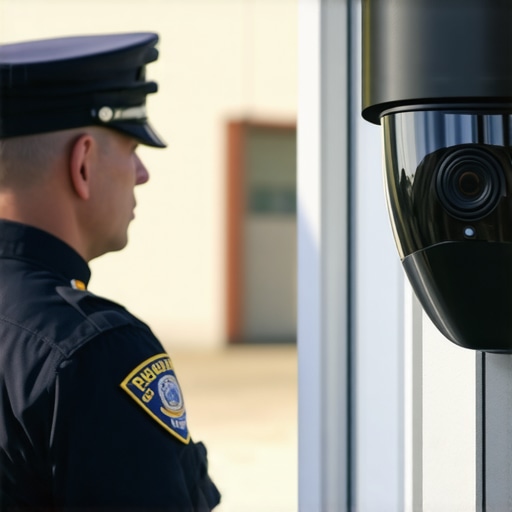
Sit down. Your case is currently a disaster. You think because the officer wrote down that you failed the sobriety tests, the game is over. You are wrong, but you are also dangerous to your own defense if you keep believing that a police report is a collection of facts. It is a narrative. It is a story written by a man who has already decided you are guilty before he even stepped out of his patrol car. I smell like strong black coffee and the reality of a thousand lost causes that could have been won if the client had just shut up and let the evidence speak. I watched a client lose their entire claim in the first ten minutes of a deposition because they ignored one simple rule about silence. They tried to explain why they looked tired instead of forcing the officer to define the word tired. They filled the silence with excuses, and the insurance company ate them alive. Your case is no different unless we dismantle the officer’s subjective opinions and replace them with the cold, hard logic of procedural failure.
The myth of the objective police report
Police reports are often treated as gospel but are actually subjective narratives shaped by confirmation bias and limited sensory input. A dui lawyer knows that an officer’s observations of bloodshot eyes or slurred speech are frequently non-scientific interpretations rather than empirical facts which would hold up under scrutiny. When an officer writes down that you had watery eyes, he is not a doctor. He is a guy who has been on shift for twelve hours, breathing in exhaust fumes and looking at you through the glare of strobe lights. Case data from the field indicates that the perception of impairment is heavily influenced by the officer’s expectation of finding it. If they pull you over at 2 AM, they are looking for a drunk, not a tired driver. The report is the culmination of that expectation. Every twitch you make is recorded as a sign of intoxication. Every stutter is a failure. This is not science; it is a biased observation documented in a way that looks official. A dui attorney understands that these notes are the starting point for a cross-examination, not the final word on your guilt or innocence.
Where the badge meets the bias
The dui defense strategy hinges on demonstrating that a patrol officer’s opinion is a procedural construction. When you call an attorney, the first task is to separate the officer’s sensory conclusions from the objective physical evidence recorded on dashcam or bodycam footage during the initial stop. Procedural mapping reveals that officers often skip the foundational questions required by the National Highway Traffic Safety Administration. They forget to ask if you have inner ear issues, back problems, or if you are wearing contact lenses. Instead, they jump straight to the Horizontal Gaze Nystagmus test. They look for the involuntary jerking of the eye, but they do it in the rain, or they do it while their cruiser lights are flashing in your face. These lights cause optokinetic nystagmus, a physiological response that has nothing to do with alcohol. But in the report, it just says you failed. You did not fail; the officer failed the protocol. While most lawyers tell you to sue immediately, the strategic play is often the delayed demand letter to let the defendant’s insurance clock run out, or in this case, waiting for the full forensic download of the officer’s disciplinary history. We look for the patterns of exaggeration.
“Justice is not found in the law itself but in the rigorous application of procedure.” – Common Law Maxim
Scientific reality versus roadside theater
Standardized Field Sobriety Tests are designed to produce measurable failure rather than measure impairment accurately. A skilled dui attorney will challenge the subjective scoring of these tests, pointing out that biological variance often mimics signs of intoxication under the stressful roadside conditions found during a stop. The Walk and Turn test is a perfect example of this theater. The officer tells you to walk a straight line, heel to toe, with your arms at your sides. If you lift your arms six inches to maintain balance on a sloped shoulder of a highway while a semi-truck blazes past at seventy miles per hour, the officer marks that as a clue of impairment. It is a joke. It is a physical coordination test administered under conditions that would make an Olympic gymnast wobble. The dui legal framework allows us to challenge these clues as being unscientific. We bring in kinesiologists to explain that a person over the age of fifty, or anyone fifty pounds overweight, is physically predisposed to fail these tests regardless of their blood alcohol content. The officer’s opinion that you failed is just that, an opinion based on a rigged game.
The ghost in the preliminary breath test
The preliminary breath test used at the scene is a notoriously unreliable tool that produces variable results based on environmental factors. Any dui lawyer worth their salt knows that these handheld devices are not evidentiary and are prone to residual alcohol interference from breath mints or recent GERD episodes. The machine does not see the alcohol in your blood; it sees the chemicals in your breath. If you have acid reflux, the alcohol from your stomach is pushed into your esophagus, creating a false high reading. The officer sees a number on a screen and thinks they have a conviction. They do not. They have a data point that is tainted by the lack of a proper observation period. The law requires a fifteen to twenty minute observation period where you do not burp, vomit, or smoke. Most officers are too busy searching your car to watch your throat. This procedural lapse is where cases are won. We do not look at the number; we look at the clock. If the timing is off, the evidence is junk. It is that simple. It is that brutal. You need to understand that the system is built on these small, technical efficiencies that we must exploit.
“The integrity of the judicial process depends upon the absolute adherence to the rules of discovery and the presentation of evidence.” – American Bar Association Journal
The tactical attack on sensory evidence
The officer’s claim that they smelled the strong odor of an alcoholic beverage is a subjective conclusion that cannot be scientifically quantified. A dui defense expert will argue that since alcohol is odorless, the officer is actually smelling the congeners or additives, which do not correlate to the level of physical impairment. You can drink a non-alcoholic beer and smell like a brewery. You can spill a drink on your shirt and smell like a bar. The smell is not proof of consumption; it is proof of proximity. Yet, in court, the prosecutor will repeat the phrase strong odor of alcohol like a mantra. We break that mantra by forcing the officer to admit they cannot tell the difference between the smell of a light beer and a shot of grain alcohol. We force them to admit they cannot tell when the drink was consumed. Their nose is not a breathalyzer. Their eyes are not cameras. Their memory is not a transcript. When you call an attorney, you are hiring someone to strip away the emotional weight of the officer’s badge and reveal the fallible human underneath. The final verdict is not about what the officer thought; it is about what the officer can prove under the white-hot light of a cross-examination. Your case is failing right now because you are playing by their rules. Stop doing that. Start fighting the procedure.