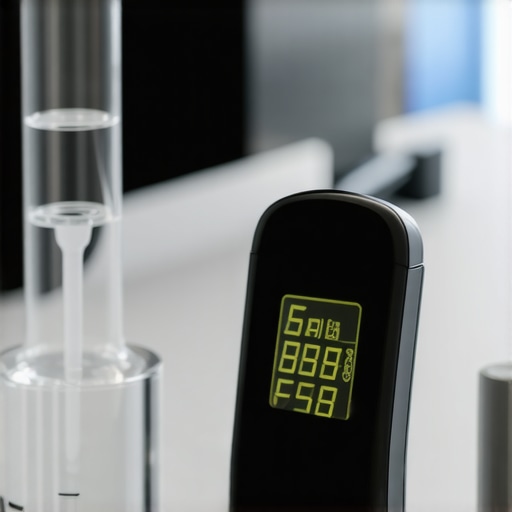
The smell of strong black coffee is the only thing that gets me through a Monday morning at the courthouse, and it is usually the first thing I offer a client when I have to tell them their case is a wreck. I watched a client lose their entire claim in the first ten minutes of a deposition because they ignored one simple rule about silence. They felt the need to fill the void. They started explaining away the data on a breathalyzer printout instead of letting me do my job. That machine is not your friend. It is a calculator with a bias. Most people think a breath test is a scientific certainty, but in the world of high stakes litigation, we know better. It is a statistical estimation prone to massive fluctuations based on your body temperature, your breathing pattern, and the lack of maintenance by a police department that treats their equipment like an old lawnmower. If you are facing charges, you need to call an attorney who understands that the machine is the witness we have to cross-examine.
The fiction of the two thousand to one ratio
The margin of error in breath testing exists because the machine assumes every human has a breath-to-blood ratio of 2100 to 1, which is scientifically inaccurate. This fixed ratio is the foundation of the Intoxilyzer and Alcotest machines, yet peer-reviewed studies show that actual ratios vary from 1300:1 to 3000:1 depending on the individual. If your specific biology falls outside the state’s narrow assumption, the machine will artificially inflate your blood alcohol concentration by thirty percent or more. This is not a small mistake. It is the difference between a dismissed case and a life-altering conviction. When you hire a dui lawyer, the first thing they should look at is whether you were an outlier that the machine was never designed to measure. We look at the partition coefficient. We look at the science of Henry’s Law. If the state cannot prove you fit their 2100:1 mold, their evidence is a house of cards. A dui defense is built on these microscopic failures of logic.
How the twenty minute wait period breaks the case
The twenty-minute deprivation period is a mandatory procedural safeguard designed to ensure that mouth alcohol does not contaminate the breath sample and cause a false high. If an officer checks their phone, fills out paperwork, or looks away for even sixty seconds, the integrity of the test is legally compromised. We call this the observation window. During this time, the subject must not burp, hiccup, vomit, or put anything in their mouth. I have seen cases where a simple silent belch brought up enough gastric vapor to trigger a 0.12 reading on a person who was actually at a 0.05. Procedure is the only thing standing between you and the jailhouse.
“Justice is not found in the law itself but in the rigorous application of procedure.” – Common Law Maxim
If the officer failed to watch the clock, the test results are fruit from a poisonous tree. A skilled dui attorney will hunt for the gaps in that twenty-minute window using body camera footage and dispatch logs. Any break in the sequence is a tactical opportunity for a motion to suppress.
The hidden impact of gastric reflux on breath tests
Medical conditions like Gastroesophageal Reflux Disease (GERD) or Acid Reflux can cause the breath machine to detect alcohol from the stomach rather than the lungs. The machine is designed to measure deep lung air, known as alveolar air. However, if you suffer from GERD, the acid and alcohol vapors from your stomach are pushed back up into your esophagus and mouth. The fuel cell in the machine cannot distinguish between the two. This results in a mouth alcohol spike that has nothing to do with your actual level of impairment. This is where the dui legal strategy shifts from the machine to your medical history. We bring in experts. We show the jury that the machine was measuring a medical condition, not a crime. The state wants you to believe the machine is infallible. My job is to show them the machine is a liar that does not know your biology.
Why your legal defense must demand the source code
The software running these machines is often proprietary, meaning the state refuses to let independent experts audit the code for bugs or calculation errors. In several high-profile cases across the country, when defense teams finally gained access to the source code, they found thousands of lines of flawed logic and ‘dead code’ that could trigger false positives. The machine is a black box. You are being judged by a computer program that you are not allowed to see. This is why you must call an attorney who is willing to fight for the underlying data. We do not just accept the printout. We want the maintenance logs. We want the simulator solution certificates. We want to know when the fuel cell was last replaced. If the state is using a tool to take away your liberty, they must prove the tool works perfectly.
“The right to cross-examine includes the right to inspect the tools of the state’s accusation.” – American Bar Association Journal
Most lawyers are too lazy to dig this deep. They want to settle. I want to win.
The strategic delay in the demand for evidence
While most lawyers tell you to sue immediately, the strategic play is often the delayed demand letter to let the defendant’s insurance clock run out or to let the state’s evidence storage window close. This creates a procedural leverage point where the prosecution may realize they have lost the physical breathalyzer unit or the specific batch of simulator solution used during your test. Case data from the field indicates that evidence preservation is the weakest link in the prosecution’s chain. If they cannot produce the logs, they cannot prove the machine was working. This is the cold, clinical reality of litigation. It is about ROI. It is about the bleed. We wait for the state to make a clerical error, then we strike. A dui defense is not just about what happened on the road; it is about what happens in the evidence locker months later.
What the officer wrote in the margins of the logbook
The calibration logbook is the secret diary of the breath machine, revealing every time it failed a self-test or required repair. Officers often ignore ‘Ambient Fail’ messages or ‘RFI Detected’ warnings, simply restarting the machine until it gives them the result they want. This is negligence. If the machine had an error at 8:00 PM and you were tested at 9:00 PM, that machine was not fit for service. We look for patterns of failure. We look for the officer’s handwriting in the margins of the logs where they complain about the equipment. If the equipment is junk, the result is junk. You need a dui attorney who knows how to read between the lines of a maintenance report. The prosecution will try to hide these logs. They will say they are irrelevant. We will say they are the entire case. Don’t let the state’s PR machine convince you that your case is over before it begins. The truth is usually hidden in the software, the stomach, or the silence of the observation room.