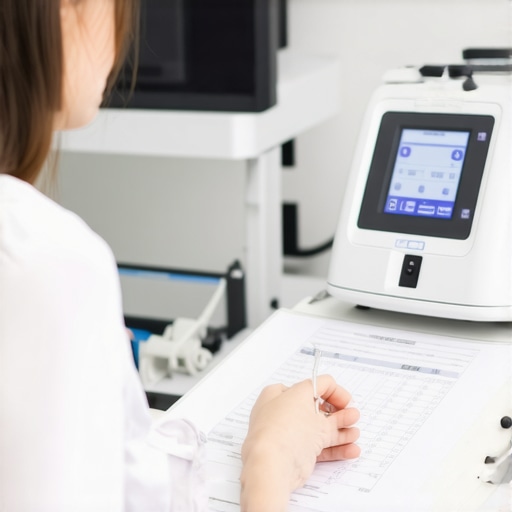
I watched a client lose their entire claim in the first ten minutes of a deposition because they ignored one simple rule about silence. They thought they could explain their way out of a breath test result. They sat in that chair and tried to tell the prosecutor about their two beers and their heavy dinner. They didn’t realize that the machine was the one that was failing. My office smells like strong black coffee and the cold reality of forensic data. I am not here to hold your hand or tell you it is all going to be fine because you are a good person. I am here because the legal system is a machine that wants to process you as a conviction. If you want to stop that machine you need to understand the hardware. You need to understand why the calibration log of a breath machine is your best friend when you are facing a criminal charge. Most people see a 0.08 on a digital screen and they give up. They think the science is settled. It is not. That number is an estimate produced by a device that is often poorly maintained and rarely checked for true accuracy. You need to call an attorney who knows how to tear that machine apart page by page.
The lie about the digital readout
DUI defense strategies often hinge on the fact that breathalyzer results are not absolute truths but rather scientific estimates subject to instrumental error and calibration drift. A skilled dui lawyer examines the Intoxilyzer calibration log to identify systemic failures and inaccurate readings that can lead to a case dismissal in a criminal court. The machine does not measure your blood. It measures the infrared light absorption of the molecules in your breath and then uses a mathematical conversion to guess what is in your blood. This conversion assumes you are an average human with an average body temperature and an average lung capacity. If you deviate from that average the machine is wrong. If the machine has not been calibrated to account for the specific batch of dry gas used for testing then the machine is wrong. We look for the variance. We look for the ghost in the machine that says you were over the limit when the science says you were not.
“Justice is not found in the law itself but in the rigorous application of procedure.” – Common Law Maxim
What the maintenance technician hides from the court
Maintenance records for the Intoxilyzer 8000 often reveal analytical errors and solution variance that the prosecution will never volunteer during a dui defense. These logs show when the internal standard check failed or when the ambient air blank was contaminated by cleaning supplies in the room. Case data from the field indicates that many breath machines stay in service long after they have flagged multiple errors. The technician comes in once a month. They run a few tests. They sign a log. But if you look at the raw data between those visits you often find a history of instability. The machine might have been struggling to maintain its temperature. It might have been failing its internal diagnostic checks. A dui attorney who understands the engineering of these devices knows that a machine that is failing its checks on Tuesday cannot be trusted on a Friday night arrest. We map the procedural history of that specific unit to show that the state was negligent in its upkeep.
The science of the dry gas canister
Dry gas standards are the primary method used to verify the accuracy of breath tests in the field and are documented in the calibration log. These canisters have expiration dates and lot numbers that must be cross-referenced with the dui legal requirements of the state. While most lawyers tell you to sue immediately, the strategic play is often the delayed demand letter to let the defendant’s insurance clock run out or in this case to wait for the maintenance cycle to reveal a pattern of failure. The gas in that canister must be at a specific concentration. If the canister is low or if the pressure is insufficient the machine will return a skewed result. We look for the logs that show the machine was reporting low pressure. We look for the logs that show the technician ignored a warning light. This is the microscopic reality of the case. It is not about your character. It is about the chemistry of a pressurized tank and the failure of a government agency to follow its own protocols.
“The right to confront the evidence against one is the primary interest secured by the Sixth Amendment.” – United States Supreme Court
Why your silence is more powerful than any explanation
Legal representation in a dui case starts with the understanding that self-incrimination often happens during the field sobriety tests and not just the breath test. Your dui defense is built on the procedural errors of the officer and the mechanical errors of the machine. When you talk you give them a way to explain away the machine’s failure. If you say you felt dizzy then they can say the 0.08 was accurate because you showed physical impairment. If you stay silent and the machine is proven to be uncalibrated then they have nothing. Procedural mapping reveals that the most successful defenses are those where the client said nothing and let the lawyer attack the logs. The prosecution wants to talk about your driving. I want to talk about the 0.005 variance in the last three calibration checks. I want to talk about the fact that the machine’s software version has not been updated since 2019. That is where the leverage lives.
Finding a dui defense that ignores the noise
Choosing a dui lawyer requires finding a legal strategist who prioritizes evidence analysis and forensic logs over quick settlement offers. A dui attorney must be willing to go to verdict if the calibration data suggests that the breathalyzer results are legally unreliable. You do not want a lawyer who just wants to plead you out. You want someone who knows how to subpoena the maintenance tech. You want someone who knows how to read a slope detector graph. The courtroom is a territory of logistics. If we can prove the machine was not fit for service we can move to suppress the evidence. Once the breath test is gone the prosecution’s case usually collapses. They are left with the officer’s subjective opinion which is much easier to dismantle in front of a jury. It is about ROI. The investment in a high-fidelity defense pays off when you keep your license and your record clean. Do not trust the digital readout. Trust the logs. Trust the procedure. Trust the attorney who knows how to fight the machine.