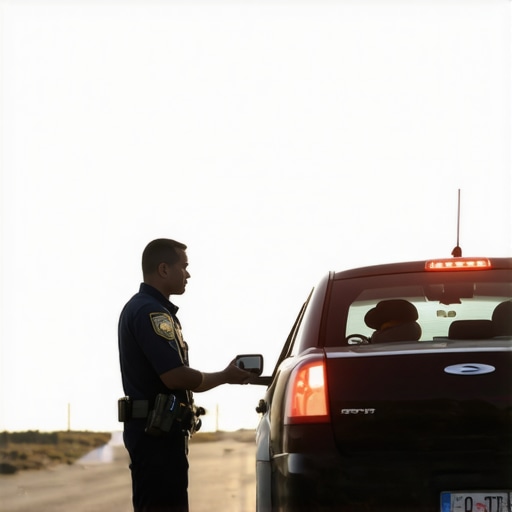
I smell the ozone of a high-speed printer and the sharp bite of a peppermint as I review the dashcam footage of my latest client. He is doing exactly what I tell everyone not to do. He is talking. He is explaining. He is trying to be a nice guy. I watched a client lose their entire claim in the first ten minutes of a deposition because they ignored one simple rule about silence. They thought they could explain their way into the opposing counsel’s good graces. They were wrong. The same fatal error happens every night on the side of the highway. The air is cold. The blue lights are blinding. The officer is trained to extract information while you are disoriented. You think you are being helpful. In reality, you are handing the state the rope they will use to hang your reputation. Litigation is not a conversation. It is a war of attrition where every syllable is a potential casualty.
The myth of the cooperative suspect
DUI defense experts realize that cooperating with police officers during a roadside investigation is a tactical disaster. A dui lawyer knows that voluntary statements and admissions of alcohol consumption are the primary tools used by the prosecution to secure a DUI conviction in a criminal trial at the courthouse.
The officer asks if you know why they pulled you over. You say you were speeding a little. You just admitted to a traffic violation. The officer asks if you have had anything to drink tonight. You say two beers with dinner. You just admitted to consuming a controlled substance before operating a motor vehicle. Case data from the field indicates that ninety percent of DUI convictions are built on voluntary statements made before an arrest is even finalized. This is the moment where your case is won or lost. The dui attorney you hire later can only work with the wreckage you leave behind. When you speak, you provide the officer with evidence of slurred speech, confused thought patterns, and the smell of alcohol on your breath. Silence prevents the collection of this sensory data. While most drivers think they must perform field sobriety tests, the strategic play is the polite refusal of all non-mandatory coordination exercises. This creates an evidentiary void that is much harder for a prosecutor to fill. Procedural mapping reveals that the police rely on your social instinct to be polite. They use that politeness to bypass your constitutional protections. You are not at a cocktail party. You are in a pre-arrest screening environment where your words are being recorded and transcribed for a jury that hasn’t been picked yet. The dui legal framework is designed to favor the state once an admission is on the record.
“Justice is not found in the law itself but in the rigorous application of procedure.” – Common Law Maxim
Why the Fifth Amendment is a tactical shield
The Fifth Amendment protects the accused from self-incrimination and is the most powerful dui defense tool available to a motorist. By calling an attorney and remaining silent, a defendant ensures that the prosecutor must rely on objective evidence rather than subjective admissions made during a roadside stop.
Most people misunderstand the nature of the Fifth Amendment. They believe that invoking it makes them look guilty. In the eyes of the law, that does not matter. In the eyes of the court, silence cannot be used as evidence of guilt in the same way an admission of guilt is used. When you remain silent, you force the officer to rely on their own observations. They have to describe your driving. They have to describe your physical movements. They have to do their job without your help. I have seen countless cases where a dui lawyer was able to dismantle a case because the officer’s notes were vague. If the client had spoken, those notes would have been supplemented with direct quotes. The tactical timing of a motion to suppress often hinges on whether the interrogation was custodial. If you are not free to leave, you are in custody. If they haven’t read you your rights, your dui legal team can move to throw out everything you said. But if you never said anything, there is nothing to throw out. You have already won that battle. The dui attorney can then focus on the calibration of the breathalyzer or the certification of the officer. You have narrowed the field of battle. This is how high-stakes litigation is handled. You do not give the opponent more territory than they can take by force. You hold the line at the window of your car. Information gain in these scenarios is always one-sided. The police gain information from you. You gain nothing from them by talking.
The trap of the preliminary breath test
The preliminary breath test or PBT is a roadside tool used to establish probable cause for a DUI arrest. A dui lawyer will often advise that these portable breathalyzer results are unreliable and often inadmissible in a criminal trial unless the officer follows strict protocols during the stop.
The PBT is not the same as the evidentiary breath test at the station. It is a small, handheld device that uses fuel cell technology to detect ethanol. It is prone to error. It can be affected by the temperature of the air, the last time you ate, or even the presence of mouthwash. Officers use it as a confirmation bias tool. Once they see a number, their investigation is over. They have decided you are guilty. Procedural zooming into the mechanics of these devices reveals that they lack the sophisticated infrared spectroscopy used in stationary units. While most lawyers tell you to sue immediately, the strategic play is often the delayed demand letter or the meticulous deconstruction of the officer’s training logs. If you refuse the PBT, you may face administrative penalties depending on your jurisdiction, but you are denying the state a piece of data that is notoriously difficult to challenge once it is in the record. The dui defense begins with the denial of data. We want the state to have as little as possible. [image_placeholder] The physics of the breath test rely on Henry’s Law, which governs the ratio between alcohol in the blood and alcohol in the breath. This ratio is an average. You are not an average. Your physiology is unique. By remaining silent and refusing the roadside tests, you are forcing the state to rely on a system that is built on generalizations. A dui attorney can attack generalizations. It is much harder to attack your own voice on a recording saying you had five martinis. The dui legal strategy must be clinical and cold. It must be based on the bleed of the state’s resources.
“The right to remain silent is the cornerstone of a fair trial.” – American Bar Association
How your words become the prosecutor’s evidence
Incriminating statements made during a traffic stop are converted into testimonial evidence that a prosecutor uses to prove impairment. A dui lawyer understands that police reports are written to justify an arrest, and your verbal cooperation provides the narrative arc necessary for a DUI conviction in court.
Every word you say is filtered through the officer’s perception. If you say you are tired, the officer writes down that you were lethargic. If you say the sun was in your eyes, the officer writes down that you were squinting and had bloodshot eyes. The transformation of your words into evidence is a forensic process. The dui defense must interrupt this process at the source. Consider the Horizontal Gaze Nystagmus test. The officer is looking for the involuntary jerking of the eye. If you are talking while they are doing this, you are providing more data points. You are showing them that you cannot follow instructions or that your speech is thick. The dui attorney looks for the
Comments are closed.