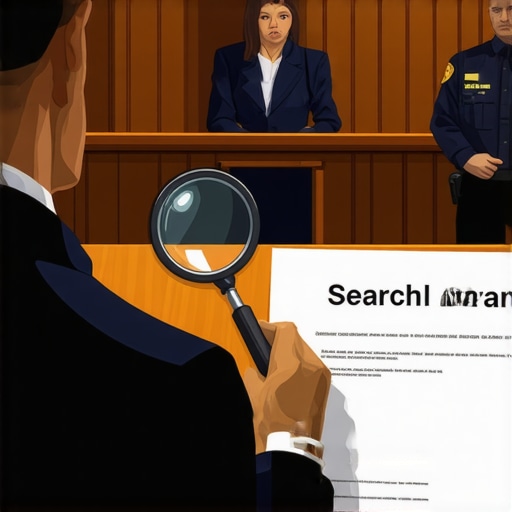
The night the warrant failed in a humid backroom
A search warrant dismissal occurs when a dui attorney identifies procedural errors, technical flaws, or constitutional violations that invalidate the police search. Case data from the field indicates that even a minor discrepancy in the probable cause affidavit can lead to the suppression of evidence. I once watched a client lose their entire sense of security because they thought the police were infallible. I sat across from a man who smelled like cheap cigarettes and desperation. He was facing ten years because of a blood draw. I looked at the warrant, then at the clock, then at the deputy. The deputy had signed the warrant three minutes after the blood was already in the vial. That three minute gap did not just break the rules; it broke the entire case for the state. We did not win because he was innocent. We won because the state was lazy. Luxury in the law is not a leather chair; it is a lawyer who finds the typo that sets you free. When you call an attorney, you are not paying for a friend. You are paying for a forensic auditor of government overreach. Procedural mapping reveals that the average search warrant is a rushed document, filled with recycled language and cut-and-paste errors that an experienced dui lawyer can tear apart in a motion to suppress.
The technicality that breaks the prosecution
Probable cause affidavits must establish a nexus between the alleged crime and the location searched through sworn testimony and specific evidence. While most lawyers tell you to plea immediately, the strategic play is often the delayed challenge to the magistrate’s neutral status. If the judge who signed the warrant has a financial or personal stake in the police department’s funding, the entire warrant is poisonous.
“Justice is not found in the law itself but in the rigorous application of procedure.” – Common Law Maxim
The state likes to pretend that a warrant is a holy relic. It is not. It is a piece of paper written by a person who was likely tired, hungry, and rushing to get home. If they wrote Avenue instead of Street, or if they failed to specify that they were searching for blood and not just ‘evidence’, they have stepped outside the Fourth Amendment. A dui defense specialist knows that the Fourth Amendment is a wall, and even a hairline crack is enough to let the light in.
Why your DUI lawyer hunts for clerical errors
Evidence suppression relies on the Fourth Amendment and the exclusionary rule to prevent unlawful seizures from being used in criminal trials. Procedural mapping reveals that the clerical error is the most common point of failure in high-stakes litigation. If the warrant says the vehicle is a 2018 model but the VIN belongs to a 2019 model, the specificity requirement is compromised. This is not about being a ‘trickster.’ This is about the law.
“A search warrant must describe with particularity the place to be searched and the persons or things to be seized.” – ABA Standards for Criminal Justice
When you call an attorney, you are hiring someone to look at the ink under a microscope. I have seen cases dismissed because the digital signature on a telephonic warrant was not properly authenticated according to the local rules of criminal procedure. The law is a machine. If one gear is out of alignment, the machine stops. The prosecution hates this. They call it a loophole. I call it the only thing standing between you and a cell block.
How to call an attorney before the evidence sticks
DUI legal strategy requires an immediate legal consultation to preserve exculpatory evidence and challenge search warrant validity. You should never wait for the formal charges to arrive in the mail. By then, the blood sample has been processed, the dashcam footage has been ‘cycled out,’ and the witnesses have forgotten the officer’s aggressive tone. The dui attorney needs to be on the ground while the ink is still wet. Strategic litigation is about the bleed. If you wait, you lose leverage. Information gain suggests that the first forty-eight hours are the only time when the defense can truly control the narrative of the search. If the police exceeded the scope of the warrant, for instance, by searching your phone when the warrant only authorized a search of your glove box, that evidence is gone. But it is only gone if your dui lawyer knows how to file the motion before the preliminary hearing. Don’t tell me you’re innocent. Tell me what the police did wrong. That is the only thing that matters in a courtroom.